
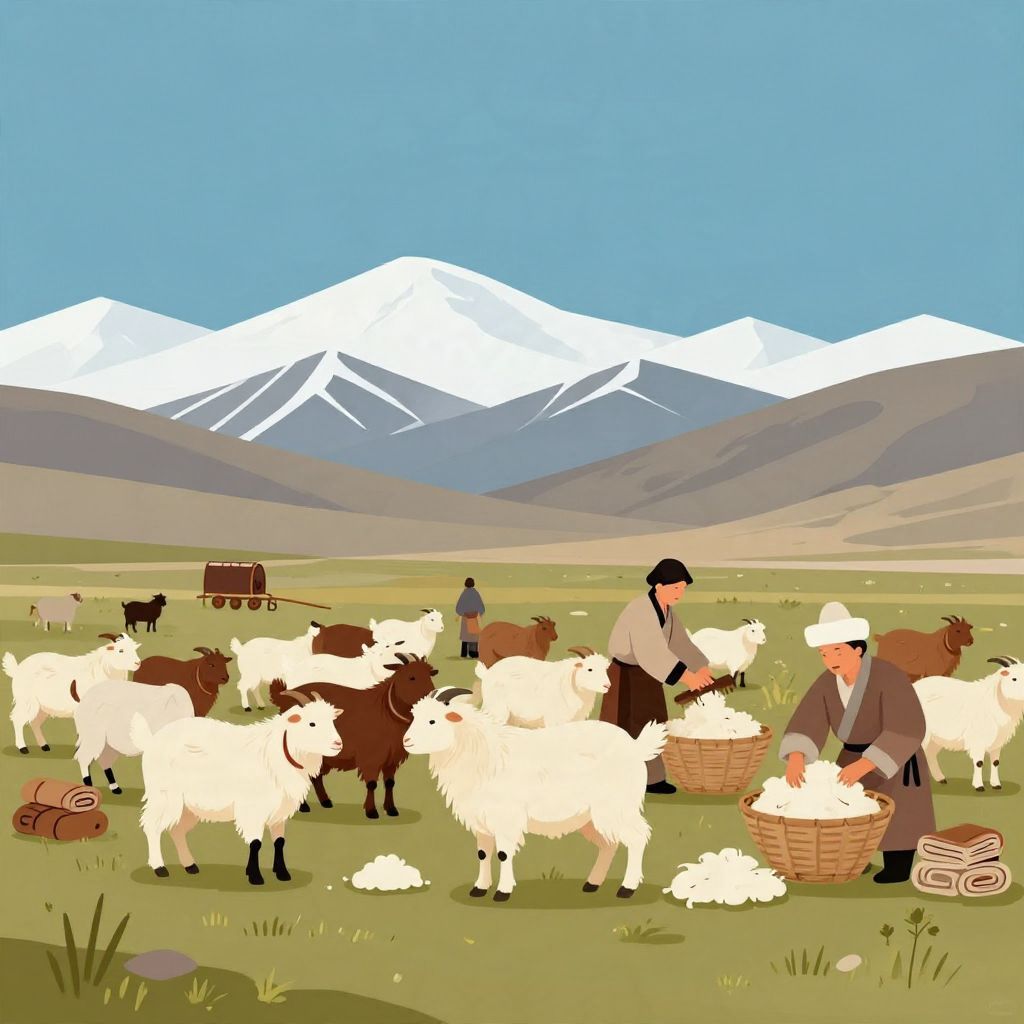
Where does cashmere come from? The short historical answer is that cashmere comes from the fine undercoat of certain goats, especially those raised across the high plateaus of Central and Inner Asia. For centuries, herders in places such as Kashmir, Tibet, Mongolia, and parts of China and Iran collected this soft fiber and turned it into warm cloth prized for its lightness and luxury.
The story of cashmere is not just about a fabric. It is also a history of pastoral life, long-distance trade, imperial fashion, and changing ideas of luxury that eventually made “cashmere” a global word.
Where Does Cashmere Come From?
Cashmere comes from the soft undercoat of cashmere goats, not from sheep or a plant. Historically, the finest fiber was gathered in the cold mountain and steppe regions of Asia, where goats grew a dense winter layer to survive harsh weather. The name is linked to Kashmir, but the fiber’s deeper origins are broader and older than that single region.
The Animal Behind Cashmere: The Goat and Its Winter Coat
Cashmere is a natural fiber combed or shorn from goats that produce a very fine undercoat beneath a coarser outer hair. This undercoat, often called the “down,” is what makes cashmere so soft and insulating. Goats develop it in response to cold climates, which is why cashmere production has long been associated with high-altitude and continental regions.
Why the climate matters
Goats in cold, dry environments grow more of this soft underlayer to trap body heat. When spring arrives, herders traditionally combed the animals to collect the shed fiber. Because the down is only a small part of the goat’s coat, cashmere has always been relatively scarce compared with wool, which helped make it valuable.
Why Is It Called Cashmere?
The word “cashmere” comes from “Kashmir,” the Himalayan region long associated with especially fine shawls and textiles. In European languages, the term became attached to the luxury fabric itself. That does not mean Kashmir was the only source of the fiber, but it was one of the most famous historical centers for making and trading it.
Kashmir’s role in the fabric’s reputation
Kashmir became linked with elite textiles because artisans there produced exceptionally refined shawls that attracted regional rulers and later European consumers. Over time, the name of the place became the name of the material. This is a common historical pattern: a product can take its name from a region strongly associated with its quality or style.
The Early History of Cashmere in Asia
Cashmere’s history stretches back well before it became fashionable in Europe. Nomadic and semi-nomadic peoples across Central Asia, the Tibetan plateau, and the Himalayan borderlands depended on goats, sheep, and other herd animals for clothing, tents, and trade goods. Fine goat fiber was part of this wider pastoral economy, though the exact earliest date of cashmere use is difficult to pin down.
Pastoral communities and textile knowledge
Herders in these regions developed practical knowledge of animal fiber long before industrial textile production. They knew when to comb goats, how to spin the down, and how to weave or felt it into garments. Cashmere was therefore not a sudden invention but the result of generations of animal husbandry and textile skill.
From local use to luxury trade
As trade routes connected the Himalayan region with Persia, Central Asia, and South Asia, fine textiles moved farther from their places of origin. Shawls made with goat down became especially prized because they were warm without being bulky. Their portability and elegance made them ideal for gift exchange among elites and for long-distance commerce.
Kashmir Shawls and the Rise of Prestige
By the early modern period, Kashmir had become famous for exquisite shawls woven from fine fiber. These textiles were admired for their softness, detailed patterns, and vivid colors. They were often associated with courtly culture, where clothing signaled status, taste, and access to rare goods.
Artisans, not just raw material
It is important to distinguish between the raw fiber and the finished textile. Cashmere goat down is only the starting point. The prestige of Kashmir shawls came from skilled spinning, dyeing, weaving, and pattern-making. In other words, the historical fame of cashmere was created by artisans as much as by the goats themselves.
Trade and imitation
As demand grew, merchants and manufacturers outside Kashmir began trying to copy the look and feel of these shawls. This helped spread the reputation of cashmere across wider markets. The result was both imitation and innovation: the name “cashmere” became a global luxury label, even when the fiber or the weaving method came from elsewhere.
How Cashmere Reached Europe
Cashmere became especially fashionable in Europe in the late 18th and early 19th centuries, when imported shawls from South Asia entered elite wardrobes. European consumers admired them for their softness, warmth, and exotic association with imperial trade. Demand grew quickly, and the fabric became a symbol of refinement and wealth.
The Napoleonic era and fashion culture
During the early 1800s, cashmere shawls became a major fashion item among European women. Their popularity was tied to changing dress styles, especially lighter garments that needed warm accessories. The shawl offered both practicality and prestige, which helped cashmere move from a regional luxury to an international fashion staple.
Industrial copying and new supply chains
European textile producers eventually developed ways to imitate cashmere shawls using local wool, machine weaving, and imported fiber. This did not eliminate the value of genuine cashmere, but it changed the market. What had once been a rare handmade import became part of industrial fashion, and the meaning of “cashmere” broadened in the process.
Where Cashmere Comes From Today
Modern cashmere still comes from goats, but production is now global. Major sources include China and Mongolia, with production also found in parts of Iran, Afghanistan, India, Pakistan, and other regions with suitable climates. The historical heartland remains the cold grassland and mountain zones where goats naturally grow dense undercoats.
From traditional herding to global commodity
Today, cashmere is collected for international markets, often through large supply chains that connect herders, processors, manufacturers, and fashion brands. The fiber may begin on a remote pasture, but it can end up in a sweater sold thousands of miles away. That global journey is a modern extension of a much older trade history.
Quality and scarcity
Not all cashmere is the same. The finest fibers are very thin and soft, and the best garments usually use carefully sorted down rather than mixed or coarse material. Because each goat produces only a limited amount, true cashmere remains more expensive than ordinary wool. Its value still depends on rarity, labor, and reputation.
Historical Facts About Cashmere
Several facts help explain why cashmere has remained famous for so long:
- It is animal fiber gathered from the soft undercoat of cashmere goats.
- The name is geographic, tied to Kashmir, though the fiber itself comes from a wider Asian region.
- Its early fame came from textiles, especially finely made shawls rather than raw fiber alone.
- Its luxury status grew through trade between Asia, the Middle East, and Europe.
- Modern production is global, but the climate that produces the best fiber is still cold and dry.
What Is Myth and What Is History?
Some popular accounts suggest cashmere came from a single place or was “discovered” at one moment in history. That is too simple. The historical evidence points instead to a long process: pastoral herding in cold Asian regions, regional textile expertise, trade across empires, and later European fashion demand. Kashmir mattered greatly, but it was part of a larger story.
Why the origin story is often simplified
Luxury goods often acquire romantic origin myths because they are easier to market than complex histories. In the case of cashmere, the association with Kashmir is real and historically important, but the fiber’s use and production were never confined to one valley. Understanding that broader geography gives a truer picture of how the material developed.
The Lasting Significance of Cashmere
Cashmere’s history shows how a practical animal fiber became a global symbol of elegance. Its journey from mountain herds to courtly shawls to modern clothing reflects larger patterns in history: the movement of goods along trade routes, the power of craftsmanship, and the way fashion can transform a local product into an international luxury.
So, where does cashmere come from? It comes from the fine undercoat of goats raised in cold Asian regions, with Kashmir giving the fiber its famous name and reputation. For more on the history of origins and naming, you may also enjoy where gin is from and where pineapples originated.