
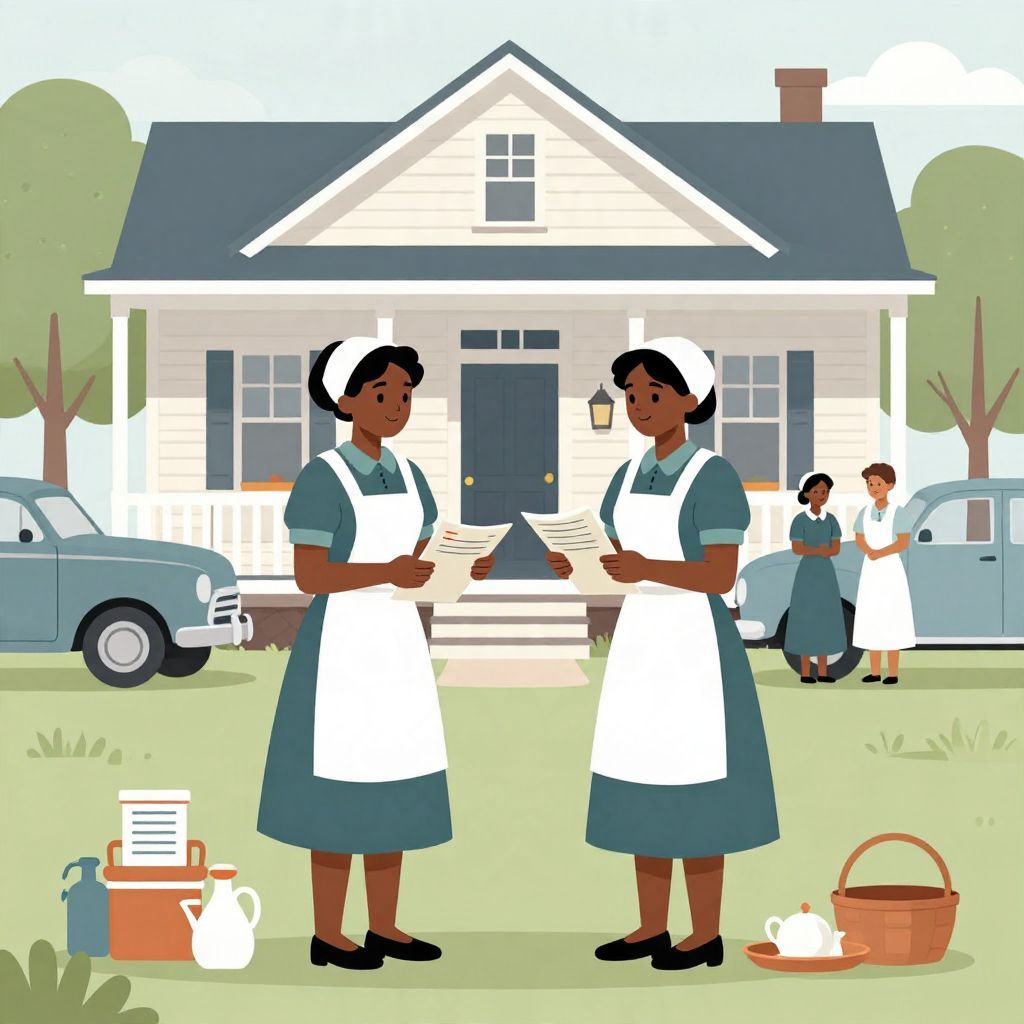
Is The Help a true story? Not exactly. Kathryn Stockett’s 2009 novel The Help is a work of fiction, and the 2011 film adaptation is also fictional. However, it is set against a real historical backdrop: Black domestic workers in Jackson, Mississippi, during the early 1960s, when segregation and Jim Crow shaped everyday life in the American South.
The book draws on historical realities, social tensions, and some broad patterns of experience, but its characters and plot are invented. To understand what is true, and what is dramatized, it helps to look at the world that produced the story.
Is The Help a true story?
The Help is not a true story in the sense of being a biography or a direct retelling of one real family’s experience. It is a fictional novel inspired by the history of Black maids and white households in the segregated South. The setting, racial hierarchy, and many details of domestic labor are historically grounded, but the main characters and events are not documented historical facts.
What parts of The Help are historically real?
The setting: Jackson, Mississippi, in the Jim Crow era
The story takes place in the early 1960s, a period when Mississippi was still governed by Jim Crow segregation laws and customs. Black residents faced restricted access to schools, public facilities, voting, housing, and employment opportunities. White supremacy was enforced not only by law but also by social intimidation and violence. That historical framework is real and central to the novel’s atmosphere.
Black domestic work in white homes
One of the most historically accurate elements is the presence of Black women working as maids, cooks, and nannies in white households. In the South, domestic service was one of the most common forms of paid work available to Black women in the first half of the 20th century and remained important into the civil rights era. These jobs often involved long hours, low pay, and constant racial humiliation, even when personal relationships between employers and workers appeared cordial on the surface.
Racial etiquette and everyday segregation
The novel reflects the strict racial etiquette that governed daily life: separate entrances, different bathrooms, segregated schools, and the expectation that Black workers show deference to white employers. These customs were not minor social quirks; they were part of a larger system designed to maintain racial inequality. The book captures that atmosphere, even though it simplifies some historical complexities for narrative effect.
What is fictionalized in The Help?
The main characters are invented
Characters such as Skeeter, Aibileen, Minny, Hilly, and the other central figures are fictional creations. They are not direct portraits of specific real people. Kathryn Stockett has said in interviews that the novel was inspired in part by memories of her own upbringing and by the Black domestic worker who helped raise her, but inspiration is not the same as documentary truth.
The plot is not a historical event
The book’s central project—Black maids secretly telling their stories to a young white writer in a single book-length collaboration—is a fictional device. While Black domestic workers did share experiences, and while white women did sometimes write about race and segregation, there is no well-established historical record of the exact events depicted in the novel.
The timeline is compressed and shaped for drama
Like many historical novels and films, The Help compresses time, combines themes, and focuses on a small set of characters to make a larger social world easier to follow. Real civil rights history in Mississippi was broader, messier, and more dangerous than the story can fully show. Important institutions, activists, and conflicts are often simplified or left offstage.
How accurate is The Help as history?
The Help is best understood as historical fiction rather than historical evidence. It can help readers imagine aspects of segregation-era life, especially the emotional realities of domestic labor in white homes. But it should not be treated as a substitute for scholarship, oral histories, or primary sources from the period.
What the novel gets right
- The persistence of segregation in early 1960s Mississippi.
- The central role of Black women in domestic labor.
- The unequal power relationship between white employers and Black workers.
- The social risk involved in challenging racist norms.
- The importance of everyday, not only legal, forms of racism.
What the novel can oversimplify
- The diversity of Black political thought and activism in Mississippi.
- The scale and danger of civil rights organizing in the state.
- The complexity of relationships between Black workers and white families.
- The fact that many Black women resisted racism in ways that were not centered on white protagonists.
The historical world behind the story
Domestic labor and racial hierarchy
For much of the 20th century, domestic work was one of the few occupations open to many Black women in the South. This work was shaped by the legacies of slavery and sharecropping. Even after emancipation, white households often depended on Black women’s labor while still denying them equal dignity and rights. That contradiction is one of the most important historical truths behind The Help.
Mississippi and the civil rights movement
Mississippi was one of the most resistant states to civil rights change. In the early 1960s, activists faced voter suppression, economic retaliation, and violent threats. The state became a major battleground in the struggle for voting rights, school desegregation, and basic citizenship. The novel’s backdrop reflects this era, though it is more focused on private household life than on mass political organizing.
Why the story resonated with readers
The book and film became popular because they made a painful history accessible to a wide audience. Many readers recognized the emotional truth of fear, silence, and inequality, even if they knew the characters were fictional. At the same time, the story also sparked criticism for centering a white narrator in a history that was fundamentally shaped by Black women’s experiences and resistance.
Why historians and readers debate The Help
The debate is not about whether segregation existed—it clearly did. The debate is about representation. Some readers value the novel for bringing attention to the lives of domestic workers and to the cruelty of Jim Crow. Others argue that it filters Black experience through a comforting narrative for white audiences, softening the political struggle and giving too much narrative authority to fictional white observers.
That criticism matters historically because the way stories are told affects what audiences think the past was like. A novel can illuminate history, but it can also narrow it. In this case, the real history includes organized activism, Black women’s leadership, and the broader civil rights movement, not only private acts of courage inside white homes.
So, is The Help based on a true story?
No—The Help is not based on one true story in the documentary sense. It is a fictional novel rooted in real historical conditions: segregation, domestic service, and racial inequality in Mississippi during the civil rights era. The characters are invented, the plot is imagined, and the emotional world is shaped for fiction. Still, the book reflects a real and important past, even if it does not reproduce that past exactly.
In historical terms, the safest answer is this: The Help is fiction inspired by real history, not a true story. If you want to explore more questions about history on screen and in books, you may also like Is Sarah’s Oil Based on a True Story? and Is Killers of the Flower Moon a True Story?