
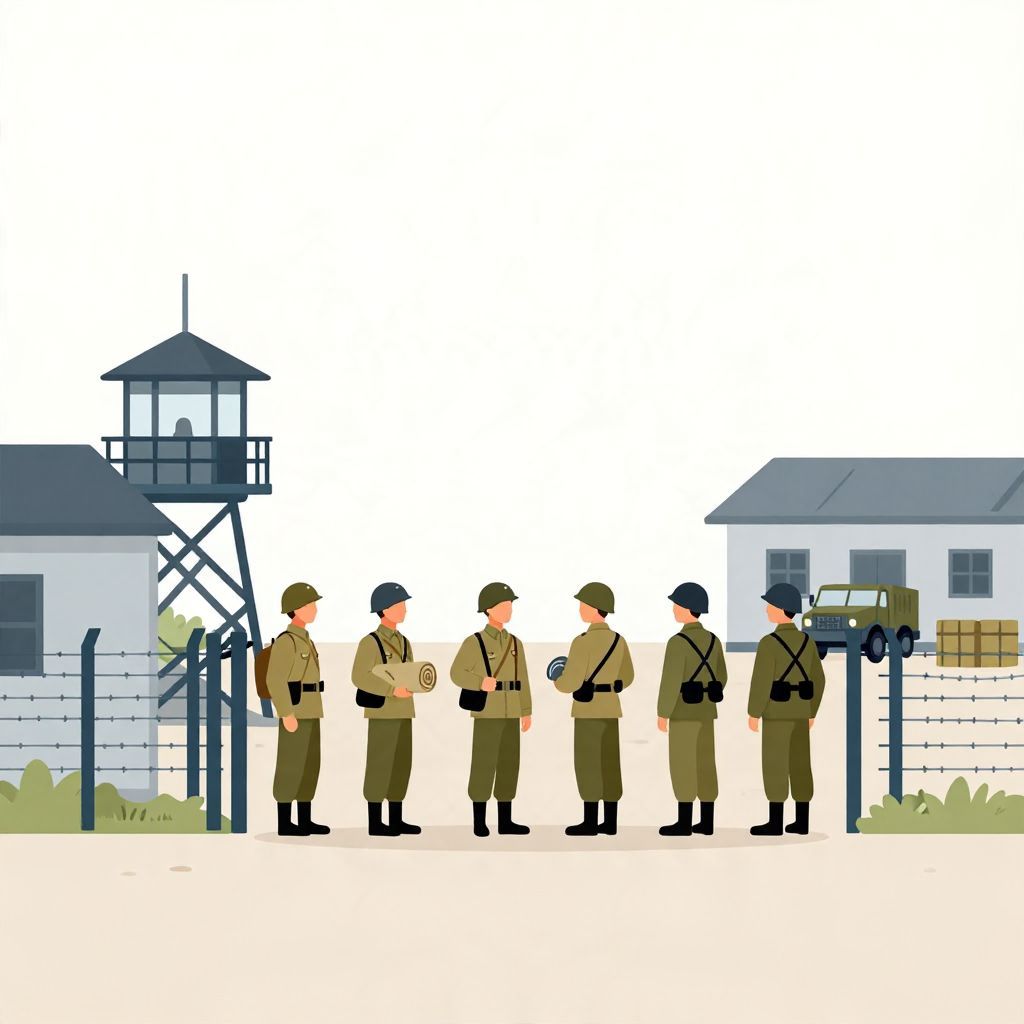
What is a POW? In military history, the term stands for “prisoner of war” and refers to a combatant who has been captured by an enemy force during an armed conflict. The label is most familiar from the twentieth century, but the practice of taking and holding enemy captives is much older than the term itself.
Understanding what a POW is helps explain how war has been regulated, how armies treated captives, and why the rights of prisoners became a major issue in modern international law. The history of POWs is a history of warfare, state power, and attempts—often imperfect—to limit cruelty.
What Is a POW?
A POW, or prisoner of war, is a person captured by an opposing military force in wartime. The term usually applies to members of armed forces, militias, or other combatants who fall into enemy hands, and it is now governed by international law, especially the Geneva Conventions.
The Historical Meaning of POW
The phrase “prisoner of war” is a modern legal term, but the underlying reality is ancient. For most of history, captured soldiers were at the mercy of the victors. Some were ransomed, enslaved, exchanged, executed, or forced into labor. Only gradually did states begin to treat prisoners as protected persons with defined rights.
Before modern law: captives as spoils of war
In the ancient world, prisoners of war were often seen as part of the victor’s spoils. In Mesopotamia, Egypt, Greece, Rome, and many other societies, captured enemies might be killed, enslaved, or incorporated into the conqueror’s society. Treatment varied widely depending on the era, the ruler, and the strategic value of the captives.
In medieval Europe, Islamic empires, and other premodern states, elite prisoners were sometimes held for ransom, while ordinary soldiers could face harsh imprisonment or enslavement. The treatment of captives was shaped less by universal rules than by custom, religion, class, and military necessity.
The rise of the modern POW concept
The modern idea of a POW developed alongside standing armies, nation-states, and written rules of war. By the eighteenth and nineteenth centuries, European powers increasingly negotiated prisoner exchanges and accepted that captured soldiers should not automatically be treated as criminals. This shift did not eliminate brutality, but it laid the groundwork for legal protections.
How POW Status Developed in History
The history of POWs is not a straight line toward humane treatment. It is a long process of conflict between military practice and legal restraint. As warfare became more organized and international, states began to recognize that prisoners needed rules, partly for moral reasons and partly because reciprocity mattered: one side’s treatment of captives could affect how its own soldiers were treated if captured.
Ancient and medieval precedents
Ancient warfare rarely distinguished clearly between combatants and civilians, and prisoners were often absorbed into systems of slavery. Yet there were also early precedents for restraint. Ransom, prisoner exchange, and negotiated surrender were all known in various forms. These customs were inconsistent, but they showed that captivity could be regulated even before modern law.
In the medieval period, religious and chivalric ideals sometimes influenced treatment, especially for noble captives. Knights and commanders might be held for ransom, while common soldiers had far fewer protections. This class-based distinction lasted for centuries and reminds us that POW treatment was never equal in practice.
Early modern warfare and prisoner exchange
As armies grew larger in the early modern period, the number of captives increased. States began to see prisoners not only as enemies but also as diplomatic assets. Formal exchanges, paroles, and prison camps became more common. This era did not make war humane, but it did encourage more systematic handling of prisoners.
Nineteenth-century legal reforms
The nineteenth century was crucial for the legal history of POWs. The scale of industrialized warfare and the growth of international humanitarian thinking pushed governments toward formal rules. One landmark was the Lieber Code of 1863, issued for Union forces during the American Civil War. It helped define how prisoners and other wartime captives should be treated.
Later international agreements, including the Hague Conventions of 1899 and 1907, further developed rules on the treatment of prisoners. These agreements did not end abuse, but they marked a major shift: POWs were increasingly understood as protected war captives rather than simply defeated enemies.
POWs in the Twentieth Century
The twentieth century made the POW a central figure in global history. Two world wars, colonial conflicts, civil wars, and later Cold War-era struggles produced millions of prisoners. These conflicts exposed both the importance of legal protections and the ease with which they could be ignored.
World War I
During World War I, millions of soldiers were captured on the Western and Eastern Fronts. Prisoner camps became a major feature of the war. Conditions varied, but many POWs endured overcrowding, disease, forced labor, and poor food. At the same time, the war encouraged more organized relief efforts and international monitoring than had existed in earlier centuries.
World War II
World War II is often the conflict most associated with POWs because of the enormous number of captives and the wide variation in their treatment. The Geneva Convention of 1929 had already set standards for POW care, but compliance differed greatly among belligerents.
Some prisoners were held in camps with relatively regulated conditions, while others suffered starvation, abuse, forced labor, or execution. Treatment often depended on nationality, race, ideology, and the policies of the captor state. Soviet prisoners of war, for example, were subjected to especially severe mistreatment by Nazi Germany, with catastrophic death rates. Allied prisoners in Japanese captivity also faced brutal conditions in many camps.
Postwar and Cold War conflicts
After 1945, the legal framework for POWs became even more explicit. The Geneva Conventions of 1949 remain the core international treaties governing prisoners of war. They define who qualifies as a POW and set standards for humane treatment, food, shelter, medical care, correspondence, and protection from torture or public humiliation.
Even so, twentieth-century conflicts continued to produce disputes over whether captured fighters qualified as POWs. Guerrilla warfare, anti-colonial struggles, insurgencies, and civil wars often blurred the line between regular soldiers and irregular combatants. That ambiguity remains important today.
What Rights Do POWs Have?
Under modern international law, POWs are not supposed to be treated as criminals simply for taking part in war. They are detained to prevent them from returning to the battlefield, but they retain legal protections. These rights are designed to reduce suffering and to prevent captors from using prisoners as tools of terror or revenge.
Main protections under modern law
- Humane treatment without torture, cruelty, or degrading abuse
- Adequate food, shelter, and medical care
- Protection from violence, intimidation, and public humiliation
- Permission to send and receive information through approved channels
- Right to be identified and registered
- Release and repatriation after the end of hostilities, in many cases
These protections are not absolute in every circumstance, and enforcement can be difficult during war. Still, they represent one of the clearest attempts in international history to regulate violence through law.
Who counts as a POW?
Not every captured person in wartime automatically qualifies as a POW. The legal category usually includes members of regular armed forces, certain militias, volunteer corps, and some other combatants who meet defined conditions. Civilians are generally protected under different legal rules, though in practice civilians are often detained during war as well.
This distinction matters because the law treats combatants and civilians differently. A captured soldier may be held as a POW; a civilian suspect may be treated under criminal or security law; and an unlawful combatant may fall into a disputed category. These issues have been especially controversial in modern asymmetric warfare.
Why POWs Matter in Military History
POWs reveal how societies understand enemy soldiers: as enemies to be destroyed, as assets to be exchanged, or as human beings entitled to protection. The treatment of prisoners often reflects a war’s moral climate and the strength—or weakness—of legal norms.
Reciprocity and deterrence
One reason POW protections developed is reciprocity. If one side mistreats prisoners, the other side may do the same. Rules for POWs therefore serve a practical military purpose as well as a humanitarian one. They help reduce retaliation and create incentives for better conduct.
Propaganda and public memory
POWs have also played an important role in propaganda and memory. Governments have used prisoner stories to demonstrate enemy cruelty, rally public support, or justify war aims. After conflicts end, the experiences of POWs often become part of national remembrance, especially when camps, marches, starvation, or forced labor were involved.
The human cost of captivity
Even when prisoners survive, captivity can have lasting physical and psychological effects. Hunger, disease, isolation, uncertainty, and abuse leave deep scars. For historians, POW experiences are valuable because they show war from the perspective of those who were disarmed, confined, and dependent on the enemy for survival.
Common Misunderstandings About POWs
POWs are not the same as hostages
A POW is captured because of participation in armed conflict. A hostage is usually seized to pressure an opponent, force a negotiation, or secure compliance. The distinction matters legally and historically, even though the two can be confused in public discussion.
POW status is legal, not just descriptive
Calling someone a POW is not merely a label; it has legal consequences. It determines how a detainee should be treated and what protections apply. Disputes over status often arise when armed groups do not fit traditional state armies.
Not all captives are treated the same
History shows that POW treatment has varied enormously by time, place, and conflict. Some prisoners were exchanged or decently housed; others faced starvation, forced labor, or death. There is no single historical pattern, only a long struggle between violence and restraint.
The Lasting Significance of POW History
The history of POWs shows how war has been shaped by law as well as force. From ancient captivity and ransom to the Geneva Conventions, the treatment of prisoners has evolved from a matter of victor’s choice into a subject of international regulation. That change did not end abuse, but it did establish a powerful norm.
Today, when people ask “What is a POW?”, the answer is both simple and historically rich: a prisoner of war is a captured combatant, but the term also represents centuries of changing ideas about war, humanity, and legal responsibility. For related background, you may also want to read about political ideology and militarism, two concepts that help explain why wars are fought and how states justify them.