
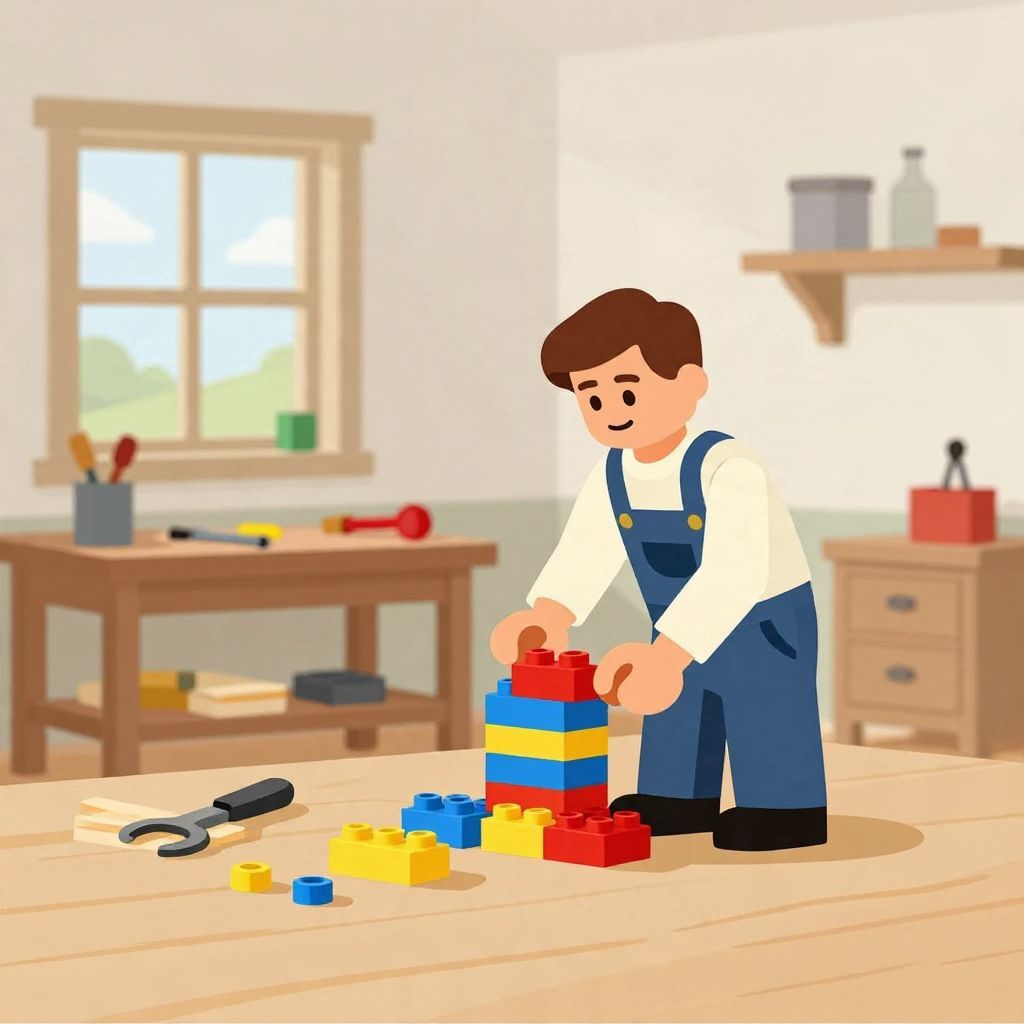
When was Lego invented? The short answer is that Lego began in 1932, when Danish carpenter Ole Kirk Christiansen started making wooden toys in Billund, Denmark. The famous plastic brick came later, but the company’s origins are rooted in the hardships of the Great Depression and a small workshop that survived by making practical, durable toys.
What became one of the world’s best-known toy brands did not appear all at once. Lego’s story is a gradual one: first wooden toys, then plastic experiments, then the interlocking brick system that transformed play worldwide.
When Was Lego Invented?
Lego was invented in 1932, when Ole Kirk Christiansen founded a toy-making business in Billund, Denmark. If you mean the modern interlocking plastic brick, that design emerged later, especially in the late 1940s and 1950s. So the company began in 1932, but the iconic Lego brick was developed over the following decades.
The Origins of Lego in 1932
Ole Kirk Christiansen was a carpenter who turned to toy making during the economic crisis of the early 1930s. He began with wooden products such as yo-yos, pull toys, and miniature models. The name “Lego” was adopted in 1934, coming from the Danish phrase leg godt, meaning “play well.”
Why a carpenter started making toys
The timing mattered. The Depression reduced demand for building and furniture work, so Christiansen adapted his skills to smaller, cheaper goods. Wooden toys were practical, and they fit his craftsmanship. This was not yet the Lego people know today, but it established the company’s core values: precision, durability, and play.
From Wooden Toys to Plastic Bricks
The crucial shift came after World War II, when plastics became more available in Europe. In 1947, Lego purchased a plastic injection-molding machine, a major step toward modern construction toys. By 1949, the company was producing early plastic building pieces called “Automatic Binding Bricks.”
What made the early bricks different?
These first plastic bricks were inspired by earlier interlocking toy ideas, but they were not yet perfect. They had a hollow underside and could connect, though the grip was limited. The design was still evolving, and the company kept refining it to make the bricks more stable and versatile.
The Brick That Made Lego Famous
The most important technical breakthrough came in 1958, when Lego patented the modern stud-and-tube brick design. This version allowed bricks to connect firmly while still being easy to separate. That patent is one of the key reasons Lego became so successful: it created a system of play that was both simple and expandable.
Why 1958 matters more than 1932 for the brick itself
If someone asks when Lego was “invented,” they may really mean the brick. In that sense, 1958 is the most important date. The company existed earlier, but the classic Lego brick—the one that locks together reliably and forms the basis of sets, buildings, vehicles, and worlds—dates to this patented design.
How Lego Developed Into a Global Brand
After the 1958 patent, Lego expanded rapidly. The company introduced themed sets, more specialized pieces, and eventually minifigures in the 1970s. These additions turned Lego from a simple construction toy into a storytelling platform. Children could build structures and also create characters, scenes, and entire imaginary worlds.
Key stages in Lego’s rise
- 1932 – Ole Kirk Christiansen begins making wooden toys in Billund.
- 1934 – The name Lego is adopted.
- 1947 – Lego buys a plastic injection-molding machine.
- 1949 – Early plastic “Automatic Binding Bricks” are produced.
- 1958 – The modern brick design is patented.
- 1978 – The Lego minifigure becomes a major part of the system.
Was Lego Truly the First Building Brick Toy?
No. Lego was not the first toy to use interlocking bricks or blocks. Earlier toys and construction systems existed in Europe and elsewhere. What made Lego distinctive was the quality of the design, the consistency of the pieces, and the company’s commitment to a system that could grow over time. That combination helped Lego outlast many competitors.
Innovation versus invention
In history, “invented” can mean different things. A company may be founded on one date, while the defining product appears later. Lego is a good example. The business began in 1932, the plastic brick line emerged in the late 1940s, and the modern brick was patented in 1958. Each date tells part of the story.
Why the Lego Story Matters
Lego’s history shows how a local workshop can become a global cultural force through gradual innovation. The company did not rely on one dramatic invention alone. Instead, it combined craftsmanship, postwar plastics technology, and a clear understanding of how children play. That approach made the bricks adaptable across generations and cultures.
The lasting impact of the 1958 design
The 1958 brick standard remains central to Lego’s identity. Because the pieces made decades apart still fit together, children and collectors can mix old and new sets. Few products have maintained such long-term compatibility. That continuity is a major part of why Lego has remained relevant for so long.
The Best Historical Answer in One Sentence
Lego was invented as a company in 1932, but the modern Lego brick was invented and patented in 1958. If you are asking about the brand’s origin, use 1932. If you are asking about the iconic interlocking brick, use 1958.
In other words, Lego’s history is not a single moment but a sequence of inventions: a carpenter’s toy workshop in 1932, a move into plastics after the war, and the patented brick system that arrived in 1958. For readers interested in how other everyday technologies developed over time, see also when the violin was invented and when the smartphone was invented.