
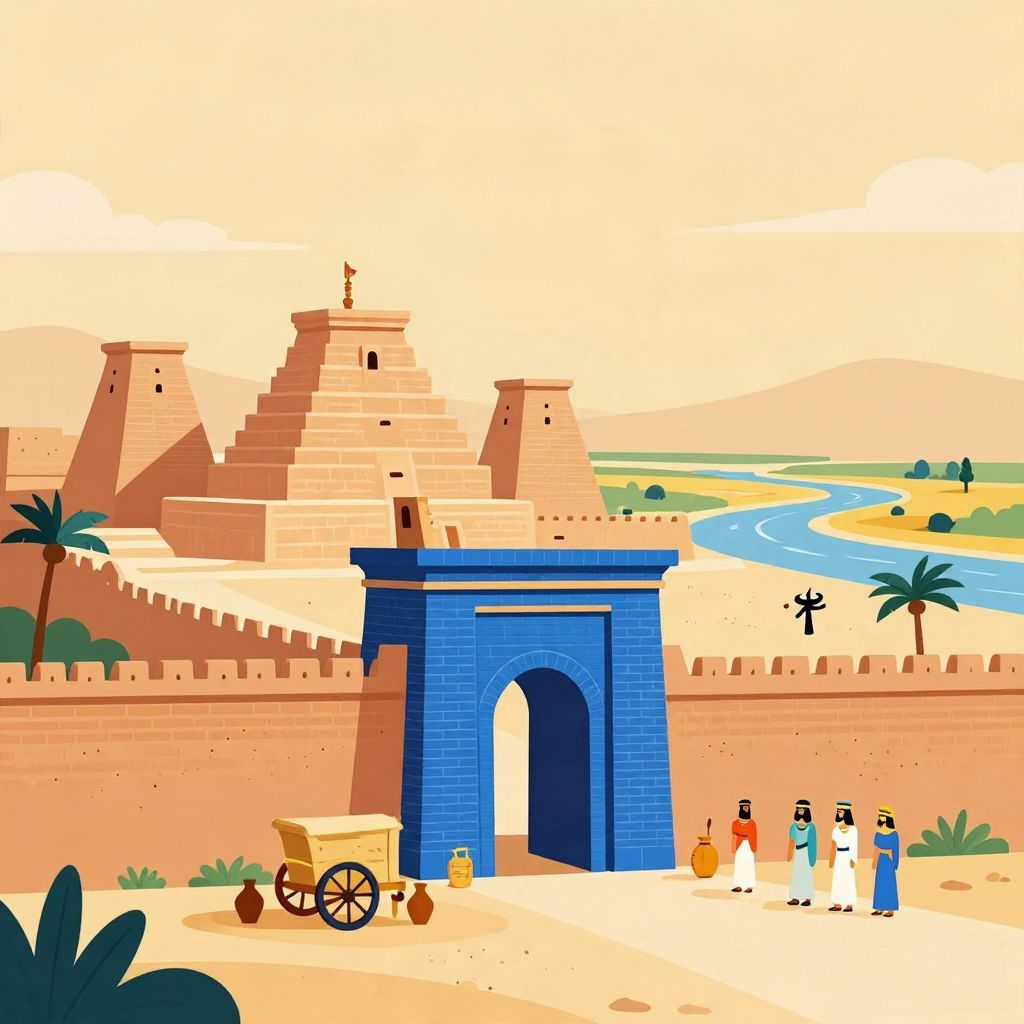
What is Babylon called today? The short answer is that Babylon is generally called Babylon today as well, because the ancient city’s ruins are still identified by that historical name. In modern geography, however, those ruins lie in Iraq, near the city of Hillah in Babil Province, south of Baghdad.
So when people ask what Babylon is called today, the answer depends on whether they mean the ancient city itself or the modern place where it stood. The site is not renamed in the way some ancient cities were; instead, it survives as an archaeological location known as Babylon, within present-day Iraq.
What is Babylon called today?
Babylon is still called Babylon today as the name of the ancient site, but it is located in modern Iraq, near Hillah in Babil Province. The ancient city no longer exists as a living urban center; what remains are ruins, archaeological remains, and a protected historical landscape.
Where was ancient Babylon located?
Ancient Babylon was built in southern Mesopotamia, between the Tigris and Euphrates rivers, in one of the world’s earliest urban regions. Its location made it strategically important for trade, agriculture, administration, and empire-building. The city rose on the Euphrates, not far from today’s Hillah, roughly 85 kilometers south of Baghdad.
Babylon in ancient Mesopotamia
Babylon was part of Mesopotamia, the broad historical region often called the “cradle of civilization.” Long before Babylon became famous, earlier Sumerian and Akkadian cities had already developed writing, irrigation, law codes, and complex government. Babylon inherited that world and eventually became one of its greatest political and cultural centers.
The modern country name
Today, the ancient site lies within the borders of Iraq. That does not mean Babylon was renamed Iraq; rather, Iraq is the modern nation-state that now contains the ruins. The province name Babil also preserves the city’s ancient memory.
Why Babylon is still known by its ancient name
Babylon remains called Babylon because historians, archaeologists, and local tradition continue to use the ancient name for the site. Unlike many places that were rebuilt under new names after conquest or migration, Babylon’s ruins remained identifiable through texts, maps, and archaeological work. The name has survived for millennia in historical memory.
Continuity in texts and tradition
Babylon appears in ancient cuneiform records, Greek and Roman writings, biblical literature, and later Islamic-era geographical traditions. This long documentary trail helped preserve the name even after the city declined. The name became so famous that “Babylon” also entered world literature as a symbol of wealth, power, and decadence.
Archaeology and identification
Modern archaeology confirmed the site’s identity through excavation, inscriptions, and the layout of the ruins. Scholars have long associated the remains near Hillah with ancient Babylon, especially because the city is described in ancient sources with enough geographic detail to match the location.
A brief history of Babylon
Babylon was not always a world-famous empire capital. It began as a smaller city in southern Mesopotamia and gradually grew in importance. Its rise was tied to political change in the region, especially during the early second millennium BCE, when Amorite dynasties gained power in Mesopotamia.
The Old Babylonian period
Babylon became especially prominent under Hammurabi in the 18th century BCE, when it emerged as the center of a powerful kingdom. Hammurabi is remembered for his law code, though the city’s importance went far beyond that single monument. Babylon became a major administrative and military capital.
Neo-Babylonian greatness
Babylon reached another peak in the Neo-Babylonian Empire during the 7th and 6th centuries BCE. Under rulers such as Nebuchadnezzar II, the city became famous for monumental architecture, including massive walls, processional ways, temples, and the Ishtar Gate. Much of Babylon’s legendary image comes from this period.
Conquest by Persia
In 539 BCE, Babylon was conquered by the Persian king Cyrus the Great. The city remained important for a time, but its political dominance declined as empires shifted and trade routes changed. Later rulers used Babylon, but it gradually lost its status as a major capital.
What happened to Babylon after its golden age?
Babylon did not disappear overnight. It declined over centuries as imperial centers moved elsewhere, rivers changed course, and regional power shifted. By the classical and late antique periods, the city had lost much of its former scale. Over time, its monumental structures fell into ruin, though the site remained known and visited.
Decline through changing empires
Successive empires, including the Persians, Greeks, Parthians, and Romans, all interacted with Mesopotamia in different ways. Babylon’s importance faded because imperial attention moved to other cities and because the city’s economic base weakened. Urban life in the region continued, but not on Babylon’s earlier scale.
From city to archaeological site
By the medieval and modern periods, Babylon was no longer a functioning ancient metropolis. What survived were mounds, walls, foundations, and scattered remains. These ruins became the basis for archaeological study in the 19th and 20th centuries, turning Babylon into one of the world’s most significant historical sites.
Babylon today: ruins, heritage, and modern significance
Today, Babylon is an archaeological and cultural heritage site rather than a living city. Visitors can see reconstructed and preserved remains, though the site has also faced damage from time, conflict, and earlier reconstruction efforts. Its importance lies in what it reveals about ancient urban life, empire, religion, and architecture.
Why the site matters
Babylon is important because it helps historians understand how ancient states governed large populations, built monumental cities, and expressed power through architecture. It also illuminates Mesopotamian religion, law, astronomy, and literature. Few ancient places carry such a strong combination of historical evidence and symbolic meaning.
UNESCO recognition
The site of Babylon was inscribed as a UNESCO World Heritage Site in 2019, reflecting its global historical value. That recognition underscores that Babylon is not simply a famous name from the Bible or ancient history books; it is a real place with surviving material remains that continue to be studied and protected.
Common confusion: Babylon, Babel, and modern meanings
People sometimes confuse Babylon with other names or meanings. In religious and literary traditions, “Babylon” can symbolize pride, corruption, exile, or imperial power. But historically, it was a real city in Mesopotamia. “Babel” is related in some traditions, though it is not the same as the historical city name used by archaeologists and historians.
Babylon in religion and literature
Babylon appears prominently in the Hebrew Bible, where it is associated with conquest and exile. In later Christian and literary usage, it became a symbol of worldly power or moral decay. These symbolic meanings are historically important, but they should not be confused with the city’s actual ancient history.
Babylon as a cultural symbol
Because Babylon was so influential, its name came to stand for more than a place. It became a shorthand for empire, luxury, and downfall in many traditions. That symbolic afterlife is one reason the name has remained familiar across centuries, even to people who know little about Mesopotamian history.
Key facts about Babylon today
- Ancient name: Babylon
- Modern country: Iraq
- Nearest modern city: Hillah
- Province: Babil Province
- Historical region: Mesopotamia
- Major peak periods: Old Babylonian and Neo-Babylonian eras
- Current status: Archaeological and heritage site
So, what is Babylon called today?
Babylon is still called Babylon today, but the ancient city no longer exists as an inhabited metropolis. Its ruins are in modern Iraq, near Hillah in Babil Province. In historical terms, the name has survived because the site remains identifiable, famous, and deeply important to the history of the ancient Near East.
For more context on Babylon’s historical decline, see when Babylon fell, and for a related look at ancient regional names, explore what Persia is called now.