
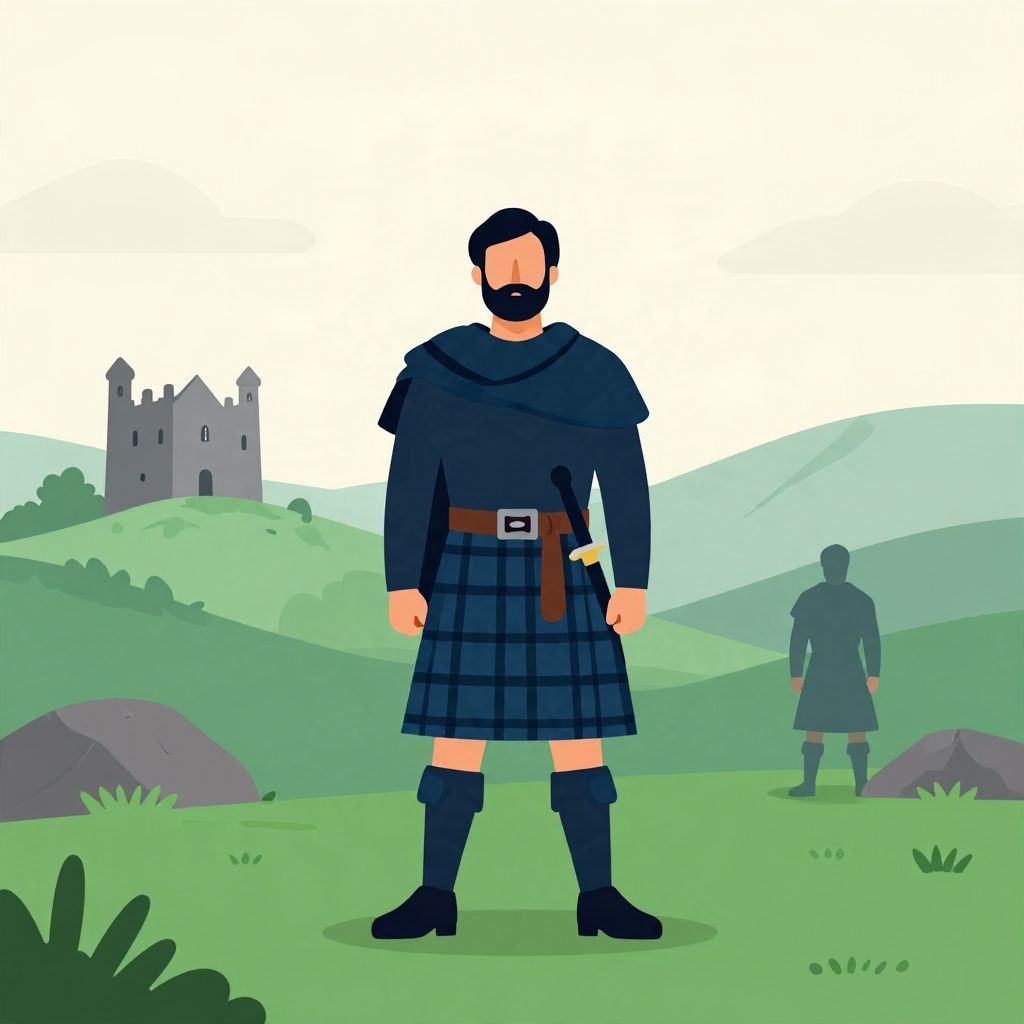
What is a kilt, and why has it become one of the most recognizable symbols of Scottish identity? The answer lies in a garment that began as practical Highland dress, then evolved into a powerful cultural emblem. A kilt is not simply a skirt; it is a tailored pleated garment traditionally associated with Scotland, especially the Highlands, and worn by men and women in different forms over time.
Its history stretches from early modern Highland clothing to modern ceremonial wear, with layers of myth, fashion, politics, and nationalism shaping its meaning.
What Is a Kilt?
A kilt is a knee-length garment made of woolen cloth, usually tartan, wrapped around the body and fastened at the waist. The modern tailored kilt is a pleated skirt-like garment worn primarily by men in Scottish dress, though similar forms of Highland dress existed earlier in a different style. It is both clothing and cultural symbol.
Where Did the Kilt Come From?
The kilt developed in Scotland, especially in the Highlands, during the early modern period. Its ancestor was the great kilt or belted plaid, a large length of cloth worn from roughly the 16th to 18th centuries. This older version was draped and belted rather than sewn into the tailored form familiar today.
The Great Kilt and Highland Life
The great kilt was practical for a rugged environment. It could serve as clothing by day and bedding by night, and the loose cloth allowed freedom of movement in wet, mountainous terrain. It was not unique to a single clan or region, but it became closely associated with Highland society, where kinship, warfare, and pastoral life shaped dress and identity.
From Draped Cloth to Tailored Garment
The modern kilt, usually called the small kilt or tailored kilt, emerged in the 18th century. It is often linked to Thomas Rawlinson, an English industrialist active in the Highlands in the 1720s or 1730s, who is traditionally credited with adapting the belted plaid into a more convenient lower-body garment for workers. The exact details are debated, but by the mid-18th century the tailored kilt was clearly established.
How Did the Kilt Become a Scottish Symbol?
The kilt became a symbol of Scotland through a mix of military service, political repression, romantic nationalism, and later tourism. It was not always celebrated. In fact, after the Jacobite rising of 1745, the British government tried to suppress Highland dress as part of a broader effort to control the Highlands. That repression helped transform the kilt into a marker of identity and resistance.
The Dress Act and Its Impact
After the defeat of Charles Edward Stuart’s forces at Culloden in 1746, the Dress Act of 1746 restricted the wearing of Highland dress in much of Scotland. This law was part of the government’s attempt to weaken clan power and prevent further rebellion. The ban did not erase the garment, but it did alter its meaning: what had been everyday or regional dress increasingly became a political and cultural statement.
Revival in the 19th Century
By the early 19th century, the kilt was revived in a more ceremonial and romanticized form. Writers, artists, and members of the British royal family helped popularize Highland imagery. Sir Walter Scott’s influence, along with royal visits to Scotland, encouraged a vision of Scotland that emphasized tartan, clans, and heroic Highland tradition. This was not a simple recovery of old custom; it was also a reinvention shaped by Victorian tastes.
What Is Tartan, and Why Is It So Closely Linked to Kilts?
Tartan is a patterned woven cloth made of intersecting stripes in different colors. Today many people think of tartan as belonging to specific clans, but that association became especially strong in the 19th century. Earlier tartans were often regional, local, or family-based rather than fixed clan symbols. The link between tartan and the kilt is strong, but the two are not identical: a kilt is a garment, while tartan is the fabric pattern commonly used to make it.
Clan Tartans: Tradition and Reinvention
The idea that every Scottish clan has an ancient, distinctive tartan is partly true and partly a later cultural construction. Some tartan associations are old, but many were standardized in the 18th and 19th centuries. The weaving of tartan became a way to express belonging, and the kilt became the most visible form of that expression.
How Is a Kilt Worn?
A traditional kilt is worn at the waist and falls to about the knee. It is usually secured with straps and buckles, and it is often paired with accessories such as a sporran, kilt hose, flashes, and a jacket for formal wear. The kilt’s pleats are typically at the back, while the flat apron lies at the front.
Common Kilt Accessories
- Sporran: a pouch worn at the front, since kilts have no pockets.
- Kilt hose: knee-high socks worn with the garment.
- Flashes: decorative garters that help hold the hose in place.
- Prince Charlie jacket or similar formal jacket: often worn for dress occasions.
- Kilt pin: a decorative pin that can add weight to the apron and provide ornament.
Everyday Wear and Formal Wear
Historically, kilts were once worn in everyday life, especially in Highland communities and military contexts. In modern times, they are more often reserved for formal events, weddings, graduations, parades, and cultural ceremonies. They also appear in military dress, where they continue to carry strong associations with Scottish regiments.
What Is the Difference Between the Great Kilt and the Modern Kilt?
The great kilt was a large wrap of cloth, while the modern kilt is a sewn, fitted garment. The older version was more versatile and less tailored; the newer one is more convenient and structured. Both are part of Highland dress, but they reflect different periods and different ways of living.
- Great kilt: a full-length cloth wrapped and belted around the body.
- Modern kilt: a tailored garment with sewn pleats and a fixed waist.
- Time period: the great kilt was common earlier; the modern kilt became established in the 18th century.
- Use: the great kilt suited daily Highland life; the modern kilt became more formal and symbolic.
Was the Kilt Always Worn by Men?
In historical Highland society, the kilt and related forms of dress were primarily associated with men, especially in public and military contexts. However, women’s dress in Scotland had its own traditions and was not simply a version of the male kilt. In modern times, women may wear kilts or kilted garments as part of fashion, uniform, or cultural expression, but this reflects later developments rather than an unbroken ancient practice.
Why Did the Kilt Survive When Other Regional Clothes Disappeared?
The kilt survived because it became more than clothing. It was carried by soldiers, preserved in ceremonial settings, and revived by cultural movements that valued Scottish distinctiveness. Once linked to identity, heritage, and performance, it remained meaningful even after everyday use declined. Its survival shows how dress can outlast the social world that created it.
Military and Ceremonial Role
Scottish regiments helped keep the kilt visible in the 19th and 20th centuries. Military use gave it prestige and public recognition, while ceremonial wear reinforced its place in weddings, dances, and national events. In this sense, the kilt became both a living tradition and a stylized emblem of Scottishness.
What Does the Kilt Mean Today?
Today the kilt is widely understood as a symbol of Scottish heritage, though it is also part of global fashion and diaspora identity. People wear it to express ancestry, celebrate national pride, or take part in formal and cultural events. It is no longer everyday Highland dress, but it remains one of the most enduring images associated with Scotland.
Modern Misconceptions
One common misconception is that the kilt has existed unchanged for centuries. In reality, it has changed shape, function, and meaning over time. Another is that tartan patterns are ancient clan codes in a rigid sense; many were standardized later. Understanding the kilt historically means seeing it as a garment shaped by adaptation, not frozen tradition.
Key Facts About the Kilt
- The kilt originated in Scotland, especially in the Highlands.
- Its earliest form was the great kilt or belted plaid.
- The modern tailored kilt developed in the 18th century.
- Highland dress was restricted after the Jacobite defeat in 1746.
- The kilt later became a symbol of Scottish identity and heritage.
- Tartan is the patterned cloth commonly used to make kilts.
- Modern kilts are often worn for ceremonial, formal, or cultural occasions.
Conclusion
A kilt is a traditional Scottish garment whose history reflects practical Highland life, political conflict, and later cultural revival. From the belted plaid to the tailored modern kilt, its form changed over time, but its symbolic power only grew. For more on clothing and identity in history, see what Scottish people look like in historical context and what a dashiki is.