
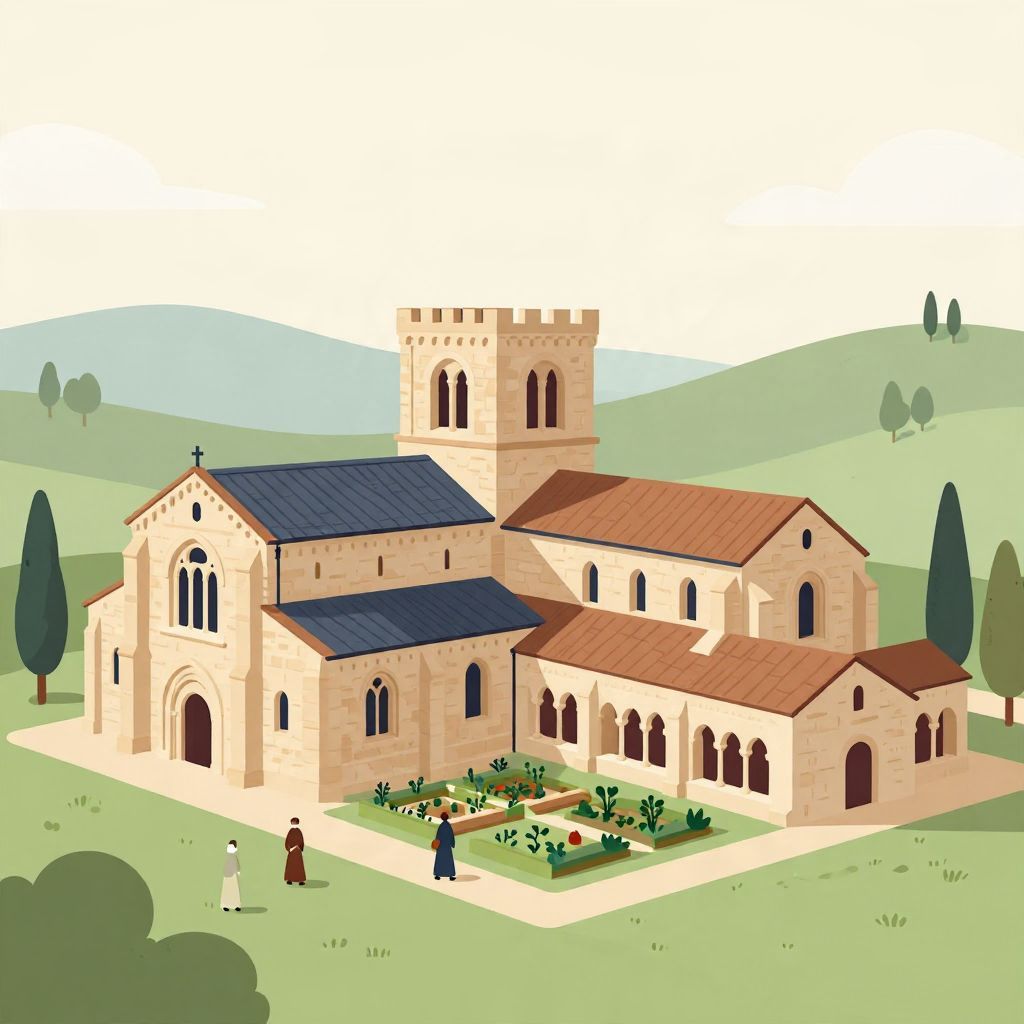
An abbey is a religious house centered on a community of monks or nuns, usually led by an abbot or abbess. In Christian history, abbeys were not just places of prayer: they were also centers of learning, landholding, charity, manuscript production, and local power.
The word is most often associated with medieval Europe, especially the Catholic and Orthodox traditions, but abbeys developed over a long period and varied widely by region and order. To understand what an abbey is, it helps to look at its origins, its daily life, and the role it played in society.
What Is an Abbey?
An abbey is a monastery or convent with a formal leadership structure, usually headed by an abbot for men or an abbess for women. It is a self-contained religious community where members live under a rule, pray regularly, and often work, study, or manage land. Abbeys became especially important in medieval Christianity.
Where Did Abbeys Come From?
Abbeys grew out of early Christian monasticism, which began in the late Roman world. The first monks and nuns sought a life of prayer, discipline, and withdrawal from ordinary society. Over time, these communities became organized institutions, and some were recognized as abbeys when they gained a stable community and formal superior.
Early monastic roots
Christian monastic life emerged in Egypt, Syria, and Palestine during the 3rd and 4th centuries. Some early ascetics lived alone as hermits, while others gathered in communities. The communal model became especially influential because it was easier to sustain, govern, and expand.
The rise of the abbey in the West
In western Europe, abbeys developed as monasticism spread after the fall of the Western Roman Empire. A major turning point came with the Rule of Saint Benedict, written in the early 6th century. Benedictine monasteries emphasized stability, obedience, prayer, and work, and many later abbeys followed this pattern.
How Is an Abbey Different from a Monastery or Convent?
In everyday speech, “abbey,” “monastery,” and “convent” are sometimes used loosely, but they are not exactly the same. An abbey is a specific kind of monastery or convent that has an abbot or abbess and a degree of independence. A monastery is the broader term for a religious community; a convent usually refers to a house of nuns or, in some traditions, friars.
Key distinctions
- Abbey: a monastery or convent led by an abbot or abbess.
- Monastery: a general term for a religious community.
- Priory: often a smaller house, sometimes dependent on an abbey.
- Convent: commonly used for communities of women religious, especially in later usage.
These terms can overlap depending on the religious order, country, and period. In some cases, a house was called an abbey because it had prestige or historical importance, even if its structure changed over time.
What Happened Inside an Abbey?
Abbeys were designed for a disciplined religious life. The day revolved around prayer, worship, meals, study, and labor. Many communities followed a schedule of fixed prayer times called the Divine Office, which shaped the rhythm of the day and night.
Daily life and work
Monks and nuns in abbeys usually took vows of poverty, chastity, and obedience, though the exact vows depended on the order. They might copy manuscripts, teach, farm, brew, care for the sick, or manage estates. Work was not separate from devotion; it was often understood as part of religious discipline.
Buildings and layout
An abbey was usually more than one building. Typical features included:
- a church or abbey church for worship
- a cloister, or enclosed courtyard
- dormitories or cells for sleeping
- a refectory for meals
- a chapter house for meetings
- workshops, gardens, storehouses, and sometimes guest quarters
Large abbeys could become major architectural complexes, and many survive today as ruins, churches, or restored historic sites.
Why Were Abbeys Important in Medieval Society?
Abbeys mattered because they were religious, economic, and cultural centers at the same time. They preserved texts, educated clergy, offered hospitality, cared for the poor, and cultivated land. In many regions, abbeys were among the most organized and influential institutions in medieval life.
Centers of learning and manuscripts
Before printing, books were copied by hand. Many abbeys maintained scriptoria, where scribes reproduced religious, classical, and practical texts. This helped preserve learning from antiquity and transmit it into later centuries. Abbey libraries also became repositories of theology, law, history, and medicine.
Land, wealth, and authority
Many abbeys received gifts of land, money, and privileges from rulers and nobles. As a result, they often became major landowners. This gave them income, but it also tied them to local politics and made them vulnerable to disputes over property, patronage, and reform.
Charity and hospitality
Abbeys often provided food, shelter, and assistance to travelers, the poor, and the sick. In an age with limited public welfare, this charitable role made them especially valuable. Some abbeys also operated hospitals or infirmaries.
Who Led an Abbey?
The head of an abbey was usually an abbot in a male house or an abbess in a female house. These leaders were responsible for discipline, finances, spiritual direction, and relations with the outside world. Their authority could be considerable, especially in wealthy or politically connected abbeys.
Abbot and abbess
The word “abbot” comes from the Aramaic and Syriac root abba, meaning “father,” while “abbess” is the female equivalent. In some periods, abbots were powerful enough to advise kings, sit in assemblies, or control extensive estates. Abbesses could also wield notable authority, especially in double monasteries or wealthy female foundations.
Independence and oversight
Some abbeys were independent; others were subject to bishops, kings, or larger religious orders. Reform movements often tried to restore stricter observance when abbeys became wealthy or politically entangled. The balance between spiritual ideals and worldly power was a recurring theme in abbey history.
Abbeys in the Middle Ages
The Middle Ages were the great age of the abbey in western Europe. From roughly the 6th to the 15th centuries, abbeys multiplied across England, France, Germany, Italy, Spain, and beyond. Some became famous for scholarship, some for reform, and some for their political influence.
Major monastic orders
Different orders shaped abbey life in different ways:
- Benedictines: followed the Rule of Saint Benedict and became highly influential across Europe.
- Cistercians: founded in the late 11th century, they emphasized simplicity and stricter observance.
- Cluniacs: associated with the abbey of Cluny, they developed a powerful network of dependent houses.
- Augustinians and others: followed different rules or adapted local traditions.
Political and social influence
Some abbeys were closely linked to rulers, while others served as burial places for nobles or dynasties. Their abbots might attend councils, negotiate with kings, or oversee vast estates. In certain regions, abbeys became symbols of local identity and prestige.
Did Abbeys Exist Outside Western Europe?
Yes, though the word “abbey” is most commonly used in a Christian European context. Similar institutions existed in Eastern Christianity, where monasteries were often led by abbots or abbesses, though local terminology and organization could differ. Comparable religious communities also existed in other faith traditions, but they are not usually called abbeys.
Eastern Christian monasteries
In Byzantine and Orthodox traditions, monasteries played a major role in spiritual life, education, and manuscript preservation. Some were large and influential, but the term “abbey” is less central there than in the Latin West.
Broader religious comparison
It is tempting to compare abbeys with Buddhist monasteries or other communal religious houses, and the comparison is useful in a general sense. Still, each tradition has its own theology, rules, and historical development, so the term “abbey” should not be applied too broadly.
What Happened to Abbeys After the Middle Ages?
Abbeys did not disappear when the Middle Ages ended, but many changed dramatically. Reformation movements, state centralization, wars, and secularization reduced the number and power of monastic houses in parts of Europe. Some abbeys were dissolved, while others survived as active religious communities.
The Reformation and dissolution
In England, the Dissolution of the Monasteries under Henry VIII in the 1530s led to the closure of many abbeys and the redistribution of their lands. Similar pressures affected monastic institutions elsewhere, especially where rulers sought wealth, control, or religious reform.
Survival and restoration
Some abbeys continued functioning into the modern era, especially in Catholic and Orthodox regions. Others were revived after periods of suppression. Many former abbey churches remain in use as parish churches, cathedrals, museums, or heritage sites.
Why Do Abbeys Still Matter Today?
Abbeys remain important because they shaped European religion, education, architecture, and land use for centuries. They also left a deep mark on literature, music, and place names. Even when their religious life ended, their buildings and archives continued to influence historical memory.
Historic and cultural legacy
Visitors today often encounter abbeys as ruins or restored monuments, but these sites were once living communities. Their surviving walls reveal how religion, labor, and scholarship were organized in the past. Many also preserve art, sculpture, and records that help historians reconstruct medieval society.
Key Facts About Abbeys
- An abbey is a religious community headed by an abbot or abbess.
- Abbeys became especially prominent in medieval Christianity.
- They were centers of prayer, learning, charity, and land management.
- Many followed the Rule of Saint Benedict or related monastic rules.
- Abbeys could be wealthy, politically influential, and architecturally impressive.
- Some were dissolved in the Reformation, while others survive today.
In short, an abbey is both a place and an institution: a disciplined religious community with a long historical role in worship, learning, and society. If you want to explore the people who lived in these communities, see what monks were; for a different kind of historical institution and territorial power, you may also be interested in what a duchy was.