
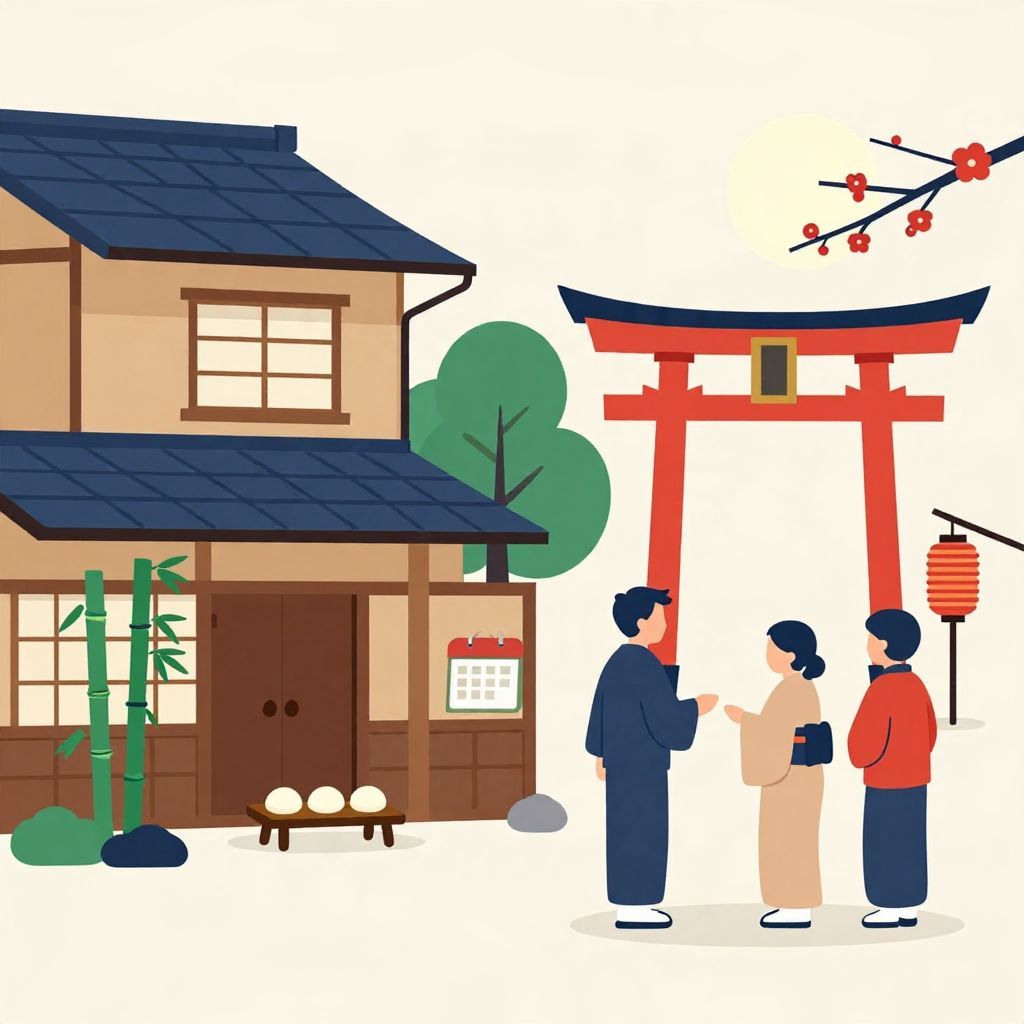
Does Japan celebrate Lunar New Year? The short answer is mostly no in the modern national calendar, but the historical answer is more complex. Japan once observed a lunisolar New Year like many East Asian societies, then shifted to the Gregorian calendar in the Meiji era.
Today, Japan’s main New Year holiday is Shōgatsu, celebrated on January 1. Yet some communities, families, and regional traditions still mark the lunar new year in limited ways, especially in areas with strong Chinese or Okinawan cultural ties.
Does Japan Celebrate Lunar New Year?
In modern Japan, the official and widely celebrated New Year is January 1, not the Lunar New Year. Japan does not treat the lunar new year as a nationwide public holiday, though some people observe it privately or through local cultural events. Historically, however, Japan did celebrate a lunisolar New Year before adopting the Western calendar in 1873.
How Japan’s New Year Changed Over Time
Japan’s relationship with the Lunar New Year is best understood as a historical transition, not a simple yes-or-no answer. For centuries, Japan followed a calendar system based on the moon and the sun, much like China, Korea, and Vietnam. That meant the New Year fell on a date that shifted each year within the solar calendar.
The premodern lunisolar New Year
Before the modern era, Japanese society celebrated the New Year according to the traditional calendar imported from China centuries earlier. This was not exactly identical to the Chinese New Year in every local custom, but it belonged to the same broad East Asian calendar tradition. The holiday was tied to seasonal renewal, agricultural rhythms, and ritual purification.
Households prepared for the new year by cleaning homes, settling debts, offering food to household deities, and visiting shrines or temples. These customs were meant to welcome good fortune and mark a fresh beginning. In that sense, Japan absolutely did celebrate a lunar or lunisolar new year for much of its history.
The Meiji calendar reform of 1873
The decisive change came in 1873, when the Meiji government adopted the Gregorian calendar. This reform was part of Japan’s broader effort to modernize state institutions and align itself with Western powers. By replacing the old lunisolar calendar with a solar one, the government fixed New Year’s Day on January 1.
This did not erase older customs overnight. Instead, it shifted the timing of celebration. Many traditions that had once been performed for the lunar new year were moved to January 1 and became part of modern Shōgatsu. As a result, Japan kept many old New Year customs while changing the calendar date itself.
Why Japan Does Not Celebrate Lunar New Year Nationally Today
Japan does not celebrate Lunar New Year as a national holiday because its official calendar and holiday system are based on the Gregorian calendar. Since the late 19th century, the state has treated January 1 as the beginning of the year. That makes Japan different from countries where the lunar new year remains a major public observance.
State modernization and international alignment
The Meiji government’s calendar reform was not just a technical adjustment. It reflected a political and cultural choice to present Japan as a modern nation-state. Standardizing the calendar helped with administration, taxation, military planning, railways, and diplomacy. A solar calendar also made Japan more legible to Western governments and global trade networks.
In practical terms, this meant that the old lunar new year lost its official status. People could still remember it, but the state no longer organized public life around it. Over time, January 1 became the dominant and familiar New Year for the whole country.
Shōgatsu became the central New Year holiday
Modern Japanese New Year traditions are deeply rooted in older customs, even though they now occur on January 1. Families often gather, eat special foods, send greeting cards, and visit shrines or temples. These practices preserve the spirit of the older seasonal festival while fitting the Gregorian calendar.
Because Shōgatsu absorbed many functions of the old lunar new year, most Japanese people do not think of January 1 as a replacement for a separate lunar holiday. Instead, it is simply the New Year.
What Survived from the Old Lunar New Year Tradition?
Although Japan no longer celebrates Lunar New Year nationally, several traditions associated with the older calendar survived in altered form. The most visible examples are New Year decorations, family rituals, and food customs. These are not “Lunar New Year” observances in the modern sense, but they reflect the same historical roots.
Customs that continued into modern Shōgatsu
- Osoji: a thorough year-end cleaning to purify the home.
- Kadomatsu and shimenawa: decorations welcoming protective spirits or deities.
- Osechi ryōri: special New Year foods prepared in advance.
- Hatsumōde: the first shrine or temple visit of the year.
- Otoshidama: money gifts to children.
These customs are not identical to Chinese Lunar New Year practices, but they belong to the same broad East Asian pattern of welcoming renewal, honoring ancestors, and seeking luck for the year ahead.
Regional and minority traditions
Some parts of Japan have more direct connections to lunar-calendar observance. In Okinawa, for example, local traditions historically used the lunisolar calendar longer than mainland Japan did, and some communities still observe culturally specific seasonal festivals tied to that older timekeeping system. In areas with Chinese communities, Lunar New Year celebrations may also be visible through family or neighborhood events.
These are important exceptions, but they do not change the national picture. They show that Japan’s calendar history is layered, with local variation beneath the official modern system.
How Japan Differs from Other East Asian Countries
Japan is often compared with China, Korea, and Vietnam because all four societies once used lunisolar calendars. But their modern holiday calendars diverged. China, Korea, and Vietnam continue to celebrate the lunar new year as a major public holiday, while Japan moved its main New Year to January 1 in the 19th century.
Shared roots, different outcomes
The shared historical root is the transmission of calendar knowledge from China to other parts of East Asia. Over time, each society adapted that system to its own political and cultural needs. Japan’s Meiji reform was especially decisive because it replaced the lunar date system at the national level rather than simply adding a solar New Year alongside it.
This is why visitors sometimes expect to find a large Lunar New Year celebration in Japan and are surprised by the answer. The historical connection exists, but the modern holiday calendar does not follow the same pattern as in neighboring countries.
Common Misunderstandings About Japanese New Year
One reason this question causes confusion is that Japanese New Year customs look familiar to people who know Lunar New Year traditions elsewhere in Asia. The timing, symbolism, and family-centered rituals can seem similar. But similarity does not mean identity.
“Japan used to celebrate Lunar New Year, so it still does”
This is only partly true. Japan did celebrate a lunisolar new year in the past, but the modern national holiday is January 1. Historical continuity survives in customs, not in the calendar date itself.
“If Japanese people celebrate New Year on January 1, it must be the same as Lunar New Year”
Not exactly. The modern Japanese New Year is a solar-calendar holiday. It is historically connected to the older lunisolar New Year, but it is not the same date as the lunar new year celebrated in other East Asian countries.
“No one in Japan celebrates Lunar New Year”
That is too absolute. Some people in Japan do observe it, especially within minority communities, international families, or local cultural settings. But it is not a nationwide Japanese holiday.
Historical Significance of the Calendar Shift
The move from a lunisolar to a Gregorian calendar was more than a bureaucratic change. It altered how Japanese people experienced time, seasons, and public ritual. It also shows how modernization can preserve older cultural forms while changing their framework.
Japan’s New Year customs demonstrate this clearly. The country abandoned the old calendar date, yet retained many of the social meanings attached to the season: purification, family reunion, gratitude, and hopes for prosperity. In other words, the calendar changed, but the cultural importance of the New Year remained.
So, Does Japan Celebrate Lunar New Year?
Japan does not celebrate Lunar New Year as a major national holiday today. The country’s official New Year is January 1, established after the 1873 calendar reform. However, Japan historically did celebrate a lunisolar New Year, and many older customs survived within modern Shōgatsu. So the most accurate answer is: historically yes, today mostly no, with some local and cultural exceptions.
If you want to explore the topic further, you may also find it useful to read about when Japanese New Year is celebrated and the broader history of whether Japanese people celebrate Lunar New Year.