
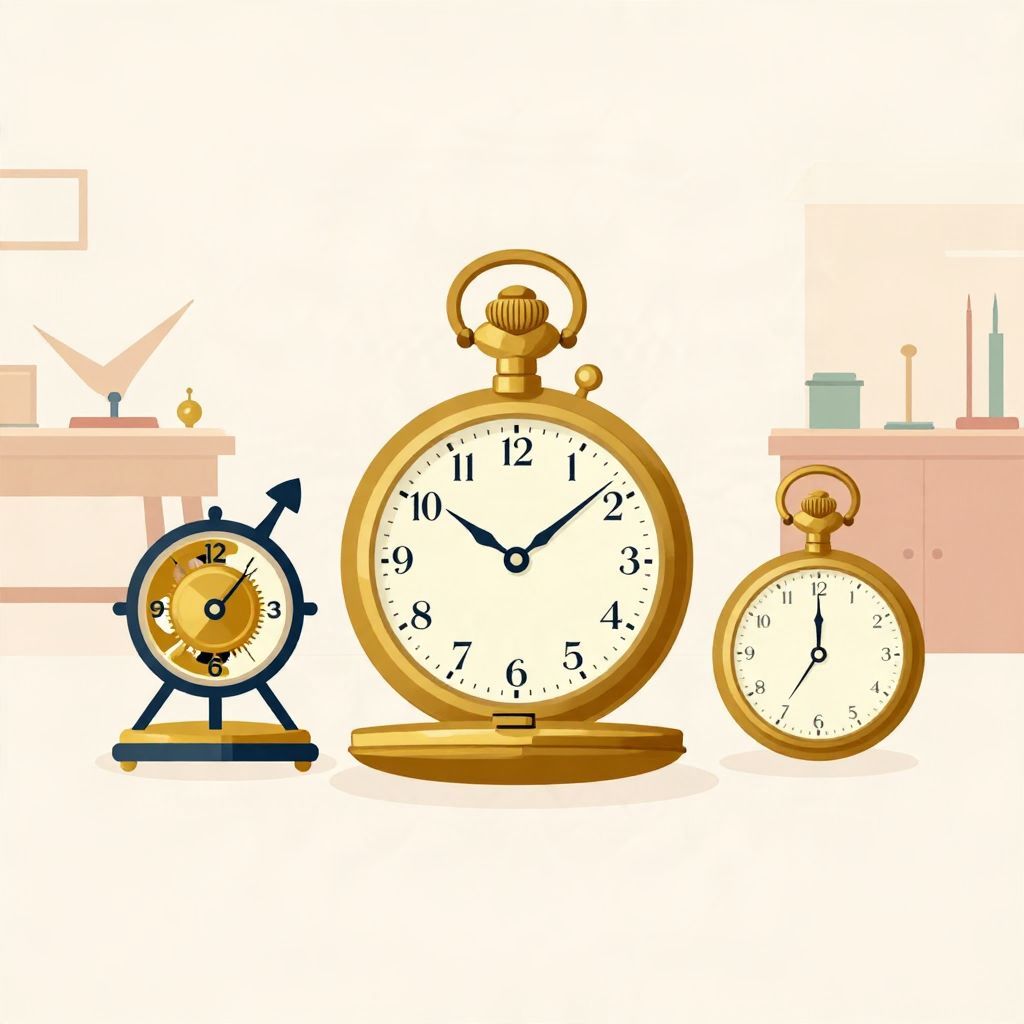
When were watches invented? The short answer is that portable timekeeping began in the early 16th century, when spring-driven clock mechanisms made it possible to shrink clocks into wearable objects. The first true watches appeared in Europe, especially in German-speaking regions, around the 1500s.
But the story is more complicated than a single invention date. Early watches were bulky, inaccurate, and more like tiny clocks than the slim wristwatches we know today. Their development stretched across centuries, from pocket watches to wristwatches and finally to mass-produced modern timepieces.
When were watches invented?
Watches were invented in the early 16th century, with the first portable spring-driven timepieces appearing in Europe around 1500 to 1510. These early watches were usually worn as pendants or carried, not strapped to the wrist. The modern wristwatch came much later, becoming common only in the late 19th and early 20th centuries.
The first watches: from clocks to portable timepieces
To understand when watches were invented, it helps to start with clocks. Medieval Europe had large mechanical clocks by the late 13th and 14th centuries, but they were fixed in towers and public buildings. The key breakthrough was the mainspring, a coiled spring that could store energy in a much smaller space than the weights used in tower clocks. That made portability possible.
Why the mainspring mattered
Before the mainspring, most mechanical clocks depended on heavy weights and vertical space. A spring-driven mechanism could fit inside a small case, which was essential for a wearable or pocket-sized timekeeper. This innovation did not instantly produce accurate watches, but it did create the basic technology needed for them.
Who invented the first watch?
There is no single universally accepted inventor of the watch. Historical evidence points to craftsmen in early 16th-century Europe, especially in Germany and neighboring regions, who were among the first to make spring-driven portable clocks. Names such as Peter Henlein are often linked to the invention, but the popular claim that he invented the watch is too simple. He was an important early maker, yet portable timepieces were likely developed by several artisans working in the same period.
What did the earliest watches look like?
The first watches were not sleek or precise. They were often round, metal, and relatively large, sometimes worn on a chain or carried in a pocket-like pouch. Because early springs delivered uneven power, these watches were not very accurate. Many had only an hour hand, and some were more decorative than practical.
Early watches were status symbols
In the 1500s and 1600s, watches were luxury objects for the wealthy. They were expensive, handmade, and often richly ornamented. Owning one signaled status as much as a need to tell time. In this sense, the early watch was as much a jewel or curiosity as a tool.
How watches improved over time
After the first portable watches appeared, centuries of refinement followed. Watchmakers improved the movement, the case, the balance wheel, and the escapement. These changes gradually made watches smaller, more durable, and more accurate. The history of watches is therefore not a single invention but a long chain of technical advances.
Key developments in watchmaking
- 16th century: Spring-driven portable watches emerge in Europe.
- 17th century: Watchmakers improve design and begin making smaller cases.
- Late 17th century: Better regulation mechanisms increase accuracy.
- 18th century: Precision watchmaking advances, especially in Britain, France, and Switzerland.
- 19th century: Mass production makes watches more affordable.
- Late 19th to early 20th century: Wristwatches become practical and popular.
The balance spring and better accuracy
One of the most important improvements was the balance spring, which helped regulate the motion of the watch. This made timekeeping far more reliable. By the 18th century, watchmakers were producing increasingly accurate watches, and precision timekeeping became important for navigation, science, and commerce.
When did wristwatches appear?
Although watches were invented in the 1500s, wristwatches are much newer. They began as decorative items for women in the 18th and 19th centuries, but they were not yet standard everyday tools. The wristwatch became widely accepted for practical use in the late 1800s and especially during the First World War, when soldiers needed a hands-free way to check the time.
Why the wristwatch took so long to catch on
For a long time, pocket watches were considered the proper form of portable timekeeping for men, while wrist-worn timepieces were often seen as ornamental. War changed that. In the trenches and on the battlefield, speed and convenience mattered more than tradition. After the war, wristwatches spread quickly into civilian life.
The social history of watches
Watches changed more than personal convenience. They helped reshape daily life by making time more exact, portable, and socially important. As watches became cheaper and more reliable, punctuality became a larger part of work, travel, and public life. In that sense, the history of watches is also the history of modern time discipline.
From luxury object to everyday tool
In the beginning, watches belonged to elites. Over time, industrial production and technical standardization made them accessible to ordinary people. This shift mirrored wider changes in modern society: factories, railways, timetables, and organized work all depended on more precise timekeeping.
So, what is the best answer to “When were watches invented?”
If you mean the first portable watches, the best answer is around the early 1500s. If you mean the modern wristwatch, the answer is the late 19th century into the early 20th century. Both answers are correct depending on how narrowly you define “watch.”
A simple timeline
- Late Middle Ages: Large mechanical clocks appear in Europe.
- Early 1500s: Spring-driven portable watches emerge.
- 1600s–1700s: Watches become smaller and more accurate.
- 1800s: Pocket watches are common; wristwatches begin to appear.
- 1900s: Wristwatches become the dominant form of personal timekeeping.
Why the exact date is hard to pin down
Historians are cautious about giving a single “invention date” because watches developed gradually. Different craftsmen contributed improvements, and surviving examples are limited. The earliest portable timepieces were experimental and varied in design. That is why the origin of the watch is usually described as an early-16th-century development rather than a one-day invention.
The lasting significance of the watch
The invention of watches helped make time personal. Instead of relying only on church bells, town clocks, or the sun, people could carry time with them. That portability mattered for travel, trade, military coordination, and eventually industrial society. Watches also became symbols of craftsmanship, precision, and modernity.
So, when were watches invented? The first watches appeared in Europe in the early 1500s, but the familiar wristwatch is a much later development. If you want to explore other inventions and how they evolved over time, you may also enjoy reading about when the violin was invented and when walkie-talkies were invented.