
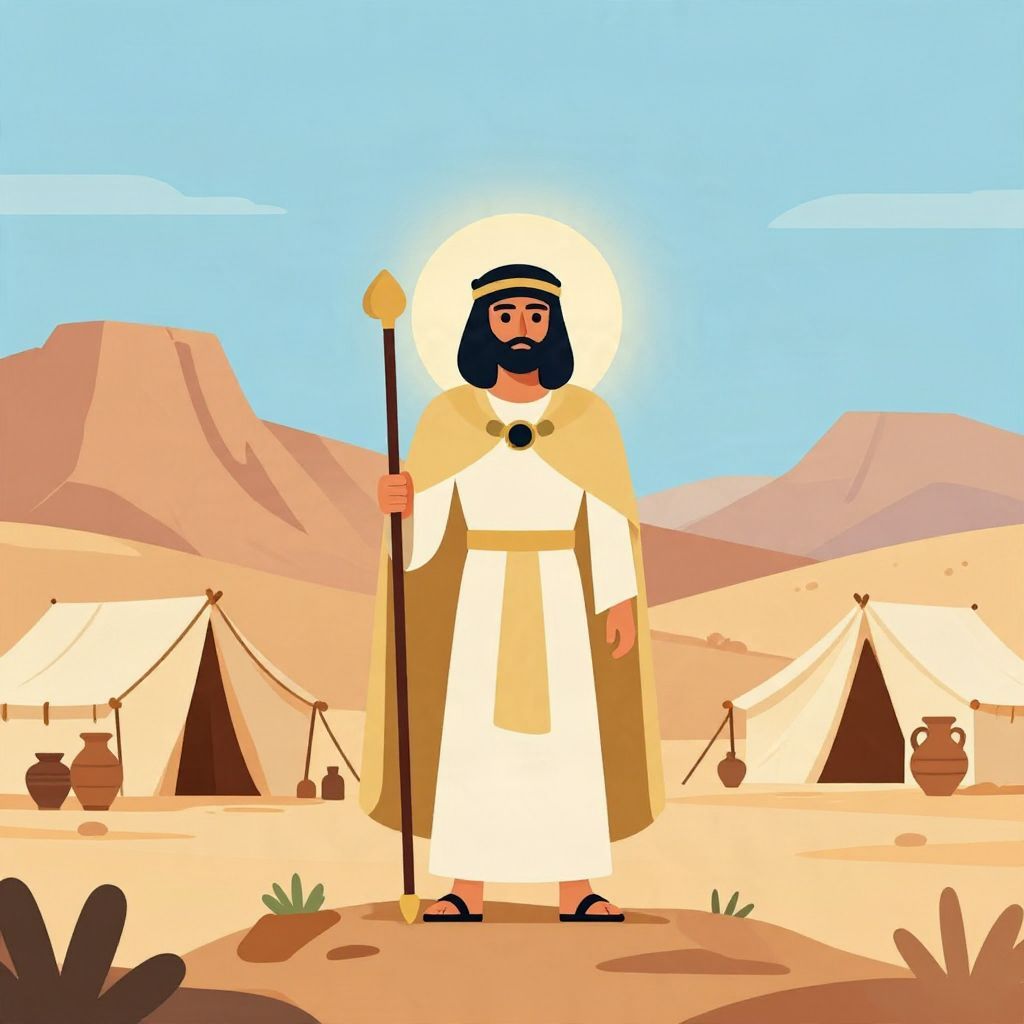
What did Moses look like? The honest historical answer is that we do not know. Moses is a central figure in the Hebrew Bible, but there is no surviving contemporary portrait, statue, or written description that can reliably tell us his exact appearance.
What we can say is that later Jewish, Christian, and Islamic traditions imagined Moses in ways shaped by their own times. Historians can describe the world he is traditionally placed in, but not his precise face, height, or clothing with certainty.
What Did Moses Look Like?
There is no historically verified physical description of Moses. The Bible does not give his height, hair color, eye color, or facial features. Any image of Moses today is therefore an interpretation, not a confirmed likeness, and most later depictions reflect religious art rather than ancient evidence.
Why We Cannot Know Moses’s Exact Appearance
Moses is usually dated by tradition to the Late Bronze Age, roughly the second millennium BCE, but even that chronology is debated. If he was a historical person, he lived long before portrait art, photography, or detailed biographical description became common, and no archaeological find has identified him with certainty.
What the sources do and do not say
The main ancient texts about Moses are religious writings, especially the books of Exodus, Leviticus, Numbers, and Deuteronomy. These texts focus on Moses’s role as leader, lawgiver, and prophet, not on his appearance. They describe his voice, authority, and relationship with God far more than his body.
That silence matters. In ancient literature, authors often omitted physical description unless it served a narrative purpose. Since Moses was presented primarily as a spiritual and political leader, his looks were not treated as important information. As a result, later readers filled in the gap with imagination.
What the Bible Suggests About Moses
The Hebrew Bible gives only indirect clues. It says Moses was raised in Pharaoh’s household, fled Egypt, lived in Midian, and later returned to confront Pharaoh. These details imply that he moved between Egyptian and West Semitic cultural settings, but they do not prove how he looked.
The one famous physical detail: his face
One of the best-known passages about Moses says that after speaking with God, his face shone or radiated. In some translations, this is described as “the skin of his face” shining; in others, Moses is said to wear a veil afterward. This is not a normal portrait detail, but a symbolic sign of divine encounter.
Because of this passage, many artists portrayed Moses with a luminous or serious expression. Yet the text is about holiness and authority, not a literal facial reconstruction. It tells us how ancient writers wanted Moses to be understood, not exactly how he appeared in everyday life.
How Ancient Egyptians and Levantines May Have Looked
If Moses was historically rooted in the eastern Mediterranean world of the second millennium BCE, he likely shared the general appearance of people from that region. That means he would probably have looked like other ancient Egyptians, Canaanites, or Semitic-speaking peoples of the Levant rather than like later European artistic versions.
Probable general features, not a portrait
- Dark hair was common in the region.
- Brown eyes were likely more common than light-colored eyes.
- Skin tone would probably have been medium to brown, depending on ancestry and environment.
- Clothing would have been practical, made from linen, wool, or leather.
- A beard would have been common among adult men, though styles varied by culture and status.
These are broad historical probabilities, not facts about Moses personally. They simply reflect what is known about ancient populations in Egypt and the Near East. A person living in that world could still have looked different from the norm because of family background, migration, or local custom.
Why Moses Is Often Shown With a Beard and Staff
Most images of Moses come from later religious art. Artists needed recognizable symbols, so they gave him a beard, a staff, tablets of the law, and sometimes horns or rays of light. These features helped viewers identify him instantly, especially in churches, manuscripts, and paintings.
The beard as a symbol of wisdom and age
A beard became a standard way to show Moses as an authoritative elder. In many artistic traditions, a long beard communicated wisdom, seriousness, and closeness to divine law. This convention became so strong that many people now imagine Moses with a beard as if it were a historical fact.
The staff and tablets
The staff represents leadership, travel, and miraculous power, while the tablets represent the law given at Sinai. These are among the most common visual attributes of Moses, but they are symbols of his story, not evidence about his actual physique or clothing style.
The Horned Moses Tradition
One of the most surprising images of Moses in Western art shows him with horns. This did not come from an ancient claim that Moses had horns. It came from a Latin translation of the Bible that rendered a Hebrew phrase about Moses’s shining face in a way that could be read as “horned.”
How a translation shaped art
Medieval and Renaissance artists sometimes followed this translation literally, most famously in depictions by artists such as Michelangelo. The “horns” were usually small rays or symbolic projections, not demonic features. This tradition shows how a translation choice could shape popular imagination for centuries.
For historians, the horned Moses is an excellent example of how religious art can preserve interpretation rather than fact. It tells us more about medieval reading practices and artistic conventions than about Moses’s actual appearance in antiquity.
What Scholars Say About Moses’s Historical Identity
Scholars disagree about whether Moses was a single historical figure, a composite of traditions, or a largely legendary founder figure. Because the evidence is limited, historians cannot reconstruct his exact biography with confidence. That uncertainty also affects any attempt to describe his appearance.
Historical caution is necessary
Some scholars think the Moses story may preserve memories of real experiences among early Israelite groups in Egypt or the Sinai region. Others argue that the figure of Moses was shaped over time to explain law, identity, and liberation. In either case, the sources do not preserve a reliable physical description.
So the most careful answer is simple: Moses may have been a real person, but his appearance is unknown. Any confident claim about his face, body, or complexion goes beyond the evidence.
How Later Traditions Imagined Moses
Different faith traditions emphasized different aspects of Moses, and those emphases influenced how he was depicted. Jewish art often highlighted his role as lawgiver and prophet. Christian art frequently connected him to the Ten Commandments and to prefigurations of Christ. Islamic tradition honors Musa as a major prophet, though visual representation is handled differently across cultures.
Common themes across traditions
- Moses as an older, authoritative man
- Moses as a leader carrying a staff
- Moses as a receiver of divine law
- Moses as a figure marked by holiness rather than beauty
These recurring themes shaped the “look” of Moses in cultural memory. In other words, people remembered what Moses meant more than what he physically looked like. That is why his image became standardized even though his actual features remain unknown.
What Can Be Said with Confidence
Historically, the safest conclusion is that Moses’s exact appearance cannot be recovered. He is not known from a portrait, inscription, mummy, or verified archaeological context. The best evidence allows only broad cultural inference, not a personal description.
Reliable conclusions in brief
- Moses’s physical appearance is not described in detail in the main ancient texts.
- Later art and tradition created the familiar image of an older bearded man.
- Some depictions, including horned images, came from translation history and symbolism.
- Any reconstruction of Moses’s face is speculative, not proven fact.
Why the Question Still Matters
People ask what Moses looked like because visualizing historical figures makes them feel more real. That is understandable, especially for someone as influential as Moses, whose story shaped Judaism, Christianity, and Islam. But the absence of a confirmed image is itself historically important.
It reminds us that many ancient figures survive not as photographs of their lives, but as traditions built over centuries. Moses’s enduring significance comes from the ideas attached to him: liberation, covenant, law, and leadership. His exact appearance remains unknown, but his historical and religious impact is unmistakable.
In the end, the most accurate answer to what did Moses look like is that we do not know, and no trustworthy source can tell us for sure. If you want to explore more about his life story, see when Moses was born and how Moses died.