
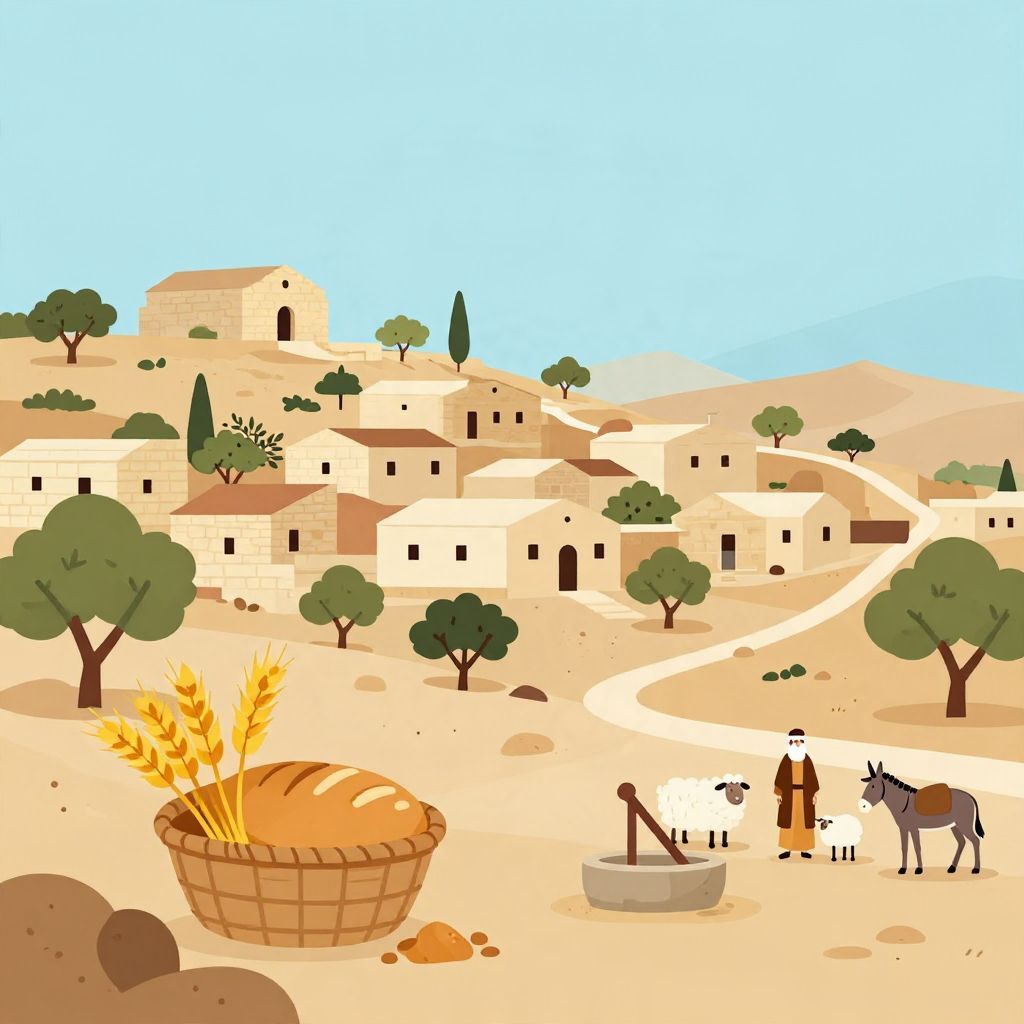
What does Bethlehem mean? In the most common historical and linguistic sense, Bethlehem means “house of bread.” The name comes from Hebrew, and it reflects how ancient place names often described a settlement’s landscape, resources, or identity. Over time, Bethlehem became far more than a geographic label: it grew into one of the best-known towns in biblical history.
Its meaning matters because Bethlehem sits at the crossroads of language, religion, and memory. The town’s name has been interpreted through Hebrew, Aramaic, Greek, and later Christian tradition, and its significance expanded as biblical narratives, pilgrimage, and history gave it global fame.
What Does Bethlehem Mean?
Bethlehem is usually understood to mean “house of bread” from the Hebrew bet lehem. Some scholars also note that the same root can be connected with “food” more broadly, while in related Semitic usage the second element may have had different nuances in earlier periods. The standard historical explanation, however, is “house of bread.”
The Linguistic Origin of the Name Bethlehem
Hebrew roots and place-name formation
The name Bethlehem is traditionally explained as two Hebrew elements: beth, meaning “house,” and lechem, meaning “bread.” This kind of compound place name was common in the ancient Near East. It did not always describe a literal building full of bread; instead, it could point to a productive agricultural area, a settlement associated with grain, or simply an inherited local name that later speakers understood symbolically.
Because ancient languages changed over centuries, scholars are careful about treating any single translation as absolutely fixed. The “house of bread” reading is the most established and widely accepted, but historical linguistics also reminds us that names can carry layers of meaning. A place name may preserve an old usage even when the everyday language around it has shifted.
Why the meaning matters historically
Bread was a basic staple in the ancient Levant. A town associated with bread would have suggested fertility, sustenance, and settled life in contrast to wilderness or pastoral movement. That makes the name Bethlehem especially fitting in a region where agriculture, grain production, and local water sources were crucial to survival.
Where Is Bethlehem, and Why Was It Important?
Bethlehem is located in the hill country south of Jerusalem, in the area historically known as Judea. In the biblical period, it was a small town rather than a major city. Its importance came less from size than from its location, its agricultural setting, and the stories attached to it in Jewish and later Christian tradition.
Archaeologically and historically, Bethlehem was part of the wider network of settlements in ancient Judah. Like many towns in the region, it likely depended on local farming, herding, and access to nearby routes connecting the highlands with Jerusalem and the southern countryside.
Bethlehem in the Hebrew Bible
Ruth, Boaz, and the agricultural setting
One of the best-known biblical associations with Bethlehem appears in the Book of Ruth. The story is set during the barley harvest, which reinforces the town’s agricultural identity. Ruth’s arrival in Bethlehem during harvest time fits the meaning “house of bread” particularly well, since grain and bread were central to daily life.
The book also links Bethlehem to the family line of King David through Ruth and Boaz. This connection became especially important later, because David’s association with Bethlehem helped elevate the town’s status in Jewish memory.
David’s hometown
Bethlehem is described in biblical tradition as the hometown of David, Israel’s second king. The town’s association with David became one of the main reasons it remained historically significant. In later Jewish and Christian interpretation, Bethlehem was not just a village in Judah; it was the place linked to a foundational royal figure.
That association shaped how people remembered the town. A small settlement could become symbolically large when tied to kingship, ancestry, and divine promise. For this reason, Bethlehem’s meaning is both linguistic and historical: it is a name about bread, but also a name embedded in national memory.
Bethlehem in Christian History
The birthplace of Jesus in tradition
In the New Testament, Bethlehem became famous as the traditional birthplace of Jesus. The Gospels of Matthew and Luke place Jesus’ birth there, linking the town to messianic expectation and the lineage of David. This association transformed Bethlehem into one of the most important places in Christian sacred geography.
Historically, scholars discuss the Gospel accounts carefully because they are theological texts as well as historical narratives. The tradition that Jesus was born in Bethlehem became central to Christian belief very early, even though ancient sources do not allow every detail to be verified in the modern historical sense. What is clear is that the Bethlehem tradition had enormous influence on later Christian devotion, art, and pilgrimage.
Why Christians emphasized Bethlehem
Bethlehem mattered to Christians because it connected Jesus to Davidic prophecy and to the idea of humble origins. A small town, rather than a royal capital, fit the theological message that greatness could emerge from obscurity. The town’s name, “house of bread,” also resonated symbolically in Christian interpretation, especially in relation to the Eucharist and the imagery of spiritual nourishment.
How Bethlehem’s Meaning Changed Over Time
From local settlement to sacred place
In antiquity, Bethlehem was probably known first as a local Judean town with an agricultural identity. Over time, its meaning expanded through scripture, tradition, and pilgrimage. What began as a place-name tied to bread and farming became a sacred landmark in Judaism and Christianity.
That shift is common in history. Many ancient towns acquired new meanings when later communities attached stories, holy figures, or political importance to them. Bethlehem’s linguistic meaning stayed the same, but its cultural significance grew dramatically.
Under Roman and Byzantine rule
By the Roman period, Bethlehem was part of a broader imperial world. After Christianity spread through the Roman Empire, Bethlehem became a major pilgrimage destination. Churches and religious institutions were built to honor the site associated with Jesus’ birth, and the town’s fame spread across the Mediterranean world.
The most famous of these was the Church of the Nativity, traditionally associated with the birthplace of Jesus. Its long history reflects how sacred geography can shape a town’s identity for centuries. Even when political control changed, Bethlehem remained important because pilgrims continued to visit it.
Common Misunderstandings About the Name Bethlehem
Is Bethlehem only a Christian name?
No. Bethlehem is much older than Christianity. Its name and early significance belong to the Hebrew Bible and the history of ancient Judah. Christianity later added a powerful layer of meaning, but the town’s origins are rooted in the ancient Near East.
Does “house of bread” mean there was a bakery there?
Not necessarily. Historical place names are often symbolic or descriptive rather than literal. “House of bread” probably points to agricultural abundance, grain production, or a settlement known for food supply. It does not mean the town was literally a single house or a market full of loaves.
Could the meaning be different?
Some scholarly discussion exists around ancient Semitic language forms, but the standard and most widely accepted meaning remains “house of bread.” When historians and linguists discuss alternatives, they usually do so as refinements of nuance rather than complete replacements for the traditional explanation.
Why Bethlehem Still Matters Today
Bethlehem remains historically important because it sits at the intersection of language, scripture, and memory. Its name preserves an ancient agricultural world, while its biblical associations shaped centuries of religious tradition. Few place names have carried so much meaning across so many eras.
For historians, Bethlehem is a reminder that a town’s significance can grow far beyond its size. For readers asking what Bethlehem means, the direct answer is “house of bread,” but the fuller historical answer is that the name became a symbol of sustenance, ancestry, prophecy, and sacred history.
For more on biblical place names and language, see what Gethsemane means and the original language of the Bible.