
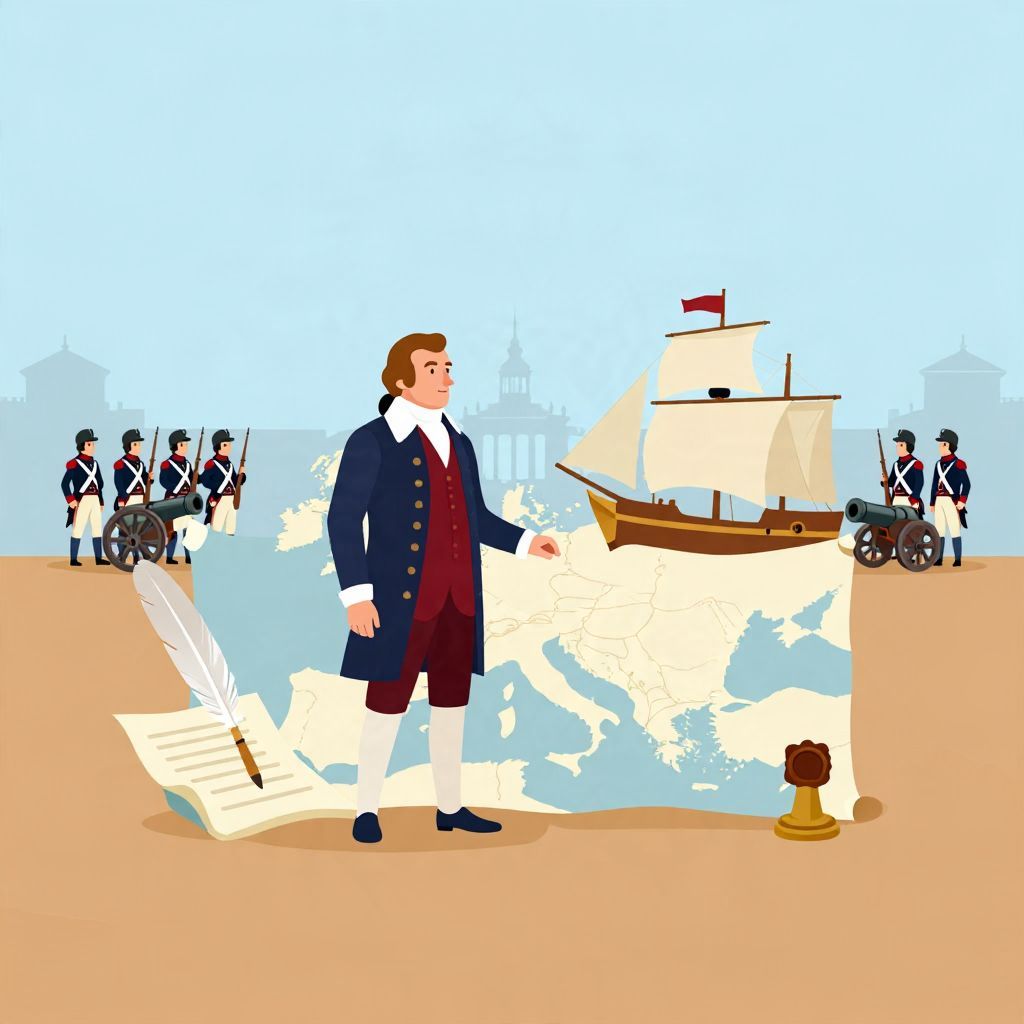
What happened in 1803? A great deal. It was a year of territorial expansion, diplomatic reshaping, and scientific and cultural change, especially in Europe and North America. The most famous event was the Louisiana Purchase, but 1803 also saw war resume between Britain and Napoleonic France, major political developments in the United States, and important steps in exploration, law, and literature.
In short, 1803 helped set the course of the 19th century. It changed the map of North America, strengthened Napoleon’s power in Europe, and marked a turning point in the relationship between the young United States and the wider Atlantic world.
What happened in 1803?
In 1803, the United States doubled its size through the Louisiana Purchase, Britain and France returned to war after a brief peace, and Napoleon Bonaparte consolidated his authority in France. The year also brought the start of the Lewis and Clark expedition, the abolition of the slave trade in Britain’s empire was debated and advanced, and several important cultural and scientific developments took place across the world.
The Louisiana Purchase changed North America
The single most important event of 1803 was the Louisiana Purchase. On April 30, 1803, the United States agreed to buy the Louisiana Territory from France for about $15 million. The deal transferred a vast region stretching from the Mississippi River to the Rocky Mountains, effectively doubling the size of the country.
Why France sold Louisiana
Napoleon had inherited Louisiana from Spain only a short time earlier, but he faced rising military costs and the difficulty of defending a distant colony. After the failure of French efforts to reassert control in the Caribbean, especially in Saint-Domingue, he chose to sell Louisiana rather than risk losing it to Britain in a future war. For the United States, the purchase solved a major strategic problem: access to the port of New Orleans and free navigation on the Mississippi River.
Why the purchase mattered
The Louisiana Purchase was not just a land deal. It accelerated westward expansion, intensified disputes over Native lands, and raised constitutional questions about whether the federal government had the power to acquire territory by treaty. In practice, President Thomas Jefferson accepted the purchase as a rare opportunity that outweighed his doubts. The consequences would shape American politics for generations.
War resumed between Britain and France
Another major development in 1803 was the collapse of the Peace of Amiens. On May 18, 1803, Britain declared war on France, ending a short-lived peace and beginning the Napoleonic Wars in earnest. Europe was again drawn into a long struggle over power, trade, and imperial influence.
Why the peace failed
The Peace of Amiens, signed in 1802, had paused hostilities but did not resolve the deeper rivalry between Britain and France. Mutual distrust remained high. Britain worried about Napoleon’s expansion and French influence in the Low Countries and Italy, while France resented British interference and the refusal to fully evacuate certain territories. By 1803, both sides were preparing for renewed conflict.
What the renewed war meant
The return to war had global consequences. Naval fighting and economic blockade became central to the conflict, and Britain’s maritime power would prove crucial. The war also affected colonies, trade routes, and neutral states, including the United States. For many people in Europe, 1803 marked the beginning of a decade of instability and mobilization.
Napoleon strengthened his rule in France
In 1803, Napoleon continued transforming France from a revolutionary republic into a more centralized authoritarian state. He was already First Consul, and his authority was growing rapidly. The political atmosphere of the year reflected both revolutionary legacy and personal rule.
Political consolidation and reform
Napoleon used law, administration, and patronage to build a stronger state. The administrative reforms of the early Napoleonic period, including a more efficient bureaucracy and legal standardization, were part of a larger effort to stabilize France after years of revolution. Although the French Revolution had overthrown the old regime, Napoleon increasingly concentrated power in his own hands.
Toward empire
1803 was also a stepping-stone toward Napoleon’s proclamation as Emperor in 1804. The year showed how revolutionary France had moved from radical upheaval to a more controlled political order. That shift mattered not only for France but for Europe as a whole, because Napoleon’s ambitions would soon reshape the continent.
The Lewis and Clark expedition began
In the United States, 1803 was the year that preparations intensified for the Lewis and Clark expedition. After the Louisiana Purchase, Jefferson wanted to learn more about the new territory, its geography, peoples, plants, animals, and possible trade routes to the Pacific.
Why the expedition was launched
Jefferson had long supported western exploration. The purchase made that interest urgent. He appointed Meriwether Lewis to lead the expedition, with William Clark as co-leader. Although the expedition did not set out until 1804, 1803 was the crucial planning year in which the United States began turning a diplomatic acquisition into a practical project of exploration and mapping.
Long-term significance
The expedition would become one of the most famous in American history, but it also had a harder side. Exploration opened the door to settlement, military presence, and dispossession of Indigenous peoples. The year 1803 therefore stands at the beginning of both scientific discovery and colonial expansion in the American West.
Important events in Britain and the wider Atlantic world
Beyond the headline events, 1803 was full of developments that reflected the age’s broader changes in politics, empire, and society. Some were directly tied to war; others were part of long-term reform and debate.
Britain and the slave trade debate
In Britain, the campaign against the slave trade was gaining strength. The abolitionist movement had been active for years, and 1803 fell within the period when Parliament and public opinion were increasingly pressured to confront the moral and economic arguments surrounding slavery. The trade itself would not be abolished in the British Empire until 1807, but 1803 belongs to the crucial buildup to that decision.
Colonial and commercial consequences
The renewed war between Britain and France disrupted shipping and trade across the Atlantic. Merchants, sailors, and colonial administrators all felt the effects. Sea power, blockades, and access to ports became central issues, linking events in Europe to daily life in the Americas, Africa, and Asia.
Science, culture, and everyday life in 1803
History in 1803 was not only made by treaties and armies. It was also shaped by intellectual and cultural life. The early 1800s were a period of scientific curiosity, literary creativity, and changing social habits.
Science and discovery
Natural history and exploration were flourishing. Governments and learned societies were increasingly interested in cataloging plants, animals, and landscapes, especially in newly explored regions. The age of Enlightenment inquiry had not disappeared; instead, it was merging with imperial expansion and state power.
Culture and literature
1803 also belonged to the Romantic era in literature and art. Writers and thinkers across Europe were reacting to revolution, war, and industrial change by emphasizing emotion, nature, and individual experience. While no single cultural event defines the year, 1803 sits within a broader shift in taste and thought that would influence the rest of the century.
A short timeline of major events in 1803
- April 30 – The United States and France agree to the Louisiana Purchase.
- May 18 – Britain declares war on France, ending the Peace of Amiens.
- 1803 – Planning advances for the Lewis and Clark expedition.
- 1803 – Napoleon continues consolidating power in France.
- 1803 – Atlantic trade, colonial policy, and abolitionist debate continue to intensify.
What was the aftermath of 1803?
The aftermath of 1803 was enormous. In the United States, the Louisiana Purchase opened the way for rapid territorial growth, new states, and deeper conflict over slavery and Native sovereignty. In Europe, the renewed war between Britain and France led to years of fighting that culminated in Napoleon’s rise and eventual downfall. The year 1803 did not simply record events; it launched processes that defined the 19th century.
For the United States
The purchase made the country larger, more ambitious, and more divided over the meaning of expansion. It strengthened the federal government and encouraged the idea of continental growth, but it also intensified tensions over who would control new lands and who would be displaced by settlement.
For Europe
The return to war marked the beginning of a much larger struggle. Britain’s naval dominance, France’s military power, and Napoleon’s ambitions would dominate European politics for more than a decade. The conflict also spread through alliances, colonies, and trade networks, making 1803 a turning point in global history.
So, what happened in 1803? It was the year the United States transformed its future through the Louisiana Purchase, Britain and France returned to war, and Napoleon’s power continued to grow. If you want to place 1803 in the broader story of early American expansion, see what the Northwest Ordinance was and how it shaped western settlement, and explore what the Homestead Act was as a later chapter in the history of land and expansion.