
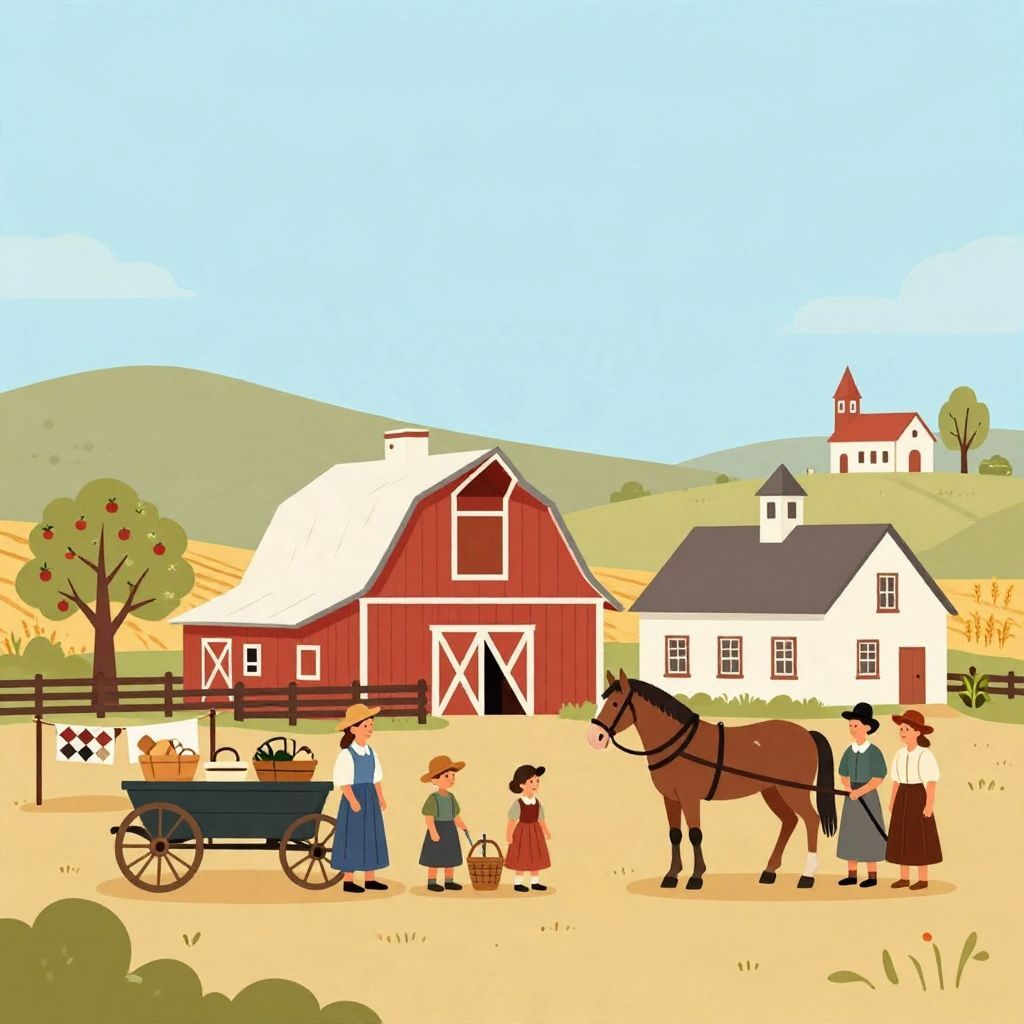
What is Pennsylvania Dutch? The short answer is that it refers not to people from the Netherlands, but to a German-speaking ethnic group in Pennsylvania and neighboring regions, descended mainly from immigrants who arrived in the 1700s. The term has long confused outsiders because “Dutch” is an older English form related to “Deutsch,” meaning German.
Today, Pennsylvania Dutch identity is associated with distinctive dialects, religious communities, farm traditions, foodways, and a strong sense of cultural continuity. Its history is tied to migration from central Europe, colonial Pennsylvania’s religious tolerance, and the ways immigrant communities preserved language and custom in America.
What Is Pennsylvania Dutch?
Pennsylvania Dutch is a cultural and linguistic term for descendants of German-speaking immigrants who settled in Pennsylvania, especially in the 18th century. Despite the name, they are generally not Dutch; the word “Dutch” in this context comes from “Deutsch.” The group includes several traditions, from Lutheran and Reformed families to Amish and Mennonite communities.
The term can describe both the people and the dialect they speak, often called Pennsylvania German or Pennsylvania Dutch. In everyday use, it usually refers to a broad regional heritage rather than a single religion or a single ethnic background.
Where Did the Name “Pennsylvania Dutch” Come From?
“Dutch” once meant “German” in English usage
The name is a historical language problem. In early modern English, “Dutch” could be used more broadly than it is today, and English speakers sometimes used it in ways connected to German-speaking peoples. Over time, “Pennsylvania Dutch” stuck as a community label, even after “Dutch” came to mean specifically the people of the Netherlands.
Why the name survived
The term persisted because the communities themselves, and their English-speaking neighbors, kept using it for generations. By the 19th century, it had become a regional identity marker in Pennsylvania. Although some people now prefer “Pennsylvania German,” “Pennsylvania Dutch” remains the best-known historical name.
Who Are the Pennsylvania Dutch?
The Pennsylvania Dutch are descendants of immigrants from German-speaking parts of Europe, especially the Palatinate, Switzerland, Alsace, and other regions of the Holy Roman Empire. They were not one single nationality in the modern sense, but a mix of related dialect groups and religious communities who shared language and many customs.
Not all Pennsylvania Dutch people belong to the Amish or Mennonite churches, though those groups are among the most visible today. Many were and are Lutheran, Reformed, or members of other Protestant traditions. What linked them historically was language, migration, settlement patterns, and a shared regional culture.
How Did Pennsylvania Dutch Culture Begin?
Pennsylvania Dutch culture began with migration to colonial Pennsylvania in the late 1600s and especially the 1700s. The colony attracted German-speaking settlers because it offered land, religious toleration, and economic opportunity. William Penn’s colony had a reputation for relative openness compared with many parts of Europe, where war, taxation, and religious conflict had made life uncertain.
Immigrants arrived in waves, often through Philadelphia, then moved inland into southeastern and south-central Pennsylvania. Once settled, they built farms, churches, schools, and kinship networks that helped preserve language and custom across generations.
Major reasons for migration
- Religious pressure in parts of Europe
- War and instability in the Rhineland and nearby regions
- Land shortages and economic hardship
- Attraction to Pennsylvania’s farmland and relative tolerance
When Did Pennsylvania Dutch Immigration Happen?
The largest period of Pennsylvania Dutch immigration was roughly from the late 17th century through the American Revolution, with the 18th century especially important. Many arrivals came after 1700, and the flow continued in smaller numbers into the early 19th century.
Some immigrants came directly from Europe, while others first lived in other colonies or in coastal towns before moving westward within Pennsylvania. Over time, German-speaking settlement spread beyond Pennsylvania into nearby areas such as Maryland, Virginia, and Ohio, but Pennsylvania remained the symbolic center of the culture.
What Language Do Pennsylvania Dutch Speak?
The traditional language is Pennsylvania German, often called Pennsylvania Dutch. It is a German dialect that developed among immigrant communities in North America and differs from standard modern German. It was once widely spoken in homes, churches, and local communities, especially in rural areas.
Many speakers today are bilingual or use the dialect mainly in family and religious settings. Among Amish communities, especially, Pennsylvania Dutch remains an important everyday language, though English is also widely used. The dialect has survived because of community continuity, especially where children grow up in close-knit settings.
Language facts at a glance
- It is not a form of Dutch from the Netherlands
- It is closely related to German dialects brought by immigrants
- It developed in North America over generations
- It remains strongest in some Amish and Mennonite communities
What Religion Is Associated with Pennsylvania Dutch History?
Pennsylvania Dutch history is closely connected to Protestant Christianity, but it is not defined by one denomination. Lutheran and Reformed churches were common among early settlers, reflecting the religious landscape of German-speaking Europe. Later, Anabaptist groups such as the Amish and Mennonites became especially well known.
The Amish and Mennonites emphasized plain living, community discipline, and separation from some aspects of modern society. Their visibility has often shaped the public image of Pennsylvania Dutch culture, though they represent only part of the broader historical population.
Important religious traditions
- Lutheran communities
- Reformed communities
- Mennonite congregations
- Amish settlements
What Makes Pennsylvania Dutch Culture Distinctive?
Pennsylvania Dutch culture is known for its blend of European inheritance and American adaptation. It includes distinctive folk art, farm architecture, food traditions, religious customs, and dialect. Over time, these features became markers of identity in a region where German-speaking settlers lived alongside English, Scots-Irish, and other immigrant groups.
Some cultural traits are widely recognized, but it is important not to flatten the group into stereotypes. Pennsylvania Dutch communities have never been identical. Their customs varied by county, denomination, and family background, and they changed over time as people interacted with broader American society.
Commonly associated cultural features
- Hex signs and decorative folk art
- Farm traditions and barn architecture
- Distinctive foods such as scrapple, chow-chow, and shoofly pie
- Dialect words and expressions
- Community-centered religious life
How Did Pennsylvania Dutch Identity Change Over Time?
In the 18th and early 19th centuries, Pennsylvania Dutch communities were often more linguistically separate than they are today. German was used in churches, newspapers, and local life. But as English became dominant in the United States, many families shifted to English, especially in cities and among later generations.
This language shift did not erase identity. Instead, Pennsylvania Dutch heritage became more selective and symbolic. Some traditions survived in family practice, church life, and regional foodways, while others faded. In the 20th century, tourism and popular culture also reshaped how outsiders imagined the group, sometimes reducing a complex history to a few familiar images.
Key stages in the change
- Immigration and settlement in colonial Pennsylvania
- Growth of German-language communities in the 1700s
- Gradual English-language shift in the 1800s and 1900s
- Preservation of some traditions in Amish and Mennonite life
- Modern heritage identity and regional tourism
Are Pennsylvania Dutch and Dutch the Same Thing?
No. Pennsylvania Dutch are not the same as people from the Netherlands, and the culture is not primarily Dutch in the modern national sense. The historical confusion comes from older English usage of the word “Dutch,” which could overlap with “Deutsch.” The heritage is overwhelmingly tied to German-speaking Europe.
This distinction matters because it helps explain the group’s origins more accurately. The Pennsylvania Dutch are best understood as a German-American ethnic and cultural community shaped by migration, settlement, and long-term adaptation in North America.
Why Does Pennsylvania Dutch History Matter?
Pennsylvania Dutch history matters because it shows how immigrant communities can preserve language and identity while also changing over time. It is a strong example of how religion, migration, and local settlement patterns shaped American regional culture long before the United States became a modern industrial nation.
It also reminds us that American identity has always been multilingual and multicultural. The Pennsylvania Dutch story is not just about one group in one state; it is about how people from Europe built new lives in colonial America and left a lasting imprint on language, religion, food, and rural life.
Key Facts About Pennsylvania Dutch
- Meaning: A German-speaking ethnic and cultural group in Pennsylvania and nearby regions
- Name origin: “Dutch” comes from older English usage related to “Deutsch”
- Main immigration period: Late 1600s through the 1700s
- Language: Pennsylvania German / Pennsylvania Dutch dialect
- Associated communities: Lutheran, Reformed, Mennonite, Amish, and others
- Core region: Pennsylvania, especially southeastern and south-central areas
So, what is Pennsylvania Dutch? It is a historically German-speaking American community with roots in colonial migration, religious diversity, and regional persistence. Understanding the term means looking past the misleading name and seeing a long story of settlement, adaptation, and cultural survival. For related context, you may also want to read about cultural divergence and American imperialism.