
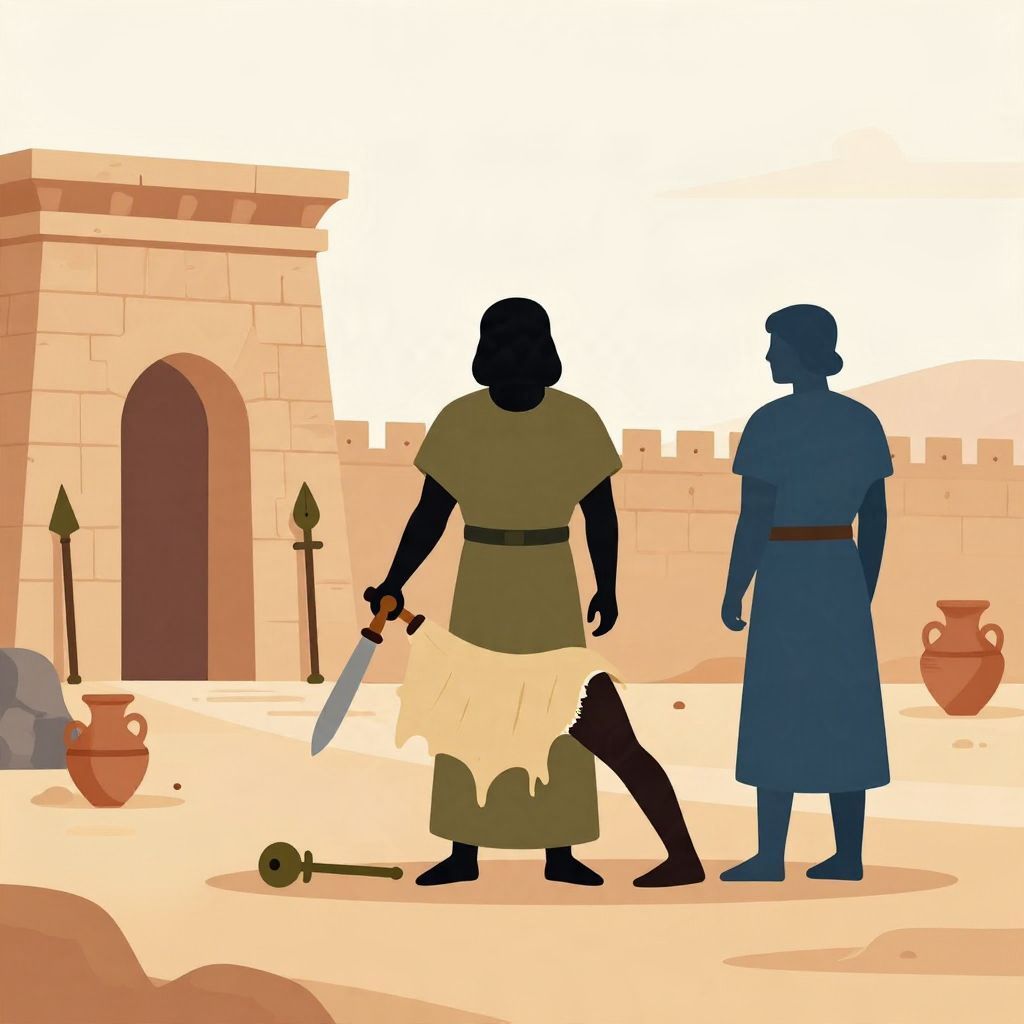
What is flaying? In historical terms, it is the removal of skin from a living or dead body, usually as a form of execution, punishment, intimidation, or ritualized violence. Because the practice appears in many societies across time, it has to be understood as both a physical act and a cultural symbol of extreme power.
Flaying is remembered today mainly for its brutality, but its history is broader than horror alone. It appears in ancient imperial warfare, legal punishments, religious stories, and political propaganda, where rulers used it to terrify enemies and display authority.
What Is Flaying?
Flaying is the deliberate removal of skin from a person or animal. Historically, when the word is used in a human context, it usually refers to a severe punishment or execution method in which skin was stripped from the body, either before death or after it. It was rare in everyday law but notorious in periods of conquest and terror.
Background and Historical Meaning
Flaying was never just about physical pain. In many premodern societies, the body was seen as a site of punishment, honor, shame, and political messaging. A ruler who ordered flaying was not only killing or mutilating an enemy; he was making a public statement about total domination. The act could be used against rebels, traitors, prisoners of war, or people accused of sacrilege.
Because the practice is so extreme, it often appears in sources that are themselves meant to shock. Ancient inscriptions, royal annals, and later chronicles sometimes describe flaying in dramatic language. That means historians must treat such accounts carefully: some may be literal, some exaggerated, and some intended to magnify a ruler’s fearsome reputation.
Where Did Flaying Come From?
There is no single origin of flaying. It seems to have emerged independently in different regions as an extreme form of punishment and sacrifice. The best-documented early examples come from the ancient Near East, especially among empires that emphasized terror as a tool of rule. It also appears in other cultural traditions, including parts of the Mediterranean, Central Asia, and Mesoamerica, though the evidence and meanings differ widely.
Ancient Near Eastern Empires
Some of the clearest historical references to flaying come from Assyria, particularly in the first millennium BCE. Assyrian royal inscriptions and reliefs present the practice as part of imperial punishment against enemies and rebels. The Assyrians were not unique in using severe violence, but their records are unusually explicit, which is one reason the practice is so strongly associated with them in modern memory.
In the ancient Near East, flaying could be used to reinforce a ruler’s image as unstoppable. It belonged to a wider repertoire of punishments that included impalement, mutilation, and mass deportation. These were not random acts of cruelty; they were methods of state terror in a world where empires often relied on fear to maintain control over conquered populations.
Other Ancient and Medieval Contexts
Flaying is also reported in Persian, Greek, Roman, and medieval sources, though the details vary. In some cases it was a legal penalty; in others it was a wartime atrocity attributed to an enemy. Classical writers sometimes used flaying stories to emphasize the cruelty of foreign rulers, which means the accounts may reflect political bias as well as historical reality.
In medieval Europe and the Islamic world, references to flaying are less common as formal law, but the practice still appears in chronicles, legends, and accounts of warfare. It remained a symbol of exceptional cruelty rather than a routine punishment. In many societies, the fact that it was remembered at all shows how deeply it violated ordinary norms of bodily integrity.
How Was Flaying Used Historically?
Flaying served several different purposes depending on time and place. It could be punitive, symbolic, ritualized, or propagandistic. The same act might be described as justice by one side and barbarity by another. Historians therefore study not only the act itself, but also who described it, for whom, and why.
As Punishment
In some states, flaying was used against high-status offenders or political enemies because ordinary execution was considered insufficient. The severity of the punishment was meant to match the perceived offense. In such settings, the body of the condemned became a public warning.
As a Weapon of Terror
Empires and armies sometimes used flaying to frighten communities into submission. Public cruelty could discourage rebellion more effectively than a hidden execution. This was especially true in societies where rulers had limited administrative reach and relied on visible demonstrations of power.
In Ritual and Myth
Flaying also appears in mythological and religious narratives, where it can symbolize transformation, sacrifice, or divine punishment. In these stories, the act may be less about literal legal practice and more about moral meaning. A famous example in classical mythology is the story of Marsyas, who is flayed by Apollo after challenging him in music. Such stories should not be read as straightforward evidence of common practice, but they do show how deeply the image of flaying resonated in the ancient imagination.
Flaying in the Ancient Near East
The Assyrian case is especially important because it is one of the best-documented examples of flaying as state violence. Royal inscriptions from rulers such as Ashurnasirpal II and others describe harsh punishments against rebels and defeated enemies. These texts were designed to glorify the king and terrify subjects, so they must be read as political statements as much as historical records.
Assyrian art and writing often present violence in highly stylized ways. The message was clear: resistance to imperial authority could lead to total bodily destruction. Whether every reported act was carried out exactly as described is sometimes uncertain, but the prominence of the image shows that flaying was part of Assyria’s language of power.
Why the Assyrians Matter
- They left unusually detailed written and visual records.
- They used violence deliberately as propaganda.
- Their empire made fear a central political tool.
- Later historians and popular writers often use Assyria as the classic example of ancient terror politics.
What Did Flaying Mean to the People Who Practiced or Witnessed It?
For rulers, flaying could represent justice, vengeance, or the restoration of order. For victims and observers, it represented humiliation, suffering, and the destruction of personhood. The skin is a powerful cultural boundary between self and world, so removing it carried a symbolic force beyond the physical pain involved.
In many cultures, bodily mutilation was not only about killing. It could also erase identity, shame the victim, or prevent an honorable burial. That is one reason flaying appears so often in stories of conquest and punishment: it was a way to attack both the body and the social memory of the person punished.
Was Flaying Common?
No. Despite its notoriety, flaying was not a standard punishment in most historical legal systems. It was exceptional, even where it was known. More often, it appears in the context of extraordinary political violence, military conquest, or highly charged religious and mythic narratives.
Its rarity is important. The fact that historians and ancient writers mention it so often does not mean it was everyday practice. Instead, it was memorable because it was extreme. When a society recorded flaying, it usually did so to mark a boundary between ordinary justice and an act seen as terrifyingly severe.
How Reliable Are the Historical Sources?
Sources on flaying range from royal inscriptions to later chronicles and literary texts. Each type has limits. Royal inscriptions may exaggerate the ruler’s power. Enemy accounts may exaggerate cruelty to demonize opponents. Mythological stories may use flaying as metaphor rather than report. Archaeological evidence can sometimes confirm patterns of violence, but it rarely proves a specific case of flaying on its own.
Because of this, historians usually avoid claiming exact numbers or universal practices unless the evidence is strong. The safest conclusion is that flaying was a real historical practice in some places and periods, but it was also a powerful literary and political image used to communicate terror, punishment, and domination.
Why Does Flaying Still Matter in History?
Flaying matters because it reveals how power worked in premodern societies. It shows that law, war, religion, and spectacle were often intertwined. It also reminds us that ancient and medieval states did not always separate punishment from public theater; violence could be made visible in order to rule.
Studying flaying also helps historians read sources more critically. When a text describes extreme cruelty, it may be reporting a fact, shaping propaganda, or doing both at once. That makes flaying a useful case study in how historical memory, political authority, and bodily violence interact.
Key Facts About Flaying
- Flaying means removing the skin from a body, usually as punishment or execution.
- It is documented in several ancient and later societies, but not as a routine punishment everywhere.
- The ancient Assyrian Empire is the best-known early example in historical sources.
- It often functioned as a form of terror, not just physical punishment.
- Some references to flaying are literal; others are literary, symbolic, or propagandistic.
Conclusion
So, what is flaying? Historically, it is the deliberate removal of skin, most often associated with extreme punishment, warfare, and intimidation in ancient and medieval societies. Its significance lies not only in its brutality, but in what it reveals about power, fear, and the public display of authority. For related historical context, see what cultural divergence means in history and who the monks were in historical societies.