
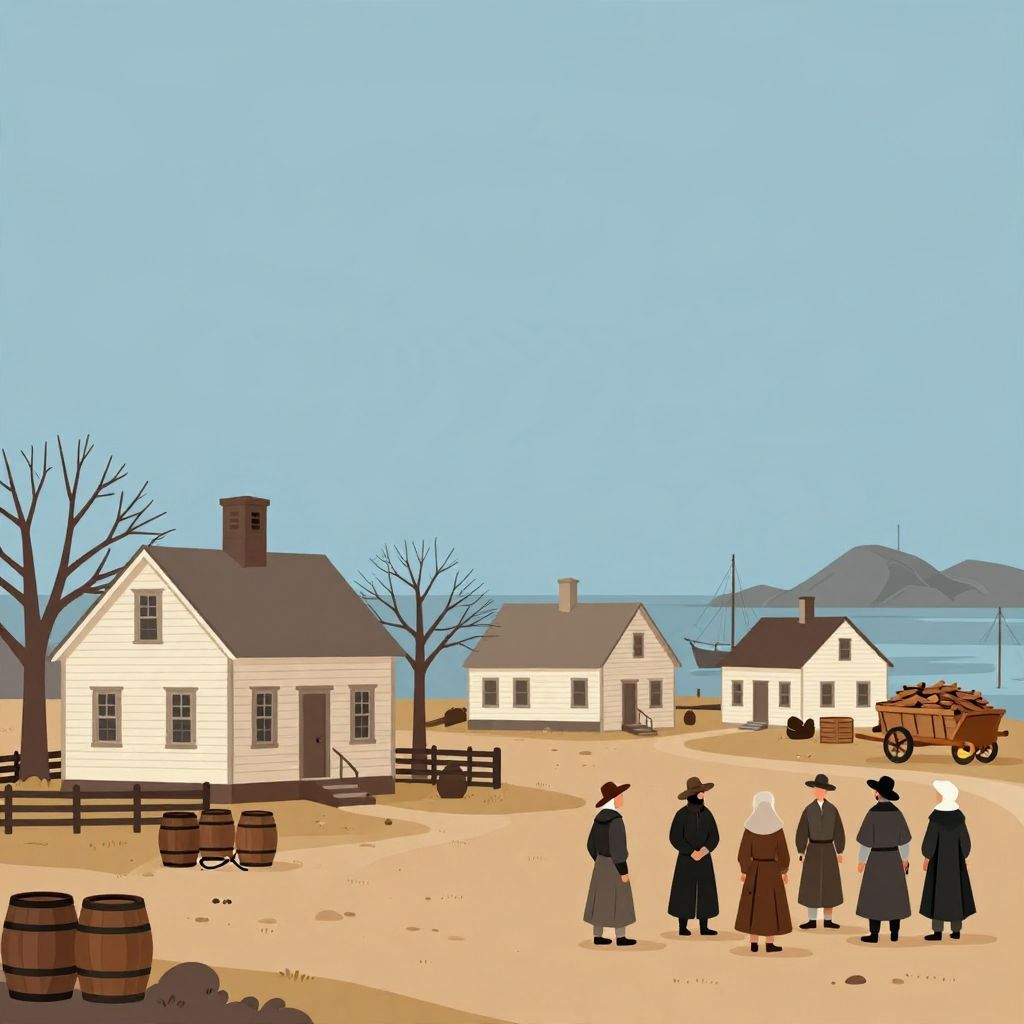
Salem is a name that can refer to several places, but in American history it most often means Salem, Massachusetts: a coastal New England town founded in the early 17th century and later famous for the Salem witch trials of 1692. It is also known for maritime trade, early industry, and preserved colonial-era architecture.
Because the word appears in many locations worldwide, the exact meaning depends on context. In U.S. history, however, Salem usually points to the Massachusetts town that became one of the most studied places in colonial America.
What Is Salem?
Salem is a historic city in Essex County, Massachusetts, best known for its Puritan settlement, its role in Atlantic trade, and the 1692 witch trials. The name also appears in other places, but when historians discuss “Salem” in early American history, they usually mean this Massachusetts community.
Where Is Salem, and Why Does It Matter?
Salem lies on the north shore of Massachusetts, about 16 miles from Boston. Its harbor location made it valuable in the colonial period, when shipping, fishing, and overseas commerce shaped New England’s economy. That geography helped Salem grow from a small settlement into one of the region’s most important ports.
A coastal town with a global reach
By the 18th and early 19th centuries, Salem merchants were sailing across the Atlantic and into the Indian Ocean. The town became famous for privateering, trade in goods such as spices and textiles, and a merchant class that linked New England to wider commercial networks. Salem’s wealth was tied to the sea, not to large-scale agriculture.
The Origins of Salem
Salem began as an English Puritan settlement in the 1620s and 1630s. The area was first associated with fishing and trading outposts, then developed into a more permanent town under Massachusetts Bay Colony rule. Its early history was shaped by English colonization, Native displacement, religious discipline, and the effort to build a godly community.
From Naumkeag to Salem
Before English settlement, the region was home to Indigenous peoples, including the Naumkeag. English colonists established a settlement there in the 1620s, and the town later took the name Salem, a biblical reference associated with peace. Like many colonial place names, it reflected the settlers’ religious worldview more than local Indigenous history.
Puritan society and town life
Early Salem was governed by Puritan values. Church membership, moral conduct, and community discipline mattered deeply. Daily life was hard, and the town faced the usual colonial challenges: disease, food shortages, conflict, and uncertainty. These pressures helped create a society where religious anxiety could become socially explosive.
Why Is Salem Famous in History?
Salem is most famous for the Salem witch trials of 1692, when accusations of witchcraft spread through Salem Village and nearby communities. Nineteen people were executed, and many others were jailed. The episode became one of the most notorious examples of mass panic, legal injustice, and religious fear in colonial America.
The Salem witch trials in brief
- 1692: accusations begin in Salem Village
- Spring and summer: examinations, arrests, and trials expand rapidly
- September: executions reach their peak
- Late 1692: public doubt grows and the court system begins to unravel
- Aftermath: officials later condemned the proceedings and offered restitution to some victims’ families
The trials did not happen in a vacuum. They grew from local disputes, fear of invisible threats, religious beliefs about the devil, and existing tensions within the community. Historians also point to political instability in Massachusetts and the stress of frontier warfare as part of the broader background.
Salem Village and Salem Town
One important detail is that the witch crisis centered in Salem Village, not the more commercially successful Salem Town. The village was more rural and socially divided, while the town was wealthier and more connected to shipping. The distinction matters because the trials reflected local conflict as much as they reflected religion.
What Happened After the Witch Trials?
The witch trials damaged Salem’s reputation, but they did not destroy the town. Over time, Salem continued to grow as a maritime center. In the 18th and early 19th centuries, its merchants and shipowners helped make it one of the leading ports in the young United States. The town’s later history is as much about commerce as it is about the trials.
Maritime prosperity
After the colonial period, Salem became known for shipbuilding, overseas trade, and privateering during wartime. Local fortunes were made through commerce with Asia, Europe, and the Caribbean. This trade brought wealth, but it also depended on the wider Atlantic world, including systems of labor and exchange that were often unequal and exploitative.
Decline and preservation
As larger ports such as Boston and New York grew, Salem’s commercial importance declined. Yet that decline helped preserve much of its historic fabric. Today, the city is known for its preserved houses, museums, and historic districts, which make Salem a major destination for studying colonial and early national America.
Salem Beyond the Witch Trials
Although the witch trials dominate popular memory, Salem’s history is broader and more complex. It played a role in early American trade, religious life, civic development, and the creation of historical memory itself. Understanding Salem means seeing both the famous crisis and the everyday town that existed before and after it.
Salem in American memory
In the 19th and 20th centuries, writers, artists, and historians turned Salem into a symbol of intolerance and mass hysteria. That reputation has shaped how the town is remembered, sometimes overshadowing the realities of colonial government, local economics, and Native displacement. The result is a place that is both a real city and a powerful historical symbol.
Tourism and heritage
Modern Salem uses its past as a major part of its identity. Historic homes, museums, and commemorative sites attract visitors interested in the witch trials and colonial history. At the same time, this public memory can simplify the past, so it is worth remembering that Salem was not only the site of a tragedy but also a working port town with a long and varied history.
Key Facts About Salem
- Location: Essex County, Massachusetts, on the North Shore
- Founded: Early 17th century, beginning in the 1620s and 1630s
- Best known for: The Salem witch trials of 1692
- Colonial role: Puritan settlement and major Atlantic port
- Later identity: Maritime trade center, then historic preservation and tourism destination
Why Salem Still Matters
Salem matters because it shows how religion, fear, politics, and community conflict could combine in colonial America. It also shows how a town can have more than one historical identity: a Puritan settlement, a trading port, a site of injustice, and a preserved historic city. That layered history is why Salem remains so widely studied today.
In short, Salem is both a real Massachusetts city and a lasting historical symbol. If you want to place it in the wider story of early America, you may also want to read about the oldest city in America and the Stono Rebellion, which help illuminate the colonial world in which Salem developed.