
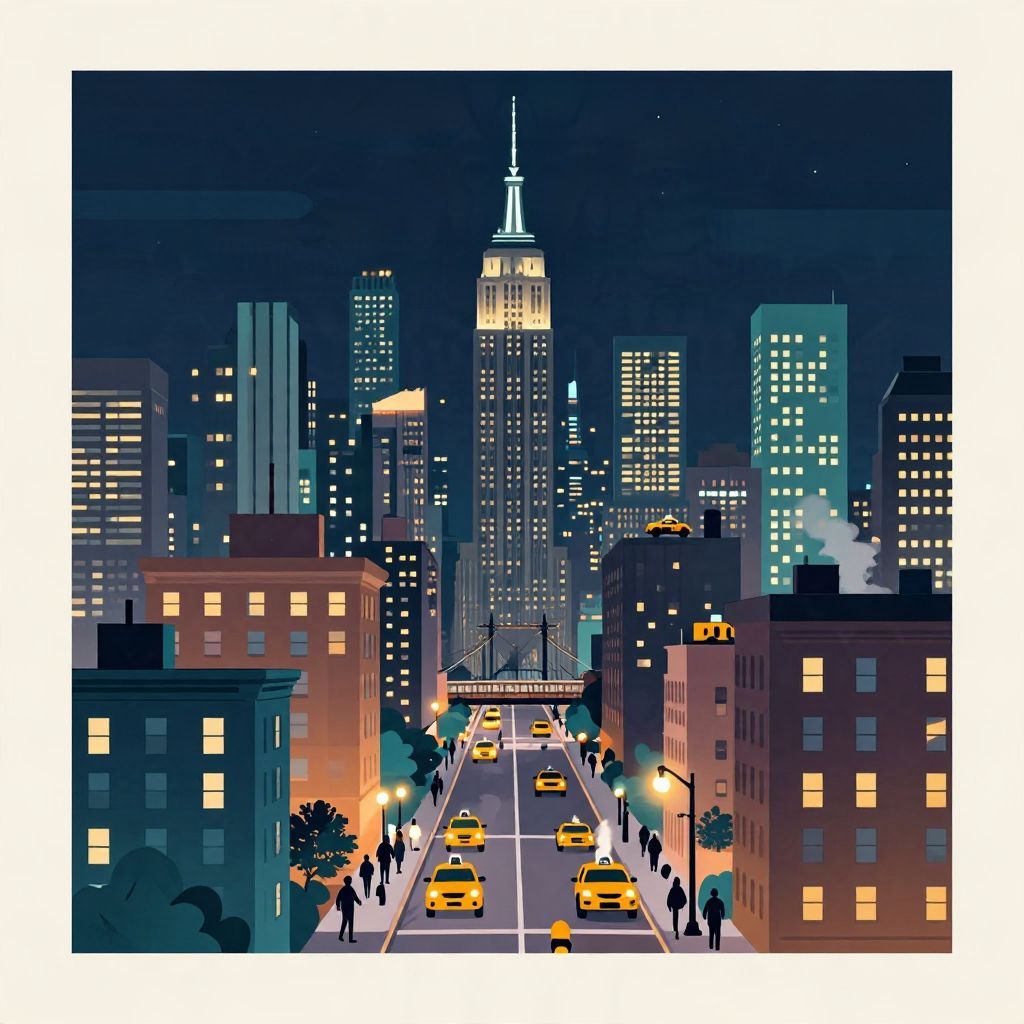
“The City That Never Sleeps” is most commonly a nickname for New York City. It refers to the city’s reputation for constant activity, late-night commerce, dense population, and a culture that seems to keep moving long after dark. The phrase is not an official title, but a popular description that grew alongside the city’s modern identity.
Historically, the nickname reflects New York’s rise as a port, immigration hub, financial center, and entertainment capital. Over time, its streets, subways, theaters, restaurants, and workplaces helped create the image of a place where day and night blur together.
What Is The City That Never Sleeps?
The city most famously called “The City That Never Sleeps” is New York City. The nickname emerged from the city’s reputation for nonstop energy, especially in Manhattan, where businesses, transit, nightlife, and media activity made it feel active around the clock. While the phrase is not unique to New York, it is now strongly associated with the city and its modern urban culture.
Why New York City Earned the Nickname
New York did not become “the city that never sleeps” overnight. The nickname grew from several long-term historical developments: its harbor economy, 24-hour transportation, immigrant neighborhoods, theater and nightlife districts, and the sheer scale of daily life in a metropolis that never fully pauses.
A Port City Built on Constant Movement
From the colonial era onward, New York’s harbor connected it to Atlantic trade. Ships arrived and departed on irregular schedules, merchants worked early and late, and the city’s economy depended on continuous movement of goods and people. That rhythm helped shape a culture that was more active than many smaller American cities.
Immigration and Dense Urban Life
During the 19th and early 20th centuries, New York became one of the world’s great immigrant destinations. New arrivals from Europe, the Caribbean, and elsewhere filled crowded neighborhoods and fueled labor, commerce, and cultural exchange. Dense population and long work hours made the city feel perpetually in motion, especially in commercial districts.
Entertainment and Nightlife
Broadway, music halls, dance clubs, restaurants, and later jazz venues and late-night diners gave New York a public life that extended well into the evening. As entertainment industries expanded in the late 19th and early 20th centuries, the city became known for after-dark activity that reinforced the “never sleeps” image.
Where Did the Nickname Come From?
The exact origin of the phrase is not easy to pin down to a single inventor or date. Like many city nicknames, it developed gradually through journalism, advertising, popular speech, and cultural repetition. By the early 20th century, the idea of New York as a place of ceaseless activity was already well established.
Popularization Through Culture
Writers, songwriters, and later filmmakers helped spread the nickname far beyond New York itself. The phrase became especially powerful because it captured a broader truth about modern urban life: in a large city, someone is always awake, working, traveling, or seeking entertainment. New York became the best-known symbol of that condition in the United States.
Not an Official Historical Title
It is important to note that “The City That Never Sleeps” is a cultural nickname, not a legal designation or formal slogan. It is similar to other city epithets such as “The Big Apple” or “The Windy City,” though it may be used more broadly and less officially than some civic slogans.
How New York Became a 24-Hour Symbol
Several historical factors made New York especially suited to the nickname. Its size, economic importance, and transportation network allowed activity to continue after dark in ways that were unusual for earlier cities. The city’s growth in the 19th and 20th centuries turned that practical reality into a cultural identity.
Transportation Never Fully Stops
New York’s subways, taxis, ferries, and later buses created a city where movement could continue late into the night. Even when service was reduced, the infrastructure supported round-the-clock circulation. That made the city feel alive in a way that older, smaller urban centers often did not.
Work, Trade, and Finance
As New York became a center of banking, shipping, publishing, and media, many industries operated beyond standard daylight hours. Financial markets, newsrooms, and service businesses all contributed to a schedule that often extended into the night. The city’s economic role encouraged a pace that seemed relentless.
Food, Theater, and Public Life
Late-night restaurants, delis, and entertainment venues helped make New York famous for after-hours activity. Visitors and residents alike could find food, music, and social life at times when many other cities were quiet. This created a powerful impression of a metropolis that remained awake while others slept.
Historical Background: New York’s Rise as a World City
The nickname makes the most sense when viewed in the larger history of New York’s rise. The city began as a Dutch settlement, grew under British rule, and then expanded rapidly after the American Revolution. By the 19th century, it was becoming one of the most important cities in the United States and the world.
From New Amsterdam to New York
New York’s origins date to the early 17th century, when the Dutch established New Amsterdam on Manhattan Island. The English took control in 1664 and renamed it New York. Its harbor location made it valuable from the beginning, but its later growth came from trade, migration, and industrial expansion.
The 19th-Century Boom
Canals, railroads, factories, and immigration transformed the city in the 1800s. The opening of the Erie Canal in 1825 strengthened New York’s link to the interior of North America, helping it become a major commercial gateway. As the city expanded, so did the pace of urban life.
Ellis Island and the Modern Metropolis
By the late 19th and early 20th centuries, New York was receiving huge numbers of immigrants through Ellis Island. This influx added labor, languages, customs, and neighborhoods that gave the city its extraordinary diversity. The result was a metropolis with layered communities and a continuous flow of activity.
How the Nickname Reflects Urban History
“The City That Never Sleeps” is more than a catchy phrase. It captures a major shift in modern history: the rise of the large, electrified, commercial city. New York became one of the clearest examples of how technology, migration, and capitalism could create a place where time itself seemed reorganized around nonstop activity.
Electric Light and the Night Economy
Electric lighting changed urban life across the world, but it had a particularly strong effect in New York. Streets, storefronts, theaters, and signs could remain illuminated after dark, making night feel safer and more commercially useful. The city’s illuminated skyline became part of its identity.
A City of Contrasts
The nickname also reflects contrast. New York can be exhausting, noisy, and crowded, but it is also full of opportunity and cultural energy. The phrase suggests both admiration and realism: the city’s vitality comes with pressure, speed, and constant motion.
Myth, Image, and Reality
Like many famous nicknames, “The City That Never Sleeps” is partly true, partly symbolic. New York does not literally stay awake everywhere all the time. Neighborhoods quiet down, businesses close, and residents sleep like people anywhere else. But as a public image, the phrase accurately captures the city’s unusual intensity and its long-standing reputation for round-the-clock life.
Why the Image Endures
The nickname has lasted because it is easy to understand and emotionally vivid. It conveys the feeling of arriving in a place where anything might happen at any hour. That image has been reinforced by literature, film, tourism, and the everyday experience of millions of residents and visitors.
Other Cities and Similar Claims
Other cities around the world have also been described as never sleeping, especially major commercial or entertainment centers. But New York remains the most famous example in English-language history and culture. Its scale and global influence make the nickname especially fitting.
Key Facts About “The City That Never Sleeps”
- Most common answer: New York City
- Type of phrase: Popular nickname, not an official title
- Why it fits: 24-hour economy, nightlife, transit, and dense urban life
- Historical roots: Port trade, immigration, industrial growth, and electrification
- Cultural meaning: Symbol of modern urban energy and constant motion
Conclusion
So, what is “the city that never sleeps”? In historical and cultural terms, it is New York City—a metropolis whose harbor trade, immigration, entertainment, and nonstop urban rhythm made it the world’s best-known sleepless city. For readers interested in New York’s development, you may also want to explore how old New York City is and what the oldest city in America is.