
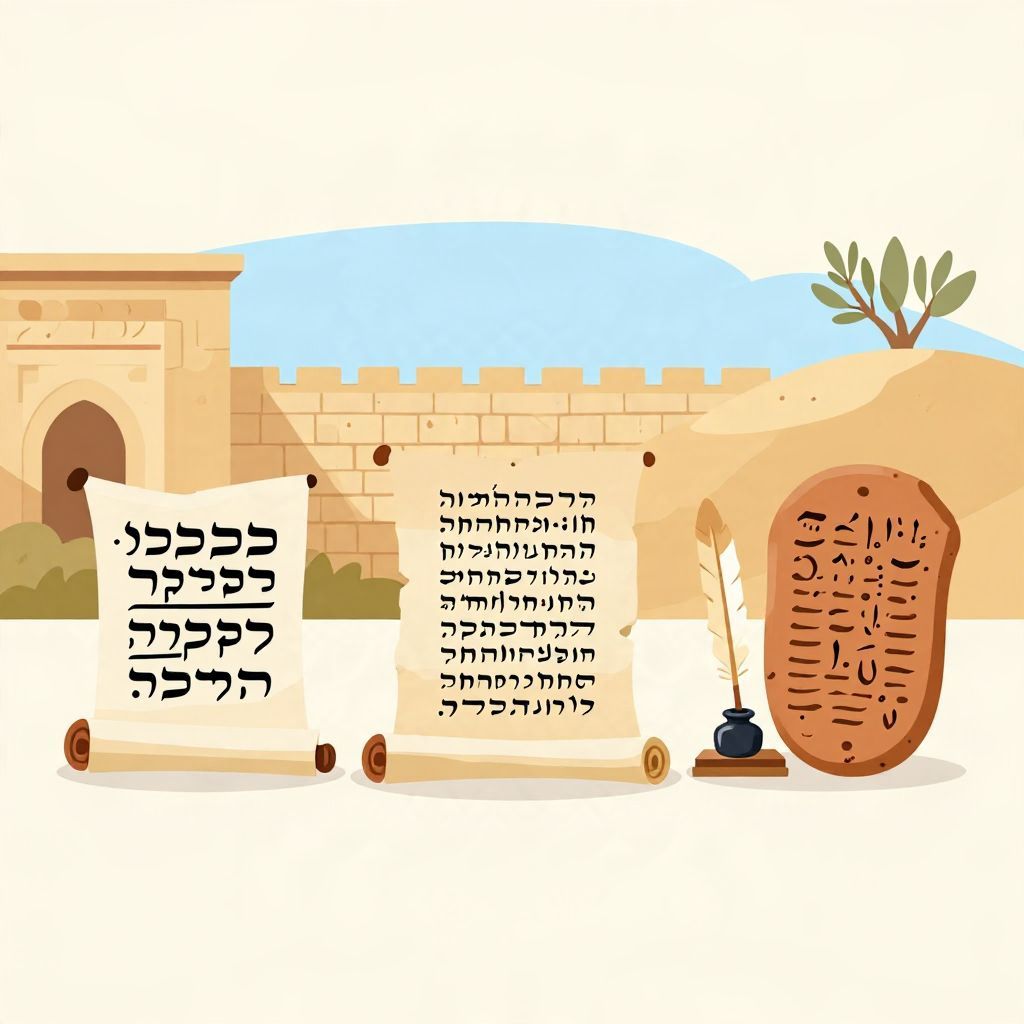
What was the original language of the Bible? The short answer is that there was not just one original language. The Bible was written over many centuries by different authors, so its earliest books and later books appeared in more than one ancient language.
In broad terms, most of the Hebrew Bible was written in Hebrew, some parts in Aramaic, and the New Testament in Greek. Understanding that mix is essential to understanding how the Bible was formed, copied, translated, and later read across the ancient Mediterranean world.
What Was the Original Language of the Bible?
The Bible’s original languages were Hebrew, Aramaic, and Greek. The Old Testament was mainly written in Hebrew, with sections in Aramaic, while the New Testament was written in Koine Greek. Because the Bible is a library of texts from different eras, there is no single original language for the whole book.
Why There Is No Single “Original Language”
The Bible was not composed at one moment by one author. It grew over many centuries, in different communities, under changing political and cultural conditions. Its books reflect the languages people actually used in ancient Israel, Judea, and the wider eastern Mediterranean.
That is why the question has to be answered historically rather than simplistically. If someone asks about the “original language of the Bible,” the most accurate response is that the Bible began as a collection of texts in the languages of its authors and audiences.
The Bible as a Library, Not One Book
The Bible includes law codes, poetry, prophecy, history, letters, and apocalyptic writing. These genres were produced in different settings and periods, so the language changed with time. Earlier Israelite writings are mainly Hebrew; later Jewish texts include more Aramaic; and early Christian writings were composed in Greek because Greek had become the common language of much of the eastern Roman Empire.
Hebrew and the Old Testament
Most of the Old Testament, also called the Hebrew Bible, was written in Biblical Hebrew. Hebrew is a Northwest Semitic language closely related to Phoenician and Aramaic. It was the main literary language of ancient Israel and Judah for much of the first millennium BCE.
When Hebrew Was Used
Hebrew appears in inscriptions and texts from the Iron Age, roughly from the 10th to 6th centuries BCE, though the exact dating of many biblical books remains debated. Some biblical traditions may preserve older material that was written down later. Scholars generally agree that the final forms of many books were edited over time, especially during and after the Babylonian exile in the 6th century BCE.
Examples of Hebrew Books
- Genesis
- Exodus
- Leviticus
- Numbers
- Deuteronomy
- Most of the Psalms
- Proverbs
- Isaiah, Jeremiah, Ezekiel, and the Twelve Prophets, in large part
These books were not all written at the same time, and some contain later editorial layers. Still, Hebrew is the dominant language of the Old Testament and the language most people mean when they speak of the Bible’s “original language.”
Aramaic in the Bible
Aramaic is another Semitic language that became widely used across the Near East. By the first millennium BCE, it had become a major language of diplomacy, trade, and administration. As empires such as the Assyrian, Babylonian, and Persian empires expanded, Aramaic spread even further.
Where Aramaic Appears
Several biblical sections are written in Aramaic, including parts of Daniel and Ezra, and a few isolated phrases appear elsewhere. This reflects the multilingual world of the ancient Near East, especially after the Babylonian exile, when many Judeans lived under imperial rule and interacted with Aramaic-speaking populations.
Aramaic was also likely spoken by many Jews in the late Second Temple period, including in the time of Jesus. That does not mean the New Testament was written in Aramaic, but it helps explain why some Aramaic words and phrases are preserved in the Greek text.
Famous Aramaic Phrases in the Bible
- “Talitha koum” in Mark 5:41
- “Eloi, Eloi, lema sabachthani?” in Mark 15:34
- “Abba” in several New Testament passages
These phrases are important because they show the linguistic world behind the texts. Even when the New Testament was written in Greek, its authors preserved some Semitic expressions to reflect the speech of Jesus and early Jewish-Christian communities.
Greek and the New Testament
The New Testament was written in Koine Greek, the common form of Greek used across the eastern Mediterranean after the conquests of Alexander the Great in the late 4th century BCE. By the 1st century CE, Greek was the language of commerce, education, and communication in many cities of the Roman Empire.
Why Greek Was Chosen
Early Christianity spread rapidly beyond Judea into Greek-speaking regions. The authors of the New Testament wrote for mixed audiences, including Jews and Gentiles. Greek allowed the message to travel widely and be understood across regional boundaries.
This choice was practical as well as cultural. Greek was the language of urban life in places such as Antioch, Ephesus, Corinth, and Alexandria. It was also the language of the Septuagint, the Greek translation of the Hebrew Scriptures used by many Jews in the diaspora.
Examples of New Testament Books Written in Greek
- The Gospels of Matthew, Mark, Luke, and John
- Acts of the Apostles
- The letters of Paul
- Hebrews
- Revelation
Some scholars have argued that one or more New Testament books may have had earlier Semitic sources or oral traditions behind them, but the surviving canonical texts are Greek. That is the historical basis for saying the New Testament was originally written in Greek.
How the Bible Was Preserved and Translated
Because the Bible circulated in multiple languages, translation became central to its history very early on. Jewish communities translated Hebrew Scriptures into Greek, and later Christian communities translated both Old and New Testament texts into Latin, Syriac, Coptic, Armenian, Georgian, and other languages.
The Septuagint
One of the most important early translations was the Septuagint, a Greek version of the Hebrew Scriptures produced over several centuries, beginning around the 3rd century BCE. It became especially influential among Greek-speaking Jews and early Christians. In some cases, New Testament writers quoted the Septuagint rather than the Hebrew text directly.
Why Translation Mattered
Translation helped the Bible cross cultural and linguistic boundaries. It also shaped interpretation, because no translation is perfectly identical to its source. Differences between Hebrew, Aramaic, and Greek versions sometimes affect how passages are understood, which is why biblical language remains a major field of historical and textual study.
What Ancient Evidence Tells Us
Our understanding of the Bible’s original languages comes from manuscripts, inscriptions, comparative linguistics, and the historical context of the ancient Near East and Mediterranean world. The evidence is strong, but not every detail is certain. Many biblical books were copied and edited for generations before the oldest surviving manuscripts we possess.
What Scholars Can Say with Confidence
- Most of the Hebrew Bible is in Hebrew.
- Some biblical sections are in Aramaic.
- The New Testament is in Greek.
- The Bible developed over a long period and was shaped by translation and transmission.
What Remains Debated
Scholars continue to debate the dates of individual books, the extent of earlier source material, and the precise relationship between oral tradition and written composition. Those debates do not change the basic answer, but they do remind us that the Bible’s linguistic history is complex.
Why the Original Language Question Still Matters
Knowing the Bible’s original languages matters because language shapes meaning. Hebrew poetry works differently from Greek prose. Aramaic phrases preserve the texture of a bilingual world. Greek vocabulary carries philosophical and literary nuances that influenced Christian theology and interpretation.
For readers, this means that the Bible is best understood as a historical collection of texts rooted in ancient languages and cultures, not as a single document with one linguistic origin. Its multilingual character is part of its history, not a complication to be ignored.
Conclusion
The original language of the Bible was not one language but several. The Old Testament was mainly written in Hebrew, some parts in Aramaic, and the New Testament in Greek. That multilingual origin reflects the long historical development of biblical texts across ancient Israel, the Near East, and the Greek-speaking Roman world. For more background, see what is the original language of the Bible and what language was the first Bible written in.