
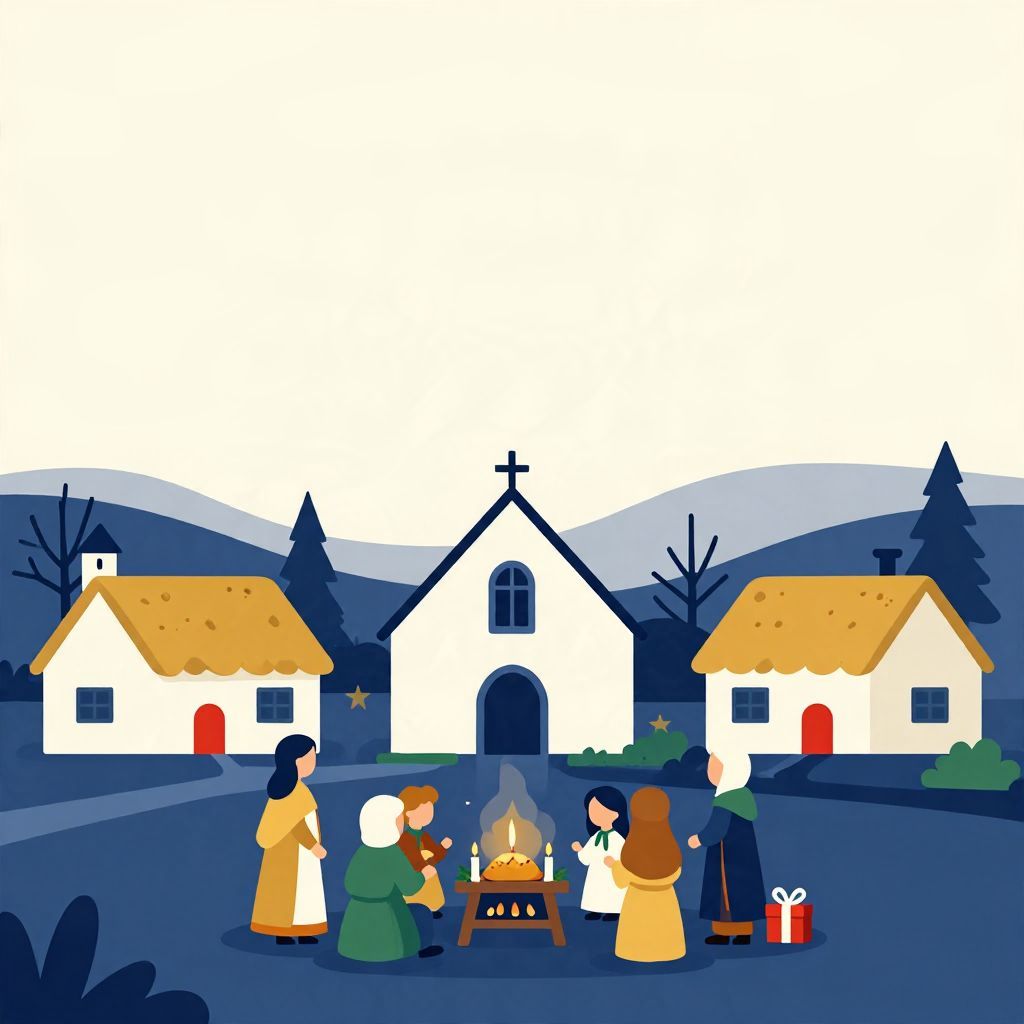
When is Little Christmas? The short answer is January 6, the Feast of the Epiphany, which falls 12 days after Christmas Day. In many places, especially in Ireland, it is also called Women’s Christmas or Nollaig na mBan. The name “Little Christmas” reflects its place at the end of the Christmas season, not a lesser importance in religious tradition.
Its meaning has changed over time, but the date has remained tied to the Christian calendar. For some families, it is a final day of celebration; for others, it marks the formal close of the holiday season.
When Is Little Christmas?
Little Christmas is celebrated on January 6, the traditional Christian feast of the Epiphany. It comes 12 days after December 25 and is often understood as the last day of the Christmas season. In Ireland and some other traditions, the day has additional cultural meanings, including a focus on women’s rest and celebration.
What Little Christmas Means in History
Little Christmas is not a separate modern holiday invented recently. It grew out of older Christian observance of the Epiphany, a feast that commemorates the revelation of Christ to the world. In Western Christianity, January 6 became associated with the visit of the Magi, or Wise Men, to the infant Jesus.
The date matters because it sits within the broader liturgical cycle of Christmas. In many Christian traditions, the “Twelve Days of Christmas” begin on December 25 and end on January 5, with January 6 as the final feast day. That is why Little Christmas is often described as the “last day” of Christmas rather than a new holiday altogether.
Epiphany and the Christian calendar
The word Epiphany comes from Greek and means “manifestation” or “appearance.” In early Christianity, the feast developed as a celebration of Christ’s revelation to the nations. Over time, different churches emphasized different biblical events on this day, including the visit of the Magi, the baptism of Jesus, and the miracle at Cana.
Because Christian communities developed in different regions, the meaning of January 6 was never perfectly uniform. Still, the date itself became widely established in both Eastern and Western Christian calendars. In popular usage, “Little Christmas” is one of several folk names attached to that date.
Why January 6 Became Little Christmas
January 6 became important because it was fixed as the Epiphany feast in the Christian liturgical year. The connection to Christmas comes from the traditional twelve-day period between the Nativity and Epiphany. In many households, the holiday season once lasted until this day, which helped the date gain special cultural weight.
Historically, the twelve-day structure was more than a festive idea. It reflected the rhythm of church observance, with feasts, prayers, and seasonal customs marking the passage from Christmas to the start of ordinary time. In places where the calendar was strongly shaped by religion, January 6 became a natural closing point for celebrations.
The “12 days of Christmas” tradition
The phrase “12 days of Christmas” is now widely known through song and seasonal custom, but it originally referred to the period from Christmas Day to Epiphany. That is why January 6 is often treated as the final day of Christmas rather than the first day after it. In this older framework, Little Christmas is the culmination of the season.
Modern commercial Christmas often begins earlier and ends later than the traditional liturgical season. Even so, many people still recognize January 6 as the symbolic end of Christmas, especially in families and communities that keep older customs alive.
Little Christmas in Ireland
In Ireland, Little Christmas is especially well known as Nollaig na mBan, meaning “Women’s Christmas.” This tradition is associated with giving women a break from domestic work after the heavy labor of the Christmas period. Men or children might take over household duties, while women gathered socially to celebrate together.
This custom reflects older gender roles in Irish rural life, where women often carried much of the burden of cooking, cleaning, and hosting during Christmas. Little Christmas became a culturally meaningful day of rest, sociability, and recognition. While practices varied by region and family, the idea remains an important part of Irish holiday heritage.
Women’s Christmas and social customs
Nollaig na mBan was not a formal church feast with a single official ritual. Instead, it developed as a popular custom embedded in everyday life. In some communities, women met for tea, food, songs, or visits with friends and relatives. In others, the day was more modest, but still marked by a lighter workload and a sense of closure after the busy season.
Because it is rooted in social practice rather than a single founding event, the tradition is best understood as folk history. Its exact age is difficult to pin down, but it clearly belongs to a long Irish Christmas culture shaped by religion, family labor, and community life.
Is Little Christmas the Same Everywhere?
No. The date is the same—January 6—but the meaning varies by country, church tradition, and family custom. In some places, Epiphany is the main emphasis. In others, the day is associated with gift-giving, special foods, or the final gathering of the holiday season. “Little Christmas” is a folk term, not a universal official title.
In Catholic and Orthodox traditions, January 6 or nearby dates can be tied to major religious observances. In some countries, the Three Kings are central; in others, the baptism of Christ is more prominent. The idea of “Little Christmas” is therefore best understood as one cultural expression within a wider Christian feast day.
Examples of related customs
- Ireland: Little Christmas or Women’s Christmas on January 6.
- Many Catholic traditions: Epiphany and the visit of the Magi.
- Some Eastern Christian traditions: The baptism of Jesus is emphasized around this season.
- Household customs: Final festive meals, special desserts, or the taking down of decorations.
How Little Christmas Developed Over Time
The history of Little Christmas is really the history of Epiphany and the changing shape of Christmas observance. In the early centuries of Christianity, feast days helped organize worship and memory. As Christianity spread through Europe, local customs grew around these dates, blending church teaching with regional practice.
By the medieval period, the Christmas season had become a structured liturgical cycle in much of Europe. January 6 stood out as a major feast. Later, as domestic Christmas traditions expanded in the early modern and modern eras, the day acquired additional meanings in folk culture. In Ireland, that included the social idea of Women’s Christmas.
From church feast to family tradition
This shift from formal religious observance to family custom is common in holiday history. A feast day can begin in church calendars and later become part of home life, local memory, and seasonal identity. Little Christmas illustrates that process well: it is both a religious date and a cultural one.
That dual identity helps explain why the term survives even among people who do not observe the day religiously. The date remains meaningful because it marks a transition—from feast to ordinary time, from holiday bustle to the return of routine.
Common Questions About Little Christmas
Is Little Christmas the same as Epiphany?
Yes, in most contexts. Little Christmas is a folk name for January 6, the Feast of the Epiphany. The term is especially common in Irish usage, while “Epiphany” is the broader religious name used across many Christian traditions.
Why is it called “little” Christmas?
The word “little” does not mean unimportant. It usually refers to its place at the end of the Christmas cycle, after the larger celebration of December 25. In some places, it may also reflect the idea of a smaller, quieter observance compared with Christmas Day itself.
Do all Christians celebrate it?
No. Many Christians observe Epiphany, but not all give it the same emphasis, and some do not use the term Little Christmas at all. The name is especially tied to Irish and some other local traditions rather than to every Christian community worldwide.
Why Little Christmas Still Matters
Little Christmas remains important because it preserves a historical way of thinking about time, faith, and family life. It reminds us that Christmas was once not just a single day of gift-giving, but a season with a beginning, middle, and end. January 6 marks that ending in a way that is both religious and cultural.
For historians, the day is a useful example of how calendar dates can carry layered meanings. A feast can become a household tradition, a religious observance can take on local social customs, and a name like Little Christmas can survive long after the world that created it has changed.
So, when is Little Christmas? It is January 6, the Feast of the Epiphany, and in Irish tradition especially, a day known as Women’s Christmas. If you want to explore related holiday customs, you may also enjoy reading about how people celebrate Christmas and why Mexicans celebrate Christmas on the 24th.