
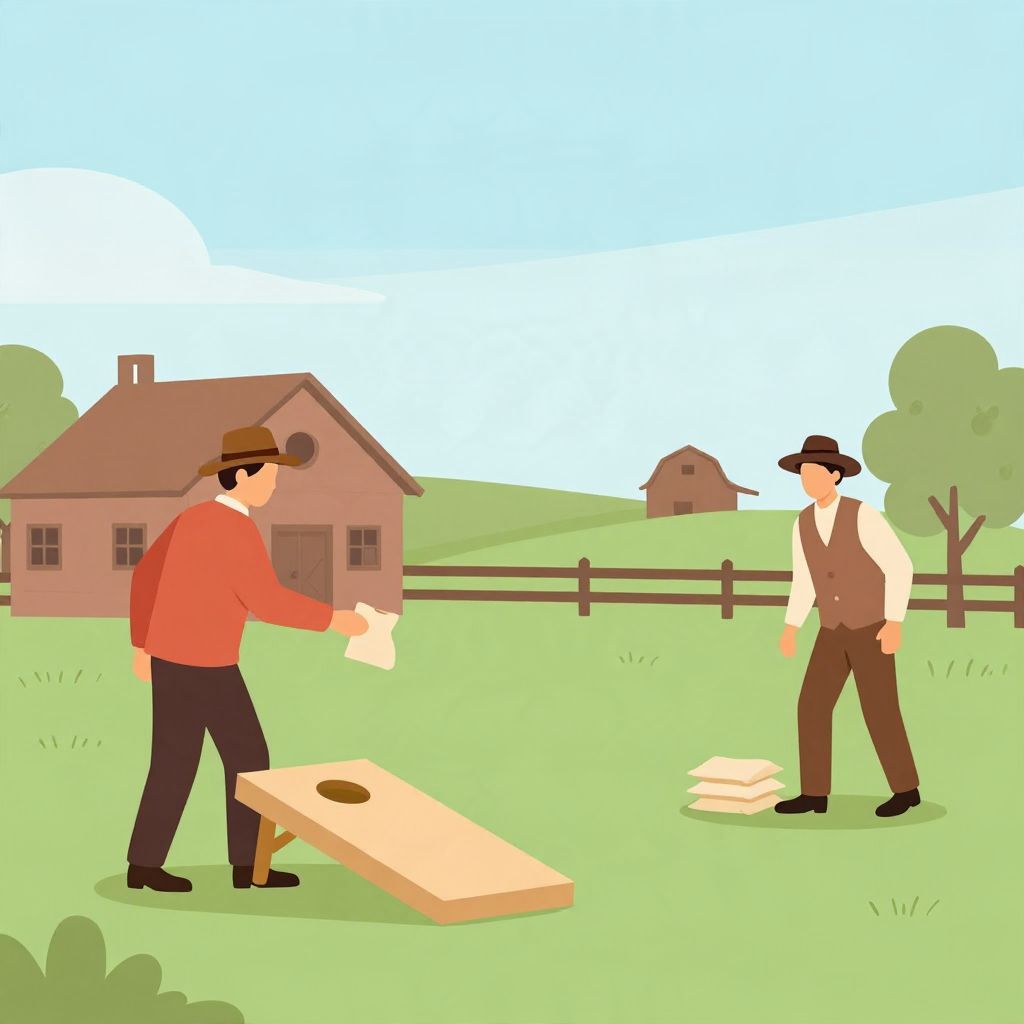
When was cornhole invented? The short answer is that the game as we know it is a modern invention, most likely taking shape in the late 20th century, even though it draws on much older tossing games. Its exact origin is disputed, and several people and regions have claimed credit.
What is clear is that cornhole did not emerge from ancient history. It spread from backyard and tailgate play into organized recreation in the 1990s and 2000s, when standardized rules and equipment helped turn a casual pastime into a recognizable sport.
When was cornhole invented?
Cornhole was most likely invented in its modern form in the late 1900s, with strong evidence that the game became established in the 1990s and then expanded rapidly in the 2000s. The exact inventor is uncertain, but the standardized beanbag-and-board version is a recent American recreation, not a centuries-old game with a single clear origin.
The origin story: older games, newer rules
Part of the confusion comes from the fact that cornhole belongs to a very old family of throwing games. People have long enjoyed tossing objects at targets for amusement, training, or competition. Cornhole’s modern version, however, is defined by its slanted board, hole placement, beanbags, and scoring rules—features that were standardized much later than the human impulse to throw things at a target.
Why the game feels older than it is
Many modern games seem timeless because they use simple materials and easy rules. Cornhole fits that pattern perfectly: a wooden board, a bag of corn or synthetic fill, and a few basic scoring rules. That simplicity makes it easy to imagine an old rural origin, but simplicity alone is not proof of age. In historical terms, cornhole is better understood as a modern codification of an older play style.
What do historians and game histories say about its beginnings?
There is no universally accepted single inventor of cornhole. Several origin stories circulate, and some are likely folklore rather than documented history. The most responsible answer is that the game’s modern form appears to have developed in the United States during the late 20th century, probably through informal backyard and tailgate culture before it was organized into leagues and tournaments.
Competing claims and why they matter
Some stories place the game in the Midwest, especially Ohio and Kentucky; others link it to rural communities more broadly. These claims are not impossible, but they are difficult to verify because early play was often informal and rarely recorded in a way historians can trace. That means the best-supported history is not a neat invention date, but a gradual emergence.
- Older tradition: tossing games existed for centuries in many cultures.
- Modern cornhole: standardized board-and-bag play appears in the late 20th century.
- Popular expansion: the game became widely known in the 1990s and 2000s.
How cornhole developed into a recognizable game
Cornhole’s rise makes sense in the context of American leisure culture. As backyard gatherings, college events, and tailgates became more central to social life, people favored games that were portable, social, and easy to learn. Cornhole met all three needs. It required little space, could be played casually, and rewarded both skill and luck.
From homemade pastime to organized sport
Once enough people were playing the same basic game, rules began to stabilize. Standard board dimensions, bag size, and scoring systems helped make matches fair and repeatable. This is a common pattern in sports history: a local pastime becomes a broader game only after communities agree on uniform rules. Cornhole followed that path in the late 20th and early 21st centuries.
Why the 1990s are important
The 1990s are often treated as the key decade for cornhole because that is when the game appears to have gained enough structure and visibility to spread widely. By then, it was no longer just a homemade diversion. It was becoming a named, recognizable activity with consistent equipment and a growing fan base.
What changed in that decade?
Several developments likely helped:
- People began making boards and bags in more standardized ways.
- The game fit well with informal social events and outdoor gatherings.
- Local groups and enthusiasts started promoting organized play.
- Media attention and word of mouth increased its reach.
By the early 2000s, cornhole had moved from a regional novelty into a broader American pastime.
Is cornhole really an old farm game?
This is one of the most common myths about cornhole. Because the bags were traditionally filled with corn and the game has a rustic look, it is often described as an old farm game passed down for generations. While that story is appealing, it is not well supported as a precise historical claim. The game may reflect rural materials and settings, but the modern sport is much newer than legend suggests.
Corn as a material, not proof of antiquity
The use of corn in the bags likely contributed to the name and the game’s down-to-earth image. But corn-filled bags do not automatically mean the game itself is ancient. Many modern inventions use traditional materials simply because they are cheap, familiar, or convenient. In cornhole’s case, the material choice helped shape the game’s identity without proving a deep historical lineage.
What makes cornhole historically interesting?
Cornhole is a good example of how everyday culture becomes history. It did not need a royal patron, a battlefield, or a famous inventor to matter. Instead, it grew from ordinary social life. That makes it especially useful for understanding how recreation develops: people adapt simple activities, share them locally, and eventually create a larger tradition around them.
A modern game with a traditional feel
Many modern sports and games borrow the atmosphere of older pastimes. Cornhole does this particularly well. It feels familiar, almost timeless, because it is easy to learn and uses humble materials. Yet its rise belongs to the recent history of American leisure, when backyard entertainment, community events, and informal competition became more visible and more organized.
The lasting legacy of cornhole
Cornhole’s history shows how a game can become culturally important without a single clear birth date. Its modern version emerged in the late 20th century, but its popularity grew because it fit contemporary social habits. Today it is played at family gatherings, bars, festivals, schools, and tournaments, showing how quickly a simple game can become part of shared culture.
So, when was cornhole invented? The best historical answer is that the game in its recognizable modern form was invented in the late 20th century, likely becoming established in the 1990s and spreading widely in the 2000s. Its deeper roots lie in the long history of target-throwing games, but the sport itself is a fairly recent American creation. For more context on the history of games, you may also enjoy when bowling was invented and, for a broader social-historical backdrop, what a duchy was.