
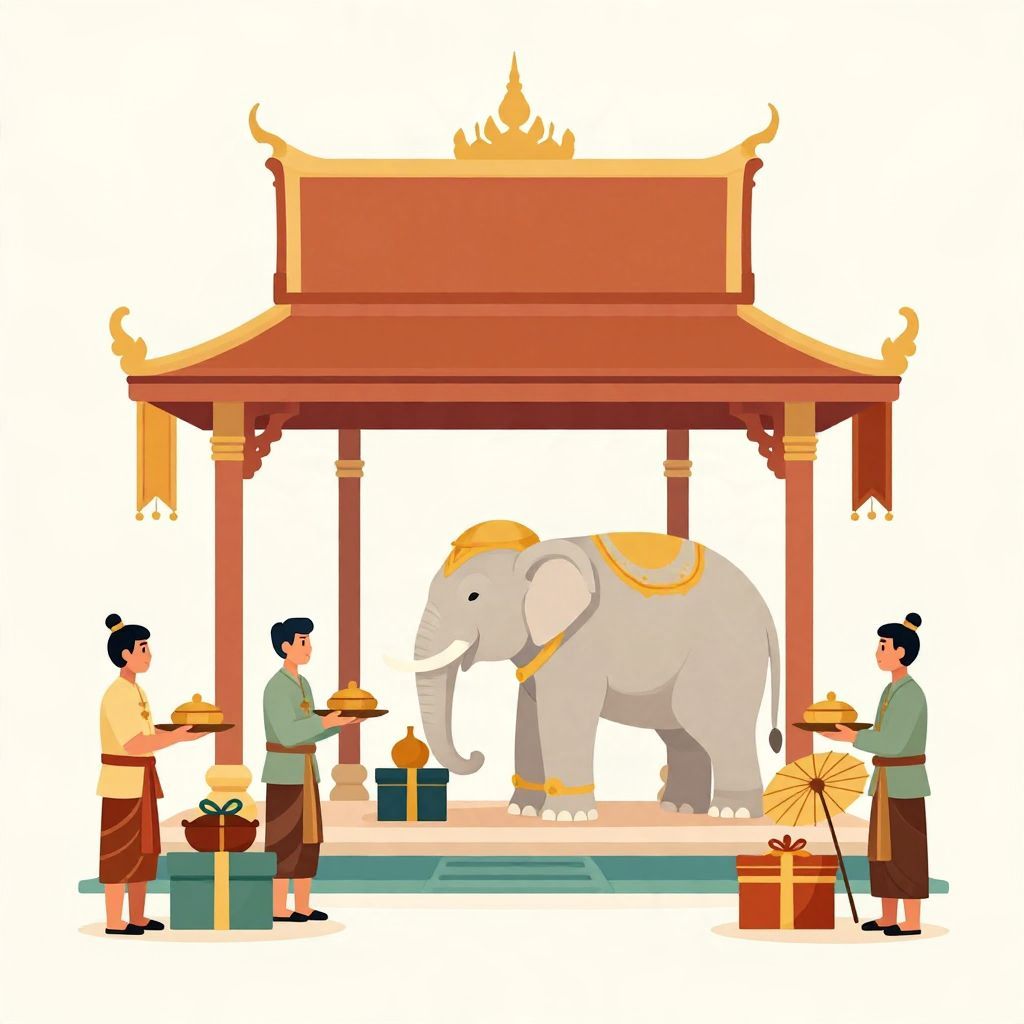
Why is it called white elephant? The phrase sounds simple, but its history is layered with royal custom, religious symbolism, and later English-language metaphor. Today it usually means something expensive to keep and hard to get rid of, but that meaning did not appear all at once.
The term traces back to Southeast Asia, especially Siam, where white elephants were rare, sacred animals associated with kingship. Over time, the phrase moved into English and became a way to describe a burdensome possession whose upkeep costs more than it is worth.
Why is it called white elephant?
It is called a white elephant because rare pale elephants in Southeast Asian royal culture were prized, but costly to maintain and often impractical to use. In English, the phrase evolved into a metaphor for an expensive possession that creates more trouble than value, especially after the 19th century.
The historical roots of the phrase
The expression comes from the cultural importance of elephants in mainland Southeast Asia, especially in the kingdoms of Siam, now Thailand. White elephants were not truly albino in every case; many were simply light-colored animals that were considered especially auspicious. Because they were linked to royal power and sacred status, they could not be used for ordinary labor.
Royal symbolism in Siam
In traditional Siamese court culture, a white elephant was a sign of legitimacy and prestige. Possessing one could enhance a ruler’s status, but it also created obligations. The animal had to be housed, fed, and honored, yet it could not be put to productive work. That combination of prestige and expense is central to the phrase’s later meaning.
Historical accounts suggest that kings valued white elephants partly because they symbolized cosmic order and good fortune. In a monarchy where signs and omens mattered, a rare elephant could become a political asset. But the same animal could also become a burden if it demanded costly care without practical benefit.
Why the elephant was “white”
The word “white” does not necessarily mean a pure white animal in the modern sense. In many historical contexts, the term referred to unusually pale skin, pinkish markings, or other distinctive features that set the elephant apart. The key point was rarity and sacred status, not a scientific color category.
How the meaning changed from sacred to burdensome
The modern English meaning developed when outsiders learned of the custom and interpreted it through a practical, often ironic lens. A gift of a white elephant could appear generous, but if the recipient had to support the animal without being allowed to use it for work, the gift became a financial trap. That idea helped shape the phrase’s later figurative use.
Gift, honor, and hidden cost
One important part of the story is that a white elephant could be given as a royal gift. In theory, this was an honor. In practice, it could be ruinously expensive. The owner had to provide food, shelter, attendants, and ceremonial respect. Because the animal was sacred, it could not simply be sold, worked, or discarded. The prestige came with a heavy price.
This is why the phrase became such a useful metaphor. It captured a familiar human experience: something that looks valuable at first but turns out to be difficult, costly, or impossible to manage. The historical meaning was rooted in court culture, but the figurative meaning fit many later situations.
When did “white elephant” enter English?
The phrase entered English in the 19th century, during a period of growing British imperial contact with Southeast Asia. Exact first uses vary by source and context, but by the mid-1800s English writers were using “white elephant” to describe a costly possession or an awkward burden. The expression then spread widely in journalism and everyday speech.
Colonial-era misunderstanding and adaptation
As Europeans described Siamese customs, they often filtered them through their own assumptions. The white elephant became a convenient symbol of useless luxury or unwanted expense. That interpretation was not identical to the original court meaning, but it was close enough to travel well in English.
By the later 19th century, the phrase was firmly established in English as a metaphor. It could refer to a building, a business, a project, or even a gift that required more maintenance than it justified. The phrase’s survival shows how a specific court custom became a general expression in global English.
Popular stories and what historians can say
There are several popular explanations for the phrase, and not all of them are equally well supported. Some versions claim that kings deliberately gave white elephants to courtiers they wanted to ruin, forcing them to spend money on a sacred animal they could not exploit. That story is plausible in spirit, but historians treat it cautiously because details vary and are difficult to verify in a single neat origin tale.
What is well established
- White elephants had special status in Siam and neighboring regions.
- They were associated with royalty, auspiciousness, and religious or ceremonial importance.
- They were expensive to maintain and not suited to ordinary work.
- The phrase became a metaphor in English for something burdensome and costly.
What is less certain
It is harder to prove a single dramatic origin event for the modern idiom. Language often changes gradually. A custom can inspire a metaphor, and the metaphor can then be reinforced by repeated use in print and conversation. In this case, the broader historical context is more reliable than any one colorful anecdote.
Why the phrase still works today
The reason “white elephant” remains useful is that it describes a very common kind of problem: an asset that is expensive to own and difficult to justify. The phrase can apply to abandoned buildings, oversized infrastructure projects, unwanted gifts, or luxury items that create maintenance headaches. Its meaning is still tied to cost, burden, and disappointment.
Examples of modern use
People may call an unused sports stadium a white elephant if it costs a city money without serving enough people. A large house that is too expensive to heat and maintain may also be described this way. In each case, the phrase emphasizes the gap between appearance and usefulness.
That modern sense is not identical to the original cultural meaning, but it preserves the central tension. A white elephant is valuable in theory, troublesome in practice, and often impossible to ignore.
Cultural sensitivity and historical context
Because the phrase comes from Southeast Asian royal and religious traditions, it is worth using it with some awareness of its origins. In its original setting, a white elephant was not simply a joke about waste. It was a symbol of status, sacred power, and kingship. The later English metaphor simplifies that history, turning a complex cultural object into shorthand for inconvenience.
This does not make the modern phrase unusable, but it does remind us that idioms often carry traces of older worlds. A term that now sounds ordinary may once have reflected a very specific political and religious order.
The lasting historical significance of the term
The story of “white elephant” shows how language moves across cultures and changes meaning in the process. A royal symbol in Southeast Asia became an English metaphor for a bad bargain. That shift reflects trade, empire, translation, and the way outsiders often reinterpret local customs for their own purposes.
It also shows how history lives on in everyday speech. People use the phrase without thinking about elephants, kings, or Siam, yet the old associations remain embedded in the words. The idiom is a small example of how cultural contact can reshape language for centuries.
So, why is it called white elephant? Because the term began with rare, sacred elephants in Southeast Asian royal culture and then evolved in English into a vivid metaphor for something costly, burdensome, and hard to dispose of. If you enjoy the history of everyday phrases, you may also like reading about why it is called a flea market and the origin of flea market.