
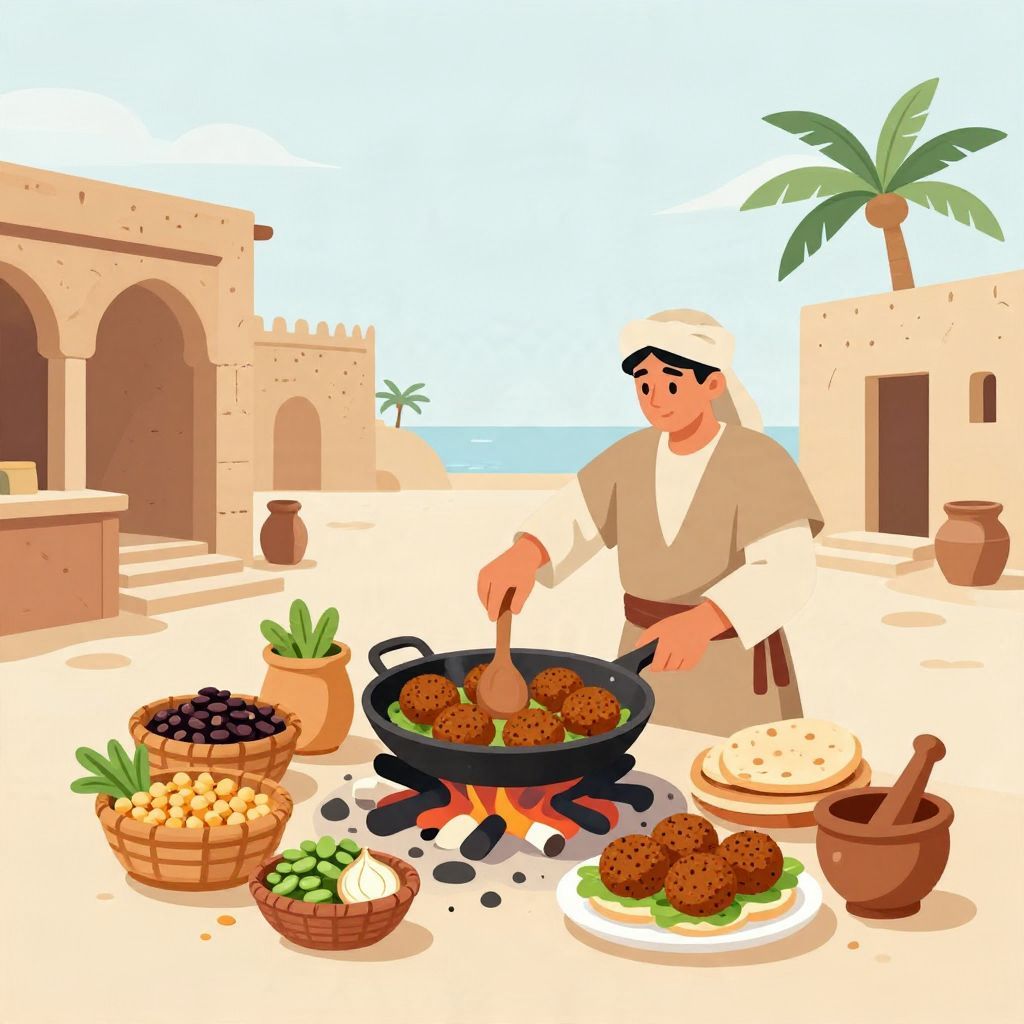
Where is falafel from? The short answer is that falafel is most strongly associated with the Eastern Mediterranean and the Arab world, especially Egypt and the Levant. Its exact birthplace is debated, because the dish spread across regions and changed over time, but its historical roots are usually traced to Egypt, where a similar fried bean patty was long eaten by Coptic Christians.
From there, falafel became a popular street food across the region, especially in Palestine, Lebanon, Syria, and later Israel. Its history is not the story of one single inventor or one fixed nation, but of a shared food tradition shaped by migration, religion, urban life, and changing ingredients.
Where is falafel from?
Falafel is generally traced to Egypt, then spread through the Levant and the wider Middle East. Most historians and food scholars connect its earliest known form to Egyptian ta‘amiya, a fried patty made from fava beans. Chickpeas, now common in many versions, likely became more widespread later in the Levant. Because the dish crossed borders and communities, its “origin” is regional rather than tied to one modern country.
Why the origin is debated
Falafel is a good example of a food whose history is older than modern national borders. Egypt, Palestine, Syria, Lebanon, and other parts of the eastern Mediterranean all claim a relationship to it, and each claim reflects real historical use. But the recipe evolved over centuries, so the question “where is falafel from” does not have a single simple answer.
The strongest historical evidence points to Egypt as the earliest known center, while the broader cultural identity of falafel belongs to the eastern Mediterranean. In other words, falafel is both Egyptian in origin and Levantine in its later development and popularity.
The Egyptian roots of falafel
Many food historians trace falafel to Egypt, where a similar fried bean mixture was known as ta‘amiya. This version was traditionally made with fava beans rather than chickpeas. It was especially associated with Egypt’s Christian communities, particularly Copts, who may have used it as a meatless food during religious fasting periods.
Ta‘amiya and religious food traditions
Meatless dishes have long played an important role in religious practice. In Egypt, a bean-based fried patty offered a filling, inexpensive, and portable meal. That made it practical for urban workers as well as for people observing dietary restrictions. Over time, the dish moved beyond religious use and became a common everyday food.
This helps explain why falafel spread so easily. It was affordable, adaptable, and satisfying. In societies where meat could be expensive, legumes provided protein at low cost. Frying the mixture in oil also gave it a crisp texture and made it appealing as street food.
From fava beans to chickpeas
The earliest Egyptian form used fava beans, but the chickpea version became especially popular farther north. Chickpeas are now the version many people think of when they hear “falafel.” That shift likely happened as the dish moved into the Levant, where chickpeas were widely available and suited local tastes.
This ingredient change matters historically because it shows falafel was not frozen in one original recipe. Instead, it adapted to local agriculture and culinary habits. The dish remained recognizable even as its main bean changed.
How falafel spread through the Levant
Falafel became deeply rooted in the Levant during the late Ottoman period and into the 20th century. Cities such as Jerusalem, Beirut, Damascus, and Jaffa developed strong street-food cultures, and falafel fit perfectly into them. It was cheap, filling, and easy to serve from small shops or carts.
Street food and urban life
As cities grew, so did demand for quick meals. Falafel was ideal for workers, travelers, and students. Vendors could prepare it in batches, fry it quickly, and serve it in bread with herbs, pickles, and sauces. This urban setting helped transform falafel from a local bean patty into a regional staple.
In the Levant, falafel also became linked to everyday social life. It was not an elite dish but a common one, eaten by people across class lines. That broad appeal helped it survive political change, shifting borders, and changing identities.
Why the Levant became central to falafel’s identity
By the 20th century, falafel was widely recognized as a hallmark of Levantine cuisine. In Palestine in particular, it became a familiar part of street food culture in cities and towns. Lebanon and Syria also claimed their own local versions, each with slightly different seasoning, bean choices, and serving styles.
The dish’s identity became more visible as migration and trade carried it beyond its original region. Once people encountered it in markets and restaurants, falafel began to represent the broader culinary culture of the Middle East to outsiders.
Falafel in modern history
Falafel’s modern rise is tied to the 19th and 20th centuries, when transportation, urbanization, and political change increased movement across the eastern Mediterranean. What had once been a regional food became a recognizable symbol of Middle Eastern cooking.
Migration and diaspora
As people from Egypt and the Levant migrated to Europe, the Americas, and elsewhere, they brought falafel with them. Restaurants and food stalls introduced it to new audiences, especially in immigrant neighborhoods. Over time, falafel became one of the most familiar Middle Eastern foods outside the region.
Its popularity abroad grew because it suited vegetarian diets and could be served in many forms: in pita, on plates with salads, or as part of mezze. That flexibility helped it cross cultural boundaries more easily than some other traditional dishes.
Falafel and national identity
In the modern era, falafel has sometimes been drawn into debates over national ownership. Israelis, Palestinians, Egyptians, Lebanese, and others have all claimed it as part of their culinary heritage. These claims are best understood in historical context: foods often become symbols of identity when borders harden and national culture becomes politically important.
Rather than proving that one group “owns” falafel, these debates show how shared regional foods can become markers of belonging. Falafel’s history is therefore both culinary and political. It reflects a common heritage that later national narratives tried to divide.
What made falafel endure?
Falafel lasted because it solved practical problems. It was inexpensive, filling, portable, and adaptable to local ingredients. It also worked in religious and secular settings alike. A food with those qualities can travel across classes, cities, and centuries.
Key reasons for its longevity
- Affordable ingredients: beans and chickpeas were widely available and inexpensive.
- Meatless flexibility: it suited fasting traditions and vegetarian diets.
- Street-food convenience: it could be cooked quickly and served on the go.
- Regional adaptability: cooks could adjust spices, herbs, and beans to local tastes.
- Cultural familiarity: it fit everyday eating habits across the eastern Mediterranean.
These qualities helped falafel move from a local specialty to a durable regional classic. Few dishes survive so successfully across changing empires, languages, and national borders.
How historians should understand falafel’s origin
When asking where falafel is from, it is better to think in layers rather than in a single point of origin. The earliest known form appears to be Egyptian, likely connected to Coptic food traditions and made with fava beans. Later, the dish spread into the Levant, where chickpea versions became common and where falafel took on its modern street-food identity.
Established evidence versus tradition
There is strong historical support for an Egyptian starting point, but not for a precise invention date or a named inventor. That means popular stories about one person creating falafel should be treated cautiously unless backed by reliable evidence. The dish emerged through gradual culinary development, not a documented moment of invention.
Likewise, modern national claims should not be confused with the dish’s older history. Falafel belongs to a shared food culture that predates many of the borders now used to define it.
Conclusion: the historical answer
So, where is falafel from? Historically, falafel is best understood as an Egyptian-born dish that developed into a beloved food of the Levant and the wider Middle East. Its exact origin cannot be pinned to one date or one modern nation, but its long journey from ta‘amiya to international street food reveals how recipes travel, adapt, and become part of many identities. If you are interested in other food origins, you may also enjoy where gin is from and where coffee originally came from.