
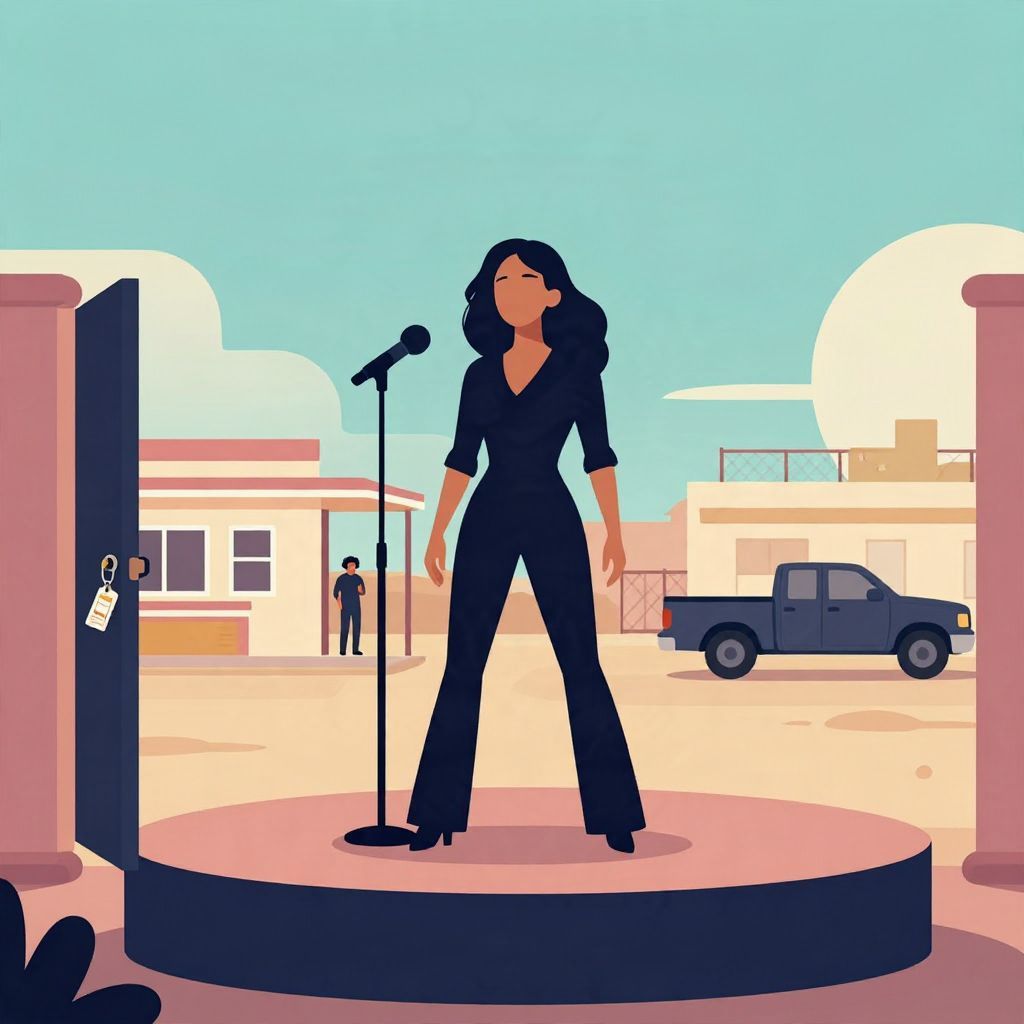
Why was Selena killed? The short answer is that Selena Quintanilla-Pérez was murdered by Yolanda Saldívar on March 31, 1995, after a breakdown in trust, financial disputes, and escalating conflict within Selena’s business circle. The killing was not the result of a public political cause or historical movement, but of a personal relationship that turned deadly.
To understand the tragedy, it helps to look at Selena’s rise, Saldívar’s role in her career, and the events that led to the shooting in Corpus Christi, Texas. The case became one of the most shocking celebrity murders in modern American history and remains significant because of Selena’s cultural legacy and the questions it raised about loyalty, power, and control.
Why Was Selena Killed?
Selena was killed because Yolanda Saldívar, who had been trusted as a manager and close associate, became the center of a dispute over money and missing records. When Selena confronted her, the confrontation ended in gunfire. Historians and journalists generally treat the murder as the result of a personal and financial breakdown, not a broader historical or ideological conflict.
The Relationship Between Selena and Yolanda Saldívar
Yolanda Saldívar entered Selena’s professional world as the president of Selena’s fan club and later became involved in managing Selena’s boutiques. At first, she was seen as a loyal and energetic supporter. Over time, however, concerns grew about missing funds and irregular business practices. Selena and her family began to suspect that Saldívar had mishandled money connected to the fan club and stores.
Why trust mattered so much
Selena’s career was still closely managed by family members, especially her father, Abraham Quintanilla Jr. In that environment, trust was essential. Saldívar’s access to records, fans, and business operations gave her unusual influence. Once suspicions arose, the relationship shifted from professional dependence to suspicion and fear, which is often how small business disputes become more dangerous when personal loyalty is involved.
The Events Leading Up to the Murder
By early 1995, Selena’s family believed that Saldívar had been stealing or mismanaging money. Selena and her relatives confronted her and moved to limit her access. Saldívar was upset by the accusations and by the loss of her position. The conflict intensified in the days before the shooting, when Selena met with her to retrieve financial documents and resolve the dispute.
A brief chronology of the final days
- Early 1995: Selena’s family investigates financial problems connected to Saldívar.
- March 1995: Pressure increases as Selena seeks missing records and clarity about the business accounts.
- March 31, 1995: Selena meets Saldívar at a motel in Corpus Christi to obtain documents.
- That same day: Saldívar shoots Selena, who later dies from her injuries.
This sequence matters because it shows that the murder was not random. It emerged from a specific dispute that had already become emotionally charged. The final meeting was supposed to settle practical matters, but instead it became the point at which fear, anger, and desperation collided.
What Happened on March 31, 1995?
On the morning of March 31, Selena met Saldívar at a motel in Corpus Christi. Selena was trying to recover business documents needed to sort out the financial problems. During the meeting, Saldívar shot her. Selena managed to leave the room and seek help, but she collapsed in the motel lobby. She was taken to the hospital and later died from blood loss.
Why the motel meeting was so important
The motel encounter is central to the historical record because it marks the moment when a business dispute became homicide. The evidence presented in the case showed that Selena had gone there expecting paperwork, not violence. That makes the murder especially tragic: the danger was not obvious in advance, even though the relationship had already become unstable.
Was There a Motive Beyond the Business Dispute?
The established motive in the case centers on conflict over money, trust, and control. Some people have speculated about jealousy, obsession, or emotional dependence, and those factors may have shaped Saldívar’s behavior. But historians and legal records are careful not to turn speculation into fact. The clearest evidence points to a combination of financial accusations and a deteriorating relationship.
What can be said with confidence
- Saldívar had been in a position of trust within Selena’s business world.
- Financial irregularities had been suspected before the killing.
- Selena confronted Saldívar shortly before her death.
- The shooting happened during an attempt to obtain records and explain the missing money.
It is important to separate confirmed evidence from later interpretations. Popular retellings sometimes simplify the story into a single emotion, such as jealousy or obsession. The historical reality is more complicated: the murder grew out of a damaged working relationship, financial suspicion, and a confrontation that spiraled out of control.
Selena’s Historical and Cultural Context
Selena was not just a singer; she was a major figure in Tejano music and a symbol of Mexican American cultural pride. By the early 1990s, she had become one of the most visible Latin music stars in the United States. Her success made her death feel larger than a private tragedy. It became a national and transnational event, especially for fans in Texas, Mexico, and across the broader Latino community.
Why her death had such a powerful impact
Selena’s popularity meant that her murder was widely covered and deeply mourned. She represented both artistic achievement and cultural visibility at a time when Latin artists were gaining broader recognition in U.S. popular culture. Her death interrupted a career that many believed was just reaching its peak, which intensified the sense of loss.
The Legal Aftermath
After the shooting, Saldívar was arrested and later tried for murder. She was convicted and sentenced to life in prison. The legal process confirmed the basic facts of the killing, even as public discussion continued to focus on motive and warning signs. The courtroom outcome established the murder as a criminal act rooted in a personal and business conflict.
Why the trial mattered historically
The trial mattered because it transformed a shocking death into a documented legal case. It also helped fix the public understanding of the event. For many people, the trial was the place where rumor gave way to evidence, even though questions about emotional motive and the social dynamics around Selena’s inner circle continued to circulate afterward.
How Historians and the Public Remember the Case
From a historical perspective, Selena’s murder is remembered in two overlapping ways: as a criminal case and as a cultural turning point. The crime itself was the result of a specific personal relationship gone wrong. But the public memory of the event has been shaped by Selena’s lasting importance as an icon of Latin music, fashion, and cross-cultural identity.
Common misunderstandings
One common misunderstanding is that Selena was killed for a broad political or social reason. That is not supported by the evidence. Another is that the murder can be explained by a single simple motive. In reality, the case involved a chain of events: trust, money, confrontation, and violence. That complexity is part of why the story still resonates.
Why the Question Still Matters
People still ask why Selena was killed because the event remains emotionally powerful and historically significant. Her death marked the end of a rising career and exposed how personal relationships in the entertainment world can become dangerous when business, loyalty, and resentment collide. It also shows how a single act of violence can reshape cultural memory for decades.
In the end, Selena was killed because a trusted associate became the source of a deadly confrontation after financial disputes and broken trust. The tragedy was personal, but its impact was historical: it ended the life of one of the most beloved performers of her generation and left a lasting mark on American and Latino cultural history. For readers interested in the wider story, see why Yolanda killed Selena Quintanilla.