
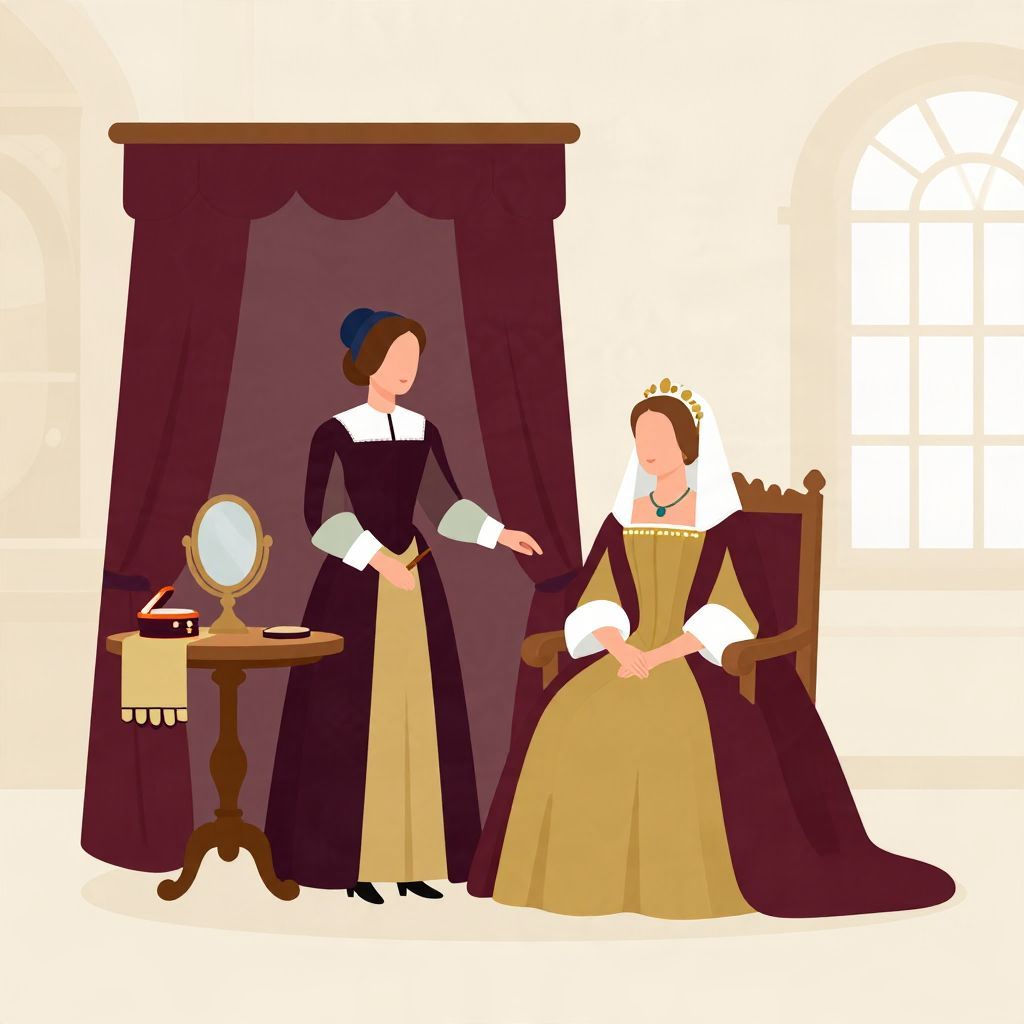
What is a lady in waiting? The phrase refers to a woman who attends a queen, princess, or other high-ranking noblewoman as part of a royal household. The role was especially important in medieval and early modern Europe, where court life depended on rank, ceremony, and constant personal service.
Although the title sounds decorative today, a lady in waiting could be a trusted companion, political observer, household official, and sometimes a powerful intermediary. Her duties varied by country and period, but the position was usually tied to aristocratic status and the intimate world of monarchy.
What Is a Lady in Waiting?
A lady in waiting was a noblewoman appointed to serve and accompany a queen or princess. She assisted with daily routines, attended ceremonies, and often provided conversation and companionship. In many courts, she was both a personal attendant and a visible sign of status, rank, and dynastic power.
Origins of the Lady in Waiting
The office developed gradually from medieval court households, where rulers and their families were surrounded by servants, attendants, and nobles. Women of rank were attached to royal women because aristocratic households were social as well as domestic spaces. By the later Middle Ages, the role had become more formalized in many European courts.
Medieval court households
In medieval Europe, royal households were not private homes in the modern sense. They were mobile centers of government, ceremony, and patronage. Noble women who served a queen or princess helped manage clothing, travel, worship, and daily access to the ruler. Their presence also reflected the importance of kinship and alliance in aristocratic politics.
Why noble birth mattered
Unlike ordinary servants, ladies in waiting were usually drawn from noble families. This was partly because they were expected to move comfortably in elite society, understand court etiquette, and represent the dignity of the woman they served. Their appointments could also strengthen political ties between families and regions.
What Did a Lady in Waiting Do?
The duties of a lady in waiting depended on the court, the time period, and the rank of the woman she served. In general, she assisted with personal attendance, ceremonial appearances, correspondence, and social life. Some also acted as confidantes, messengers, or informal political go-betweens.
Daily responsibilities
- Helping a royal woman dress and prepare for public appearances
- Accompanying her during travel, meals, worship, and ceremonies
- Assisting with letters, gifts, and household arrangements
- Providing companionship and conversation
- Serving as a witness to court events and social interactions
Ceremonial and political roles
At court, appearance mattered. A lady in waiting helped create the image of order, refinement, and hierarchy around a queen or princess. Because she was close to power, she might also hear important news, observe alliances and rivalries, and influence access to her mistress. In some courts, such proximity made the role quietly political.
How the Role Changed Over Time
The meaning of “lady in waiting” changed across centuries and countries. In some periods, the office was highly structured with clear ranks and titles. In others, it was looser and more personal. The role remained most visible in European monarchies, especially in England, France, Spain, and later in other royal courts influenced by European models.
Late medieval and Renaissance courts
During the late medieval and Renaissance periods, royal households became more elaborate. Queens and princesses often had a retinue of noblewomen whose presence reinforced dynastic prestige. Court culture emphasized display, etiquette, and controlled access to the sovereign, so ladies in waiting became important participants in the ritual life of monarchy.
Early modern Europe
By the 16th and 17th centuries, many royal households had formal ranks among female attendants. In England, for example, a queen’s household could include ladies of the bedchamber, maids of honor, and other attendants with distinct duties. Similar hierarchies existed elsewhere, though titles and functions differed from one kingdom to another.
Modern survivals
In some monarchies, the role survived into the 19th and 20th centuries, though it often became more ceremonial. As royal households modernized and public expectations changed, the practical household labor once associated with the office diminished. The title remained as part of court tradition, but its meaning became more symbolic than domestic.
Was a Lady in Waiting the Same as a Maid or Servant?
No. A lady in waiting was usually a noblewoman, not a servant in the ordinary sense. She belonged to the social elite and served in a courtly capacity. While she might perform personal assistance, her status was far above that of household staff. The distinction between rank and service is central to understanding the role.
Social status and etiquette
Because court society was deeply hierarchical, the lady in waiting occupied an unusual position: she was both subordinate to the queen or princess and superior to most other household workers. Her behavior, dress, and family background all mattered. She was expected to embody refinement, loyalty, and discretion.
Famous Examples in History
Many historical women served as ladies in waiting, though the exact title and duties varied. Some became influential because of their closeness to queens and princesses. Others are remembered because they later married into powerful families or became involved in court politics, diplomacy, or religious change.
European royal courts
In Tudor and Stuart England, ladies in waiting were part of the queen’s intimate household and could gain influence through personal trust. In France and Spain, similar court offices helped maintain the ceremonial life of monarchy. Across Europe, these women often came from families that benefited from royal favor.
Why some ladies in waiting became important
Access was power. A woman who spent time with a queen might hear confidential matters, shape opinions, or help manage correspondence and introductions. That did not mean every lady in waiting was politically active, but the position created opportunities that ordinary noblewomen did not have.
What the Role Reveals About Monarchy
The office of lady in waiting shows that monarchy was never only about kings and queens. It depended on households, servants, relatives, and attendants who made royal life function. The role also reveals how gender, rank, and service were organized in aristocratic society, where women could exercise influence through proximity and trust rather than formal office alone.
Household power and female authority
Royal women were often central to dynastic politics, diplomacy, and patronage. Ladies in waiting helped sustain that world. Their presence made it possible for queens and princesses to move through public and private life with the support expected of their station. In this sense, the office was part of the machinery of female authority at court.
Common Misunderstandings About Ladies in Waiting
Popular culture sometimes treats ladies in waiting as decorative companions or romantic figures in palace stories. In reality, the role was more structured and socially significant. It was not simply about standing beside a queen; it was about rank, access, etiquette, and the practical demands of court life.
Not all courts used the same term
The phrase “lady in waiting” is especially familiar in English, but equivalent offices elsewhere had different names. Historical translation can blur these distinctions. That is why it is better to think of the role as a type of court office rather than a single universal institution with one fixed definition.
Key Facts About a Lady in Waiting
- The role was usually held by a noblewoman, not a servant.
- She attended a queen, princess, or other high-ranking female royal.
- Her duties included companionship, ceremonial attendance, and household support.
- She could also serve as a trusted intermediary or observer at court.
- The office was especially important in medieval and early modern monarchies.
- Its exact duties and title varied by country and century.
Why the Term Still Matters Today
The phrase “lady in waiting” remains useful because it captures a distinctive feature of older royal systems: the blending of domestic life, politics, and ceremony. It reminds us that courts were organized through personal relationships as much as through laws and institutions. Understanding the role helps explain how monarchy worked in everyday practice.
So, what is a lady in waiting? Historically, she was a noblewoman attached to the household of a queen or princess, serving as companion, attendant, and sometimes political confidante. The office reflects the social order of court society, where rank and service were closely intertwined. For more on royal hierarchy, see what a duke was in royalty or what a marquess was.