
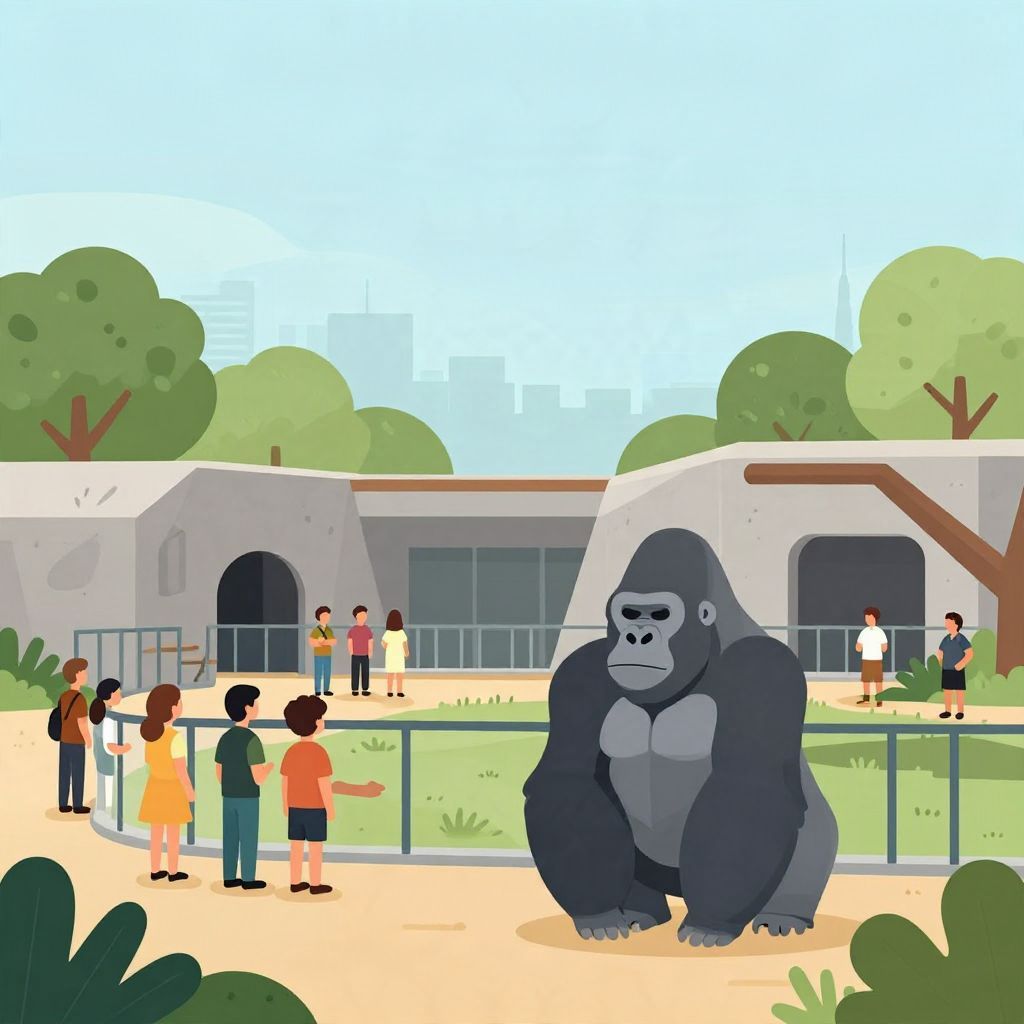
When was Harambe killed? The gorilla Harambe was shot and killed on May 28, 2016, at the Cincinnati Zoo and Botanical Garden in Ohio. His death followed a child entering the gorilla enclosure, a rapid emergency response, and a decision by zoo staff that has been debated ever since.
The incident became an international news story within hours and later turned Harambe into a symbol in online culture, public debate, and animal welfare discussions. To understand the date is simple; to understand the event requires looking at what happened that day, why the zoo acted, and why the story remained controversial.
When Was Harambe Killed?
Harambe was killed on May 28, 2016. He was a 17-year-old western lowland gorilla at the Cincinnati Zoo. After a young child fell into the gorilla enclosure, zoo officials decided to shoot Harambe to protect the child, ending the emergency within minutes.
What Happened at the Cincinnati Zoo?
The incident took place at the Cincinnati Zoo and Botanical Garden in Cincinnati, Ohio, on a busy spring day. A three-year-old boy entered the gorilla habitat after climbing or slipping through a barrier, then fell into the moat area where Harambe was present. Zoo visitors recorded part of the scene, and the footage quickly spread online.
Harambe approached the child, touched him, and moved around him in ways that alarmed observers. Zoo staff faced a fast-moving situation with a large, powerful animal and a vulnerable child in immediate danger. After assessing the risk, they fired a shot that killed Harambe and allowed rescuers to reach the boy.
Why the zoo made that decision
Zoo officials said they believed tranquilizing Harambe would not have been fast enough and could have made the situation more dangerous. A tranquilizer does not instantly stop an animal; a sedated gorilla might have reacted unpredictably before losing strength. In the zoo’s view, a lethal shot was the quickest way to prevent a possible fatal attack.
That decision remains the central reason the story is still discussed. Supporters argued that staff had to choose between a child’s life and the uncertain behavior of a distressed gorilla. Critics argued that better enclosure design, stronger barriers, or alternative response methods might have avoided the killing.
Who Was Harambe?
Harambe was a western lowland gorilla, a species native to Central Africa and listed as critically endangered in the wild. He was born in captivity on May 27, 1999, at the Gladys Porter Zoo in Brownsville, Texas, and later moved to Cincinnati in 2014.
He was not a wild gorilla but a zoo animal raised under human care. His name, often said to mean “pull together” in Swahili, became famous only after his death. Before the incident, Harambe was one animal among many in a major American zoo; afterward, he became a global reference point in arguments about zoos, safety, and social media culture.
Why Harambe became so well known
Harambe became widely known because the event was filmed, shared, and debated almost immediately. The combination of a child in danger, a dead endangered animal, and visible public disagreement created a story that moved far beyond local news. Memes, jokes, tributes, and serious commentary all followed, giving the incident an unusually long afterlife.
Why Did Harambe’s Death Cause Such a Strong Reaction?
The reaction was intense because the event touched several sensitive issues at once: child safety, animal ethics, zoo policy, and the power of viral media. Many people saw the shooting as a tragic but necessary act. Others saw it as a preventable failure that exposed weaknesses in zoo design and human supervision.
There was also a moral tension in the public response. Harambe was a rare and charismatic animal, but the child’s life was the immediate priority. That made the event emotionally difficult to discuss. People often spoke past one another, with some focusing on the zoo’s responsibility and others on the parents’, the child’s, or the animal’s welfare.
The role of viral video
The footage of the enclosure spread quickly online and shaped public opinion before many people understood the facts. Video clips can create a sense of certainty, but they often leave out context such as the layout of the habitat, the speed of the response, and the limitations of zoo staff. In Harambe’s case, the internet amplified the event into a cultural flashpoint.
The Timeline of the Incident
The sequence of events on May 28, 2016, is important for understanding why the zoo acted as it did. While exact minute-by-minute details are often simplified in retellings, the broad chronology is well established.
- Before the incident: Visitors were present at the Cincinnati Zoo on a public day in late May.
- The child entered the enclosure: A three-year-old boy got into the gorilla habitat and fell into the moat area.
- Harambe approached the child: The gorilla moved near and around the boy, leading staff to fear for the child’s safety.
- Zoo staff intervened: Officials evaluated options and chose to shoot Harambe.
- Rescue followed: After Harambe was killed, the child was removed from the enclosure and taken for medical attention.
This timeline shows why the event was so difficult to manage. The zoo had only moments to decide, and the stakes were immediate. In crisis situations, institutions often must act under uncertainty, with incomplete information and no perfect outcome available.
What Happened After Harambe Was Killed?
After the shooting, the child survived and was treated for injuries that were not life-threatening. The zoo continued to face public scrutiny, and the incident prompted broader discussion about enclosure safety and visitor responsibility. The child’s family also came under public attention, which added another layer of controversy and discomfort.
The Cincinnati Zoo defended its staff’s actions, saying the decision was made to save the child’s life. Animal welfare advocates, meanwhile, pointed to the death of an endangered gorilla as evidence that zoos must continue improving barriers and emergency procedures. The event became a case study in how quickly a local incident can become a national and even global debate.
Changes and lessons
The death of Harambe did not produce a single universal reform, but it did reinforce existing concerns about enclosure safety and human behavior around captive animals. Zoos already design habitats to reduce risk, yet no barrier is completely foolproof if visitors ignore rules or supervision fails. The incident reminded institutions that safety planning must account for both animal behavior and human error.
Why People Still Search for the Date
Many people search “When was Harambe killed” because the event has become shorthand for a very specific moment in internet history. Some want the factual date; others want the story behind the meme; still others remember the event as one of the most discussed zoo incidents of the 2010s. The date matters because it anchors the public memory of the event.
May 28, 2016, is also the date that separates the real historical event from the later online mythology. Over time, Harambe’s name was used in jokes, political commentary, and exaggerated stories that had little to do with the actual gorilla. Knowing the real date helps keep the record clear.
Harambe in Historical and Cultural Memory
Although Harambe’s death is a recent event, it has already become part of modern cultural history. It illustrates how social media can transform a local tragedy into a global symbol. It also shows how public grief, humor, outrage, and moral debate can overlap in the digital age.
In that sense, Harambe’s story is not just about one gorilla. It is about the relationship between humans and animals in captivity, the speed of online reaction, and the way modern events can acquire a second life in internet culture. Few zoo incidents have had such a lasting public aftereffect.
Quick Answer: The Date and the Story Behind It
Harambe was killed on May 28, 2016, at the Cincinnati Zoo after a child entered his enclosure. Zoo staff shot the gorilla during a fast-moving emergency, saying they acted to protect the child. The event became controversial because it raised questions about zoo safety, animal welfare, and how the public responds to tragedy online.
For readers interested in the broader context of animal history and public memory, related topics such as zoo conservation and famous modern animal controversies can help explain why Harambe’s death still resonates years later.