
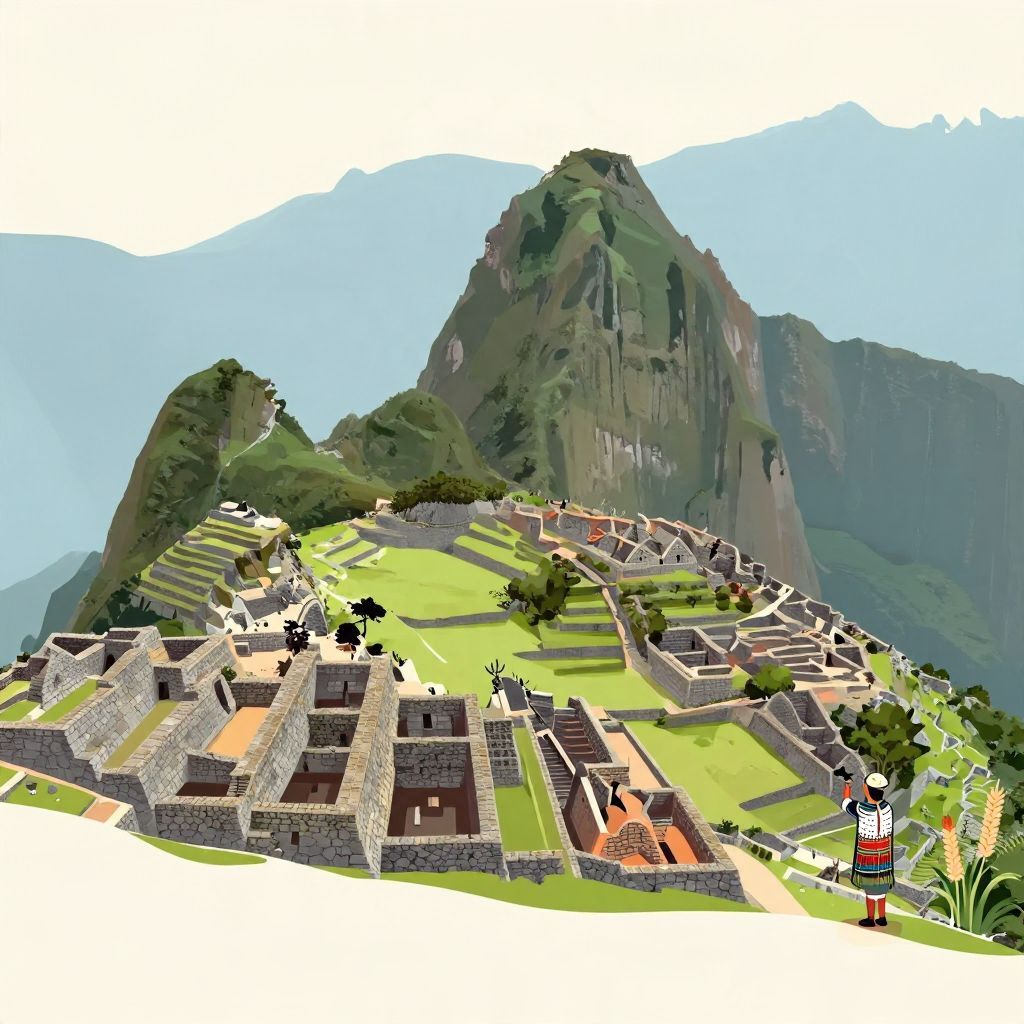
What does Machu Picchu mean? The short answer is that the name is generally understood to mean “Old Peak” or “Old Mountain” in Quechua, the language of the Inca and many Andean peoples. The famous ruins themselves are Inca, but the name is not the original Inca name for the site.
That distinction matters. Archaeologists and historians know a great deal about the city’s construction and use, but the exact original name of the site remains uncertain. “Machu Picchu” is the modern name that became attached to the ruins and later spread around the world.
What Does Machu Picchu Mean?
Machu Picchu is usually translated from Quechua as “Old Peak” or “Old Mountain.” Machu means old, while pikchu can mean peak, mountain, or promontory. The name refers to the dramatic mountain ridge on which the site sits, not necessarily to a specific Inca settlement name recorded in the 15th century.
Because Quechua was primarily an oral language in the Inca period, spellings vary. You may also see “Picchu” written as “Pikchu,” which reflects different ways of representing Andean pronunciation in Spanish and English.
Why the translation is not always simple
Translating place names from Quechua is not always exact, because words can carry several related meanings depending on context. “Machu” is fairly straightforward, but “picchu” can mean more than one kind of high place. So while “Old Mountain” is the most common everyday translation, “Old Peak” is also widely used and equally reasonable.
The Site Behind the Name
Machu Picchu is a 15th-century Inca site in the Andes of present-day Peru, above the Urubamba River valley. It was built during the height of the Inca Empire, probably under the rule of Pachacuti, the emperor who transformed the Inca state in the mid-1400s. The site is famous for its stone architecture, terraces, and mountain setting.
It was not a “lost city” in the literal sense. Local people knew of the site, but it was not widely known outside the region after the Spanish conquest. Its global fame came much later, especially after the early 20th century.
What the ruins tell us
Archaeological evidence suggests Machu Picchu was an important ceremonial, residential, and agricultural center. Its terraces supported farming, while temples and elite residences show that it had religious and political significance. Scholars still debate its exact function, but it was clearly more than a simple fortress or village.
Was Machu Picchu the Original Name?
Probably not. One of the most important points in the history of the site is that Machu Picchu may have been the name of the mountain or ridge rather than the settlement itself. The original Inca name for the urban complex is not known with certainty.
Some researchers have suggested other names based on colonial-era documents and local traditions, but no consensus has replaced “Machu Picchu.” In historical writing, the modern name remains standard because it is the one that became established through scholarship, tourism, and global usage.
Why historians are cautious
Inca place names were often recorded by Spanish chroniclers long after the empire had fallen, and many indigenous names were altered in spelling or pronunciation. That makes it difficult to recover the exact original name of a site like Machu Picchu. Historians therefore separate the meaning of the modern name from the identity of the original Inca settlement.
How the Name Became Famous
The site entered global awareness in the early 20th century, especially after its introduction to wider academic and public audiences by Hiram Bingham in 1911. Bingham’s expeditions were not the first human contact with the site, but they helped make Machu Picchu internationally famous.
As interest grew, the name “Machu Picchu” became attached not only to the mountain but also to the ruins themselves. That usage spread through books, photographs, museums, and later tourism. Today, the name is inseparable from the site’s identity in world history.
From local place to world heritage symbol
Over time, Machu Picchu became a symbol of Inca achievement, Andean heritage, and the architectural skill of pre-Columbian South America. UNESCO later recognized the site as a World Heritage Site, further cementing its global importance. The name now carries both geographic meaning and cultural prestige.
Quechua, the Inca, and the Meaning of Place Names
To understand what Machu Picchu means, it helps to know a little about Quechua. Quechua was the main language family of the Inca Empire and remains widely spoken in the Andes today. Many Inca place names describe landscape features, which makes sense in a mountainous region where terrain shaped daily life, travel, farming, and identity.
In the Andes, a place name often tells you something practical: whether a site is high, steep, old, sacred, rocky, or fertile. “Machu Picchu” fits that pattern. It identifies a prominent high place, and the name itself reflects the close relationship between Andean peoples and the mountains around them.
Common elements in Quechua place names
- Machu — old
- Picchu / Pikchu — peak, mountain, promontory, high place
- Many names combine physical description with spiritual or social meaning
What Machu Picchu Meant to the Inca
We cannot know exactly what the name meant emotionally or politically to the people who used it, but the site itself clearly mattered. The Inca often linked sacred geography with state power. Mountains were not just scenery; they were part of a living sacred landscape. A name like “Old Peak” would have been immediately meaningful in that world.
The location also suggests careful planning. Machu Picchu sits in a dramatic natural setting that offered both symbolic power and practical advantages. Its terraces, water management, and stonework show that the Inca adapted architecture to the mountain environment rather than forcing the landscape to fit a city plan.
Possible functions of the site
Scholars have proposed several roles for Machu Picchu, including royal estate, ceremonial center, and elite retreat. It may have served more than one purpose over time. What is clear is that it was integrated into the Inca imperial system and built with extraordinary skill.
How the Meaning of the Name Is Used Today
Today, “Machu Picchu” is often used in two ways: as the name of the archaeological site and as a symbol of Inca civilization. In both cases, the literal meaning “Old Peak” reminds us that the site is inseparable from its mountain setting. The name itself captures the geography that made the place distinctive.
At the same time, modern visitors sometimes assume the name tells the full story of the ruins. It does not. The meaning is only one part of a larger historical picture that includes Inca engineering, Spanish conquest, local memory, and modern rediscovery.
Why the name still matters
Names preserve history. Even when the original settlement name is lost, the surviving name can reveal language, landscape, and cultural values. Machu Picchu’s name connects the site to Quechua speech and to an Andean way of understanding place that predates modern tourism by centuries.
Key Facts About Machu Picchu
- Location: Andes of present-day Peru
- Built: likely in the mid-15th century
- Civilization: Inca
- Common meaning: “Old Peak” or “Old Mountain”
- Language origin: Quechua
- Original site name: uncertain
Conclusion: What Does Machu Picchu Mean?
Machu Picchu most likely means “Old Peak” or “Old Mountain” in Quechua, but the name is probably a modern label for the site rather than its original Inca name. That uncertainty is part of its history. The words point to the landscape, while the ruins themselves reveal the power and sophistication of the Inca world. For related background, see what language the Inca spoke and how historical place names can shape meaning.