
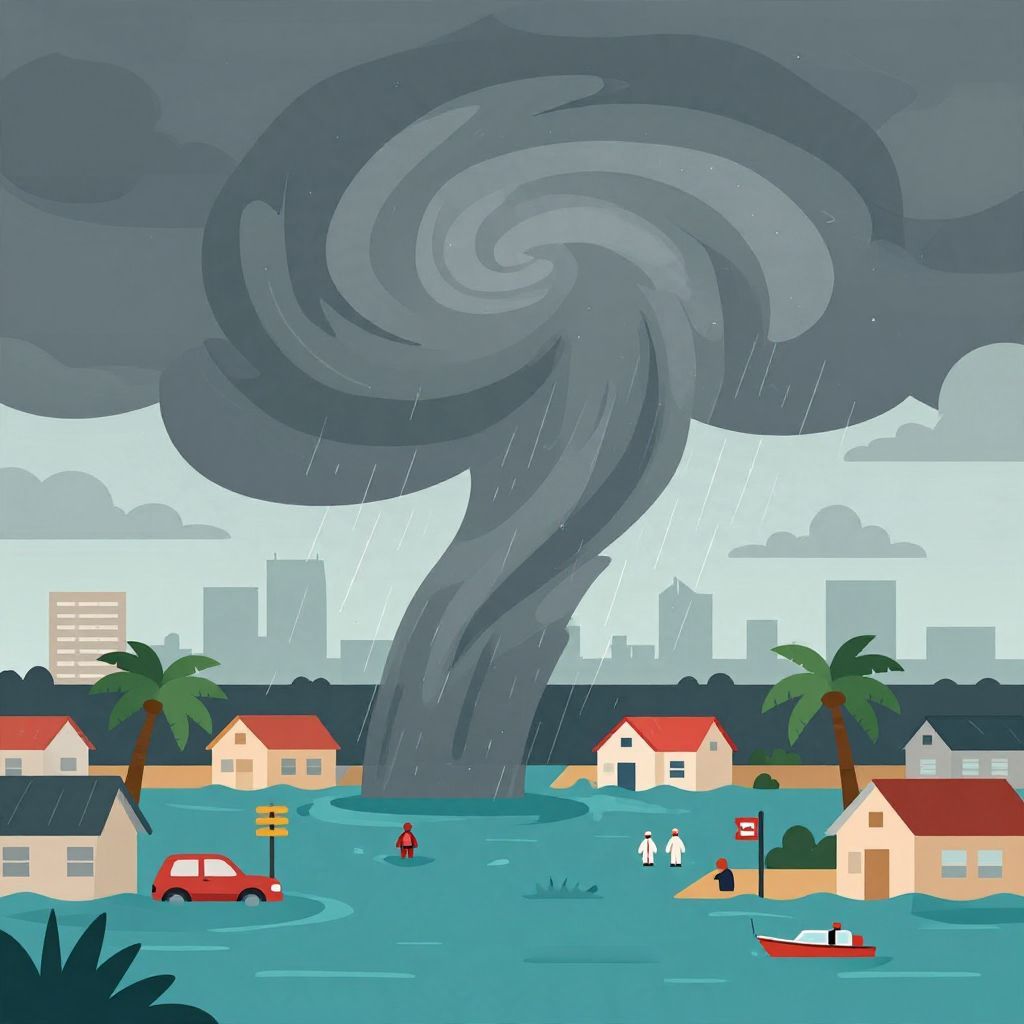
When was Hurricane Harvey? The storm formed in August 2017 and made landfall in Texas on August 25, 2017. It became one of the most destructive hurricanes in U.S. history because it stalled over the Gulf Coast region and produced catastrophic flooding, especially in the Houston area.
Harvey is remembered not just for its date, but for the extraordinary scale of the disaster it caused. Its slow movement, intense rainfall, and prolonged impact turned a late-summer hurricane into a major historical event in modern American weather history.
When was Hurricane Harvey?
Hurricane Harvey occurred in August 2017. It developed in the Atlantic basin, strengthened in the Caribbean and Gulf of Mexico, and struck Texas as a Category 4 hurricane on August 25, 2017. The storm then lingered over southeastern Texas for days, causing record-breaking rainfall and widespread flooding through late August and early September 2017.
The basic timeline of Hurricane Harvey
Harvey’s story unfolded over several days, but its most important dates are easy to place. The storm began as a tropical wave in mid-August 2017, became a tropical storm on August 17, and reached hurricane strength by August 24. The next day it made landfall near Rockport, Texas, and then weakened while continuing to dump enormous amounts of rain.
Key dates in order
- Mid-August 2017: A tropical wave moved across the Atlantic and Caribbean.
- August 17, 2017: Harvey became a tropical storm.
- August 24, 2017: Harvey strengthened into a hurricane.
- August 25, 2017: Harvey made landfall in Texas.
- Late August to early September 2017: Extreme flooding spread across southeastern Texas and neighboring areas.
What made Harvey so significant?
Harvey was significant because it did not behave like a typical fast-moving landfall hurricane. After striking Texas, it slowed dramatically and remained over the region for days. That unusual stall allowed rain to accumulate to historic levels, overwhelming rivers, neighborhoods, roads, and drainage systems. In many places, flooding became the main disaster rather than wind.
Why the storm caused such severe damage
Several factors made Harvey especially destructive. The storm drew in abundant Gulf moisture, moved very slowly, and repeatedly trained rain bands over the same areas. Houston and surrounding communities were particularly vulnerable because of their low-lying terrain, rapid urban growth, and drainage challenges. The result was a disaster that affected both coastal and inland communities.
Where did Hurricane Harvey hit?
Harvey first struck the Texas coast near Rockport, but its effects spread far beyond the shoreline. Coastal towns suffered wind damage, storm surge, and infrastructure destruction, while inland areas around Houston experienced catastrophic flooding. The storm also affected parts of Louisiana as rainfall and runoff moved eastward.
Major areas affected
- Texas coast: Especially Rockport and nearby communities, which saw intense wind damage.
- Greater Houston: The center of the flooding disaster.
- Southeast Texas: Many counties experienced swollen bayous and submerged roads.
- Louisiana: Some areas received heavy rain and flood impacts as Harvey’s moisture spread east.
How strong was Hurricane Harvey?
Harvey reached Category 4 intensity before landfall, with very strong winds near the coast. But its historical importance lies less in wind speed than in rainfall and flooding. Even after the hurricane weakened, it continued to produce dangerous conditions. In disaster history, Harvey is often remembered as a storm whose water damage far exceeded its wind damage.
Wind versus water
Many hurricanes are judged by their maximum wind speed, but Harvey showed why that is only part of the story. A storm can weaken quickly after landfall and still remain dangerous if it keeps feeding moisture into one region. Harvey’s flooding became the defining feature of the event and shaped how historians, meteorologists, and emergency planners discuss it today.
The human story behind the date
The date of Hurricane Harvey matters because it marks the beginning of a major humanitarian crisis. As the storm approached and then stalled, tens of thousands of people needed rescue or evacuation. Families were displaced, homes were damaged or destroyed, and emergency responders carried out thousands of water rescues across the Houston area and beyond.
Immediate consequences
- Emergency evacuations and sheltering began as the storm approached land.
- Coastal communities experienced severe wind and structural damage.
- Heavy rainfall caused rivers, bayous, and reservoirs to rise rapidly.
- Large-scale rescues were needed as neighborhoods flooded.
- Recovery efforts continued for months after the storm passed.
Why Hurricane Harvey is remembered in modern history
Harvey became one of the costliest natural disasters in U.S. history. Its economic impact was enormous, but its historical importance also comes from the way it changed public understanding of flood risk in major metropolitan areas. The storm demonstrated that hurricanes can be devastating far from the coast and that urban flooding can be just as dangerous as storm surge.
Long-term significance
After Harvey, discussions about flood control, infrastructure, climate resilience, and emergency planning became even more urgent. The storm is frequently used as a case study in meteorology and disaster history because it showed how a hurricane’s movement can matter as much as its strength. A slow storm can produce a disaster larger than a faster, stronger one.
Was Hurricane Harvey a historic hurricane?
Yes. In historical terms, Harvey stands out because of the combination of its landfall date, its intensity, and its unprecedented rainfall totals in some locations. It is not simply remembered as “the hurricane in 2017,” but as a defining weather disaster of the early 21st century in the United States.
What historians and meteorologists emphasize
Experts tend to focus on three things: the timing in late August 2017, the unusual stall over Texas, and the massive flooding that followed. Those elements made Harvey a landmark event in the history of American hurricanes. It is often discussed alongside other major storms not only for its damage, but for the lessons it revealed about preparedness and vulnerability.
Quick answer: the date of Hurricane Harvey
If you only need the direct answer, Hurricane Harvey was in August 2017, with landfall in Texas on August 25, 2017. The storm’s most destructive flooding continued for days afterward, making it one of the most significant weather disasters of that year.
Hurricane Harvey’s date is important, but its legacy is larger than a calendar entry. It marked a turning point in how many people understood hurricane risk, especially the danger of extreme rainfall and urban flooding. For more historical date-based context, you may also be interested in when World War 1 began or other timeline-focused history topics such as when hydrogen was discovered.