
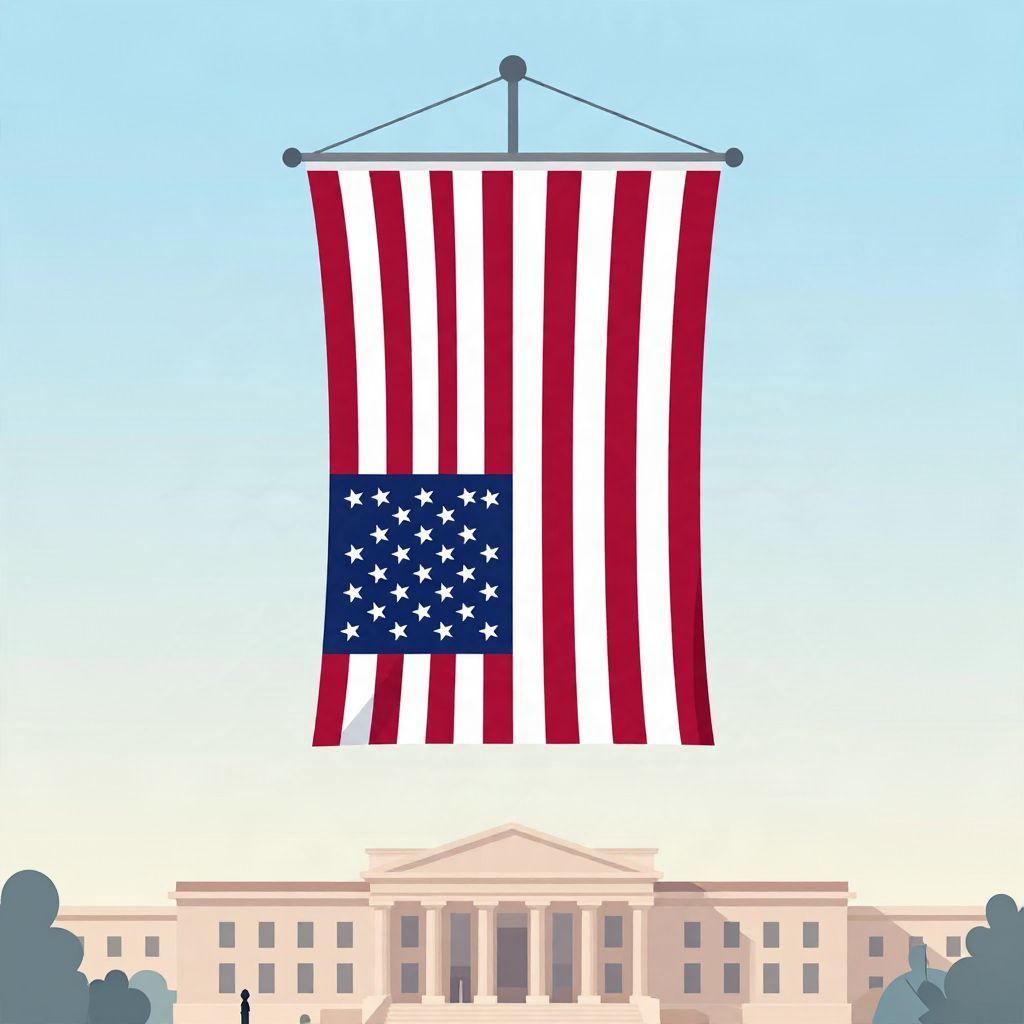
What does an upside down American flag mean? In U.S. history and law, it is most often a signal of dire distress, not a casual political statement. The meaning has changed over time, but the core idea has remained tied to emergency, danger, or a plea for help.
Because the flag is also a powerful national symbol, flying it upside down can be misunderstood. Its meaning depends on context, intent, and the setting in which it appears.
What does an upside down American flag mean?
An upside down American flag traditionally means serious distress. Historically, it was used as an emergency signal to show that people were in danger and needed help. In modern times, some people also use it as a protest symbol, but its original and official meaning is distress.
The historical meaning of an upside down flag
The idea of turning a flag upside down as a distress signal comes from older maritime and military traditions. On ships, flags were used to communicate when words could not be heard, and an inverted flag became a recognizable sign of emergency. That practice influenced later American usage.
Why distress mattered in early flag signaling
Before radios and instant communication, flags served as visual messages. A flag flown upside down stood out immediately and could be recognized from a distance. In dangerous situations, that visibility made it useful as a call for rescue or assistance.
In the United States, the distress meaning became part of broader flag custom rather than a single moment of invention. It was not created by one law or one person. Instead, it developed through long-standing flag practice and was later reflected in American etiquette and law.
How the U.S. Flag Code treats an upside down flag
The United States Flag Code recognizes the upside down flag as a signal of “dire distress in instances of extreme danger to life or property.” That wording is important: the flag is not meant to be inverted for routine disagreement, decoration, or convenience. It is reserved for emergencies.
What the law says and what it does not say
The Flag Code is a federal set of guidelines for respectful flag display. It is not generally enforced as criminal law against private citizens in ordinary circumstances, but it does establish the accepted meaning of the gesture. In that sense, the official historical meaning remains distress.
At the same time, Americans have used the upside down flag in political protest, especially in moments of national tension. That use is historically real, but it is a later and broader interpretation layered onto the older emergency signal.
When did Americans start using the flag upside down?
There is no single exact date when the upside down American flag began. The distress signal likely grew out of older nautical customs and became familiar in the 18th and 19th centuries as the U.S. flag itself became more established. By the 20th century, the meaning was widely recognized in both etiquette and law.
From ships to shore
Maritime signaling influenced many forms of American flag use. Ships relied on visual codes, and distress signals needed to be simple and unmistakable. As the American flag became a national emblem, the upside down version carried that emergency meaning onto land.
That transition matters historically because it shows how symbols move between settings. A shipboard emergency signal became a general national sign of alarm, especially in moments when people felt threatened or abandoned.
Is an upside down American flag a protest symbol?
Yes, it can be used that way today, but that is a modern political interpretation, not the original meaning. In recent decades, some Americans have flown the flag upside down to express anger about government actions, social unrest, court decisions, war, or national decline. The gesture is meant to suggest that the country itself is in distress.
Why protest and distress overlap
The protest use works because it builds on the older meaning. If the flag signals distress, then a person can use it to argue that the nation is in trouble. This is why the symbol can be powerful, but also controversial: some viewers see a plea for help, while others see disrespect.
Historically, that tension is not unusual. National symbols often acquire new meanings during periods of conflict. The American flag has been used both to express loyalty and to challenge the nation to live up to its ideals.
How the meaning changed during major historical moments
The upside down flag became especially visible during periods of division and crisis. Its use did not stay fixed in one era; instead, it adapted to changing political and social circumstances.
- 19th century: distress signaling remained tied to emergency and maritime custom.
- 20th century wars and unrest: the symbol could imply that the nation was in danger or under strain.
- Late 20th and 21st centuries: it became more common as a protest image in addition to an emergency signal.
This evolution shows a broader historical pattern: symbols rarely keep only one meaning forever. Their interpretation depends on who uses them, where they are used, and what events surround them.
What does it mean in everyday use today?
Today, an upside down American flag usually communicates one of two things: either a genuine emergency or a political protest. In ordinary life, people should not assume it is a decoration or a casual mistake. Because the symbol is so loaded, it often draws immediate attention.
Common modern interpretations
- Emergency distress: a call for immediate help or danger awareness.
- Political protest: a statement that the country is in trouble.
- Misuse or misunderstanding: sometimes people display it without knowing the historical meaning.
Context matters. A flag hanging upside down on a house, a vehicle, or a public building may be read differently depending on the surrounding circumstances. The same image can mean different things to different audiences, even when the person displaying it has one intention in mind.
Is it disrespectful to fly the flag upside down?
Many Americans do see it as disrespectful, especially when it is used outside a real emergency. Others view it as a legitimate form of protest protected by free expression. Historically, both reactions make sense: the flag is a revered symbol, but it has also been used to communicate alarm and dissent.
Respect, protest, and free speech
The upside down flag sits at the intersection of patriotism and criticism. Some people believe using it in protest dishonors the nation. Others argue that the gesture is a way to demand that the country correct serious problems. Historically, this debate reflects a long American tension between reverence for national symbols and the right to challenge authority.
That tension is part of the flag’s history, not an accident of modern politics. National symbols often become battlegrounds over identity, loyalty, and the meaning of citizenship.
How to tell whether it is an emergency or a protest
There is no foolproof way to know the person’s intent without context, but a few clues can help. The location, the surrounding signs, and whether there is an obvious emergency all matter. A flag displayed during a visible crisis is more likely to be a distress signal. A flag used alongside political messages is more likely protest.
- Look at the setting: home, public building, rally, or emergency scene.
- Notice whether other signs or banners are present.
- Consider whether there is immediate danger to life or property.
- Remember that the same symbol can carry different meanings in different contexts.
Still, it is best not to assume too quickly. Because the upside down flag has both traditional and modern meanings, interpretation should be cautious and grounded in circumstances.
The lasting historical significance of the upside down flag
The upside down American flag remains important because it shows how symbols evolve. What began as a distress signal in older signaling traditions became part of American flag etiquette, and later a powerful political image. Its history reveals how people use symbols to ask for help, express fear, or challenge the nation to change.
In that sense, the flag’s inverted display is more than a visual reversal. It is a historical message shaped by emergency, conflict, and public debate. The core meaning is still distress, but American history has given it a wider and more contested life.
So, what does upside down American flag mean? Historically, it means distress; in modern use, it can also signal protest. To understand it correctly, always look at the context, the era, and the reason it is being flown. For related reading, see why a neighbor might fly the flag upside down and a fuller explanation of the upside down flag’s meaning.