
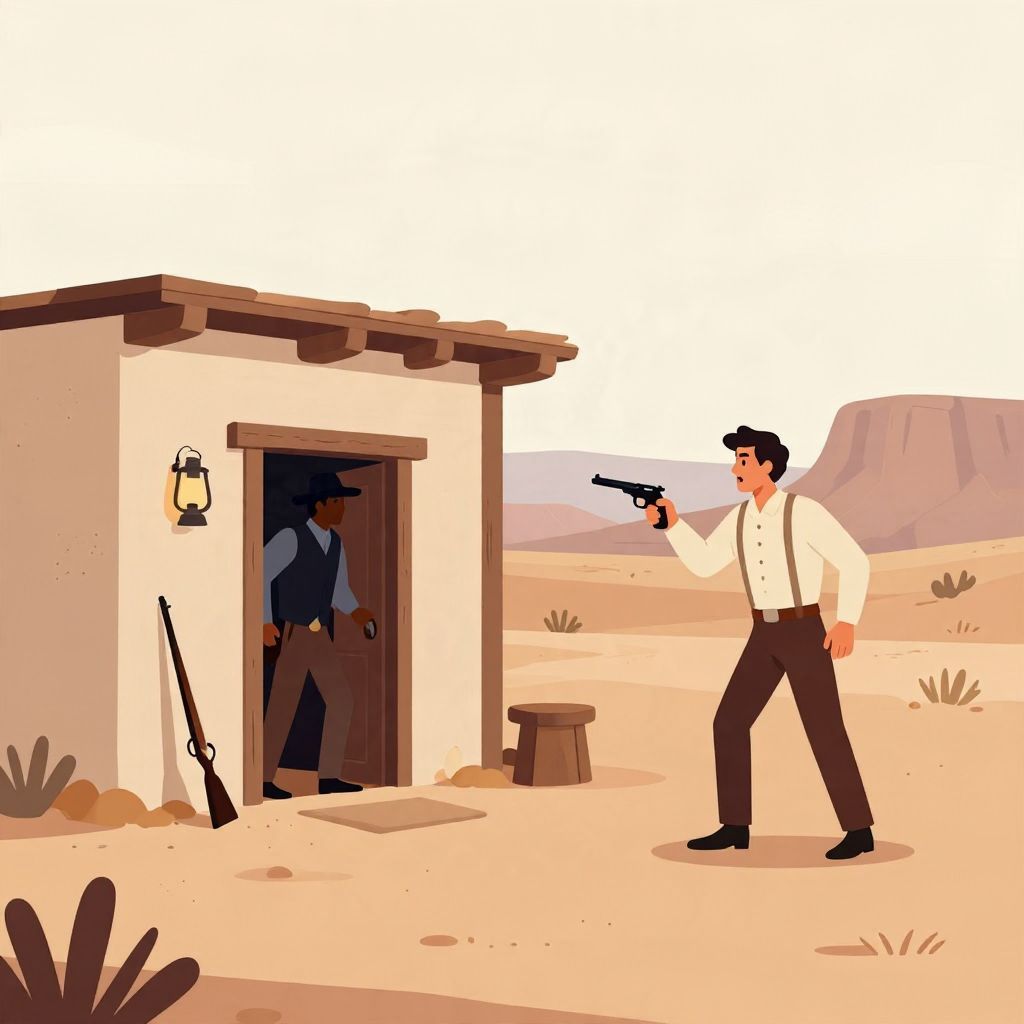
How did Billy the Kid die? The short answer is that he was shot and killed by Sheriff Pat Garrett on July 14, 1881, at Fort Sumner, New Mexico Territory. Garrett ambushed him in the dark after tracking him there, and Billy died almost instantly from a gunshot wound to the chest.
That basic fact is well established, but the story around it has become part history and part legend. Billy the Kid, born Henry McCarty and also known as William H. Bonney, was one of the most famous figures of the American West, and his death helped turn him into a lasting outlaw icon.
How did Billy the Kid die?
Billy the Kid died by gunshot on the night of July 14, 1881, when Pat Garrett shot him in Fort Sumner, New Mexico Territory. Garrett had been searching for him after Billy escaped custody earlier that year. According to the most accepted account, Billy entered a dark room at Pete Maxwell’s house and Garrett fired almost immediately, striking him fatally in the chest.
What happened on the night Billy the Kid was killed?
The killing took place in the home of Pete Maxwell, a local rancher and friend of Billy’s circle. Garrett was waiting there in the dark, hoping to catch the fugitive by surprise. Billy walked into the room, apparently unaware Garrett was inside, and asked in Spanish, “¿Quién es?” or words to that effect. Garrett then fired twice; one shot missed, and the other killed Billy.
The essential sequence is not much in dispute, but some details are. Eyewitness accounts were limited, and later retellings added drama. What historians generally agree on is that Billy was unarmed or had little chance to react and that Garrett’s shot ended the chase abruptly.
Why was Pat Garrett after him?
Garrett had been appointed sheriff of Lincoln County and was determined to capture Billy after the Lincoln County War and a series of killings that made the young outlaw notorious. In 1881, Billy had escaped from jail in Lincoln after killing two deputies, James Bell and Bob Olinger, while in custody. That escape made Garrett’s pursuit urgent and personal.
Who was Billy the Kid?
Billy the Kid was a young outlaw active in New Mexico during the late 1870s and early 1880s. He was born around 1859, probably in New York City, though even his early life is not fully documented. He became associated with the violent conflicts of the Lincoln County War, a struggle over power, cattle interests, and local politics in territorial New Mexico.
He was not a simple folk hero or a one-dimensional villain. He was a real criminal involved in theft and violence, but his youth, his daring escape, and the sensational accounts written about him after his death helped create a romantic image that outlived the historical man.
Why was he so famous?
Billy’s fame came from a combination of violence, youth, and storytelling. He was said to have killed several men, though the exact number is uncertain and often exaggerated in popular culture. Newspapers, dime novels, and later films turned him into a symbol of the untamed frontier, even as the real history was rooted in local feuds and law enforcement violence.
Was Billy the Kid really shot in the dark?
Yes, that is the accepted historical account. Garrett’s own book, published in 1882, described the killing, and the broad outline has remained consistent. Still, because the room was dark and the encounter brief, exact details are harder to verify than the fact of the death itself. Some later versions dramatized the moment, but the core event is not seriously disputed.
One reason the story has endured is that it fits the classic Western pattern: a fugitive, a lawman, a nighttime ambush, and a sudden end. But historians are careful to separate the confirmed event from the mythologized version that grew around it.
What do we know about the weapon and the wound?
Garrett is generally understood to have used a revolver. The fatal shot entered Billy’s chest and caused immediate death or near-immediate collapse. Because medical records from the scene are limited, modern readers should avoid expecting a forensic level of certainty. What matters historically is that Billy was killed instantly enough that he did not survive the encounter or recover from the wound.
Why did Garrett’s killing of Billy the Kid matter?
The death mattered for more than one reason. It ended one of the most famous manhunts in the American West, but it also helped create the legend of Billy the Kid. In death, Billy became larger than life: a symbol of outlaw freedom to some, and a reminder of frontier lawlessness to others.
Garrett’s reputation also changed. He became known as the man who killed Billy the Kid, a label that followed him for the rest of his life. The event shaped how both men were remembered, showing how a single violent act could become a lasting historical narrative.
How did the death shape the Billy the Kid legend?
Legend often grows when a life ends young and violently. Billy was only about 21 or 22 years old when he died, which made his story especially compelling. The combination of youth, rebellion, and sudden death gave writers and filmmakers a ready-made myth. Over time, the historical Billy and the fictional Billy became harder to separate.
What is myth and what is history in Billy the Kid’s death?
There are a few common myths surrounding his death. Some stories make the killing seem more theatrical than it likely was. Others suggest hidden conspiracies or alternate versions of the event. While historians continue to debate small details, there is no strong evidence that Billy survived the shooting or that the basic account was false.
- Established: Billy the Kid was shot and killed by Pat Garrett on July 14, 1881, at Fort Sumner.
- Likely: Garrett ambushed him in a dark room at Pete Maxwell’s house.
- Uncertain: The exact words exchanged, the precise positions of each man, and some later embellishments.
- Mythic: Claims that the event was staged or that Billy escaped death entirely.
What happened after Billy the Kid died?
After the shooting, Billy was buried at Fort Sumner in a simple grave. His death did not end public fascination; if anything, it intensified it. Pat Garrett published an account of the killing, and later generations kept retelling the story in books, films, and local memory. Billy’s grave eventually became a place of pilgrimage for history enthusiasts and tourists.
The broader historical setting also mattered. New Mexico Territory in the late nineteenth century was a place where weak institutions, local rivalries, and armed conflict often overlapped. Billy’s death reflected that world: justice was personal, enforcement was uneven, and violence could settle disputes when courts and sheriffs could not.
Why does Billy the Kid’s death still matter today?
Billy the Kid’s death matters because it shows how history and legend are made. The historical record tells us that a young outlaw was killed by a lawman in 1881. The cultural memory tells us much more: that the American West was a place of danger, mobility, and myth-making, where a single violent death could become national folklore.
For readers interested in how history turns famous lives into famous deaths, Billy’s story sits alongside other legendary endings. You may also want to read about how Marcus Garvey died or how Romeo died for more examples of how memory reshapes the end of a life.
In the end, the answer to how Billy the Kid died is straightforward: Pat Garrett shot him at Fort Sumner in 1881. What makes the story enduring is not uncertainty about the death itself, but the way that death helped transform a troubled young outlaw into one of the most famous figures in American history.