
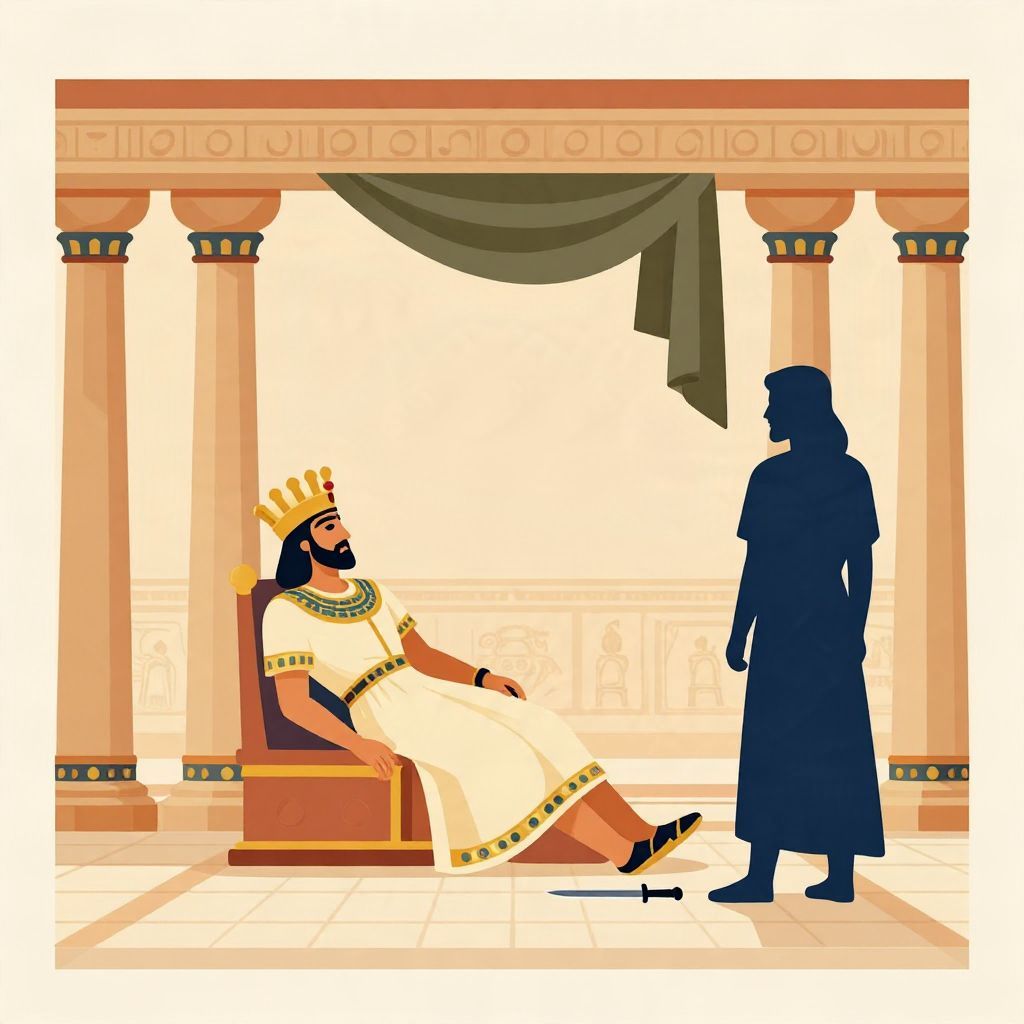
How did Xerxes die? The short answer is that the Persian king Xerxes I was assassinated in 465 BCE, most likely in a palace conspiracy at Persepolis. Ancient sources disagree on the exact details, but the broad outline is clear: he was killed by court insiders, and the murder triggered a struggle over succession.
Because Xerxes was one of the most famous rulers of the Achaemenid Empire, his death mattered far beyond the Persian court. It ended a reign remembered for the invasion of Greece, the rebuilding of imperial authority, and growing tensions within the royal household.
How Did Xerxes Die?
Xerxes I died by assassination, not in battle or of natural causes. The most widely accepted account is that he was murdered in 465 BCE by a court official named Artabanus, though ancient writers differ on whether Artabanus acted alone or with accomplices. The killing appears to have taken place inside the Persian royal court, probably at Persepolis or another royal residence.
The basic historical answer
What historians can say with confidence is that Xerxes was killed in a palace coup. He did not die on campaign, and there is no reliable evidence that he was executed after a formal trial. The assassination was part of a broader power struggle inside the Achaemenid elite, where access to the king could be as dangerous as war.
What Happened to Xerxes in 465 BCE?
Xerxes had ruled the Persian Empire for more than two decades when he was killed. By the end of his reign, he controlled a vast imperial system stretching from the eastern Mediterranean to Central Asia and Egypt. But the court had become politically unstable, and rival factions competed for influence around the throne.
Ancient accounts of the murder
Our main narratives come from later ancient authors, especially Ctesias and Diodorus Siculus, with some comparison possible to Aristotle and other writers. These sources do not fully agree. In one version, Artabanus, a high-ranking court official, killed Xerxes and then tried to place himself in control of the empire. In another, Artabanus manipulated the king’s son Artaxerxes against his father before the plot unraveled.
Because these accounts were written long after the event and often mix rumor with narrative drama, historians treat the details cautiously. Still, the core event—Xerxes’ assassination—is generally accepted.
Why the exact details are uncertain
Persian royal history is often preserved through Greek and later Roman sources, which can be biased, incomplete, or shaped by storytelling conventions. The Achaemenid court left fewer surviving narrative records than later empires, so historians must weigh conflicting testimony. That means the identity of every conspirator, the precise location of the murder, and the sequence of events remain uncertain.
Why Was Xerxes Assassinated?
The most likely reason was a struggle for power at the Persian court. Xerxes was an absolute monarch, but even absolute monarchs depended on loyal nobles, guards, administrators, and family members. When those relationships frayed, assassination became a real political weapon.
Court politics and succession fears
Xerxes’ later reign was marked by tension over succession. The Persian throne did not always pass smoothly from father to son, and royal relatives could become rivals. If Artabanus was involved, he may have hoped to control the empire through the young prince Artaxerxes I or to seize power himself. In either case, the murder reflects the instability that could emerge when imperial authority depended on palace loyalty.
Was revenge involved?
Some later traditions connect the assassination to personal grievances or to Xerxes’ harsh rule. That is possible, but it is harder to prove. Ancient court politics often blended personal ambition, family rivalry, and fear of punishment. It is safest to say that Xerxes died because powerful insiders believed his removal would benefit them.
Who Was Xerxes I?
Xerxes I was one of the major kings of the Achaemenid Empire, ruling roughly from 486 to 465 BCE. He was the son of Darius I and likely ruled from the imperial center in Persia while governing a multiethnic empire through satraps, tribute systems, and royal authority.
His place in Persian history
Modern readers often know Xerxes mainly as the Persian king who invaded Greece, especially through the battles of Thermopylae and Salamis. But his reign was much broader than the Greek wars. He oversaw administration, court ceremony, monumental building projects, and imperial consolidation. His death therefore affected not only military policy but the entire structure of Persian rule.
What kind of ruler was he?
Ancient Greek sources often portray Xerxes as a dramatic, even overconfident figure. Persian evidence is more limited, but it shows a king operating within a sophisticated imperial system. He inherited a powerful empire and worked to maintain it. His assassination suggests not weakness alone, but the dangers inherent in a court where immense power and intense rivalry coexisted.
What Happened After Xerxes Died?
After the assassination, the succession crisis was resolved in favor of Artaxerxes I, Xerxes’ son. According to the traditional account, Artabanus’ plot was exposed, and he was killed. Artaxerxes then became king and ruled for decades, helping stabilize the dynasty after the shock of his father’s murder.
The succession of Artaxerxes I
The transition mattered because it showed that the empire could survive a violent change at the top. Even though the king had been murdered, the Achaemenid state did not collapse. Instead, the royal family and elite officials moved quickly to secure the throne. That continuity is one reason the Persian Empire remained formidable for generations after Xerxes’ death.
Political consequences
Xerxes’ assassination likely intensified distrust within the court. When a king dies by conspiracy, the new ruler often responds by tightening control, rewarding loyalists, and punishing suspected rivals. In the Persian context, that meant the balance between royal authority and noble power became even more delicate. The murder may also have influenced how later kings guarded themselves and managed succession.
How Reliable Are the Sources About Xerxes’ Death?
Historians are careful here because the surviving evidence is uneven. The best-known stories come from writers who were not eyewitnesses and who wrote in traditions shaped by Greek literary interests. That does not make the assassination false; it means the dramatic details should not be treated as certain facts unless supported by stronger evidence.
What historians accept
- Xerxes I died in 465 BCE.
- He was assassinated, not killed in open warfare.
- The murder took place in or near the royal court.
- A palace conspiracy was involved, and Artabanus is the leading suspect in the tradition.
What remains disputed
- Whether Artabanus acted alone or with allies.
- The exact place where Xerxes was killed.
- The precise motive behind the plot.
- How much of the later narrative was shaped by rumor or moral storytelling.
Why Xerxes’ Death Matters in History
Xerxes’ death matters because it reveals how empires can be vulnerable from within. The Achaemenid Empire was enormous, wealthy, and militarily powerful, yet the king could still be killed by insiders close to the center of power. That is a reminder that imperial stability depended not only on armies and territory, but also on trust, succession, and elite loyalty.
Beyond the legend of the Persian Wars
Many people encounter Xerxes only through the Greek-Persian conflicts, where he is often cast as the great enemy of Greece. But his assassination shows a different historical reality: he was also a Persian monarch managing a complex state and a dangerous court. His death shifted the empire into a new phase under Artaxerxes I and helped shape the politics of the eastern Mediterranean for decades.
Conclusion
Xerxes died in 465 BCE because he was assassinated in a palace conspiracy, most likely by court insiders led by Artabanus. The exact details are uncertain, but the historical outcome is clear: his murder ended one reign and began another. If you want more background on the world Xerxes ruled, see what Persia became and explore broader chronology with another imperial timeline.