
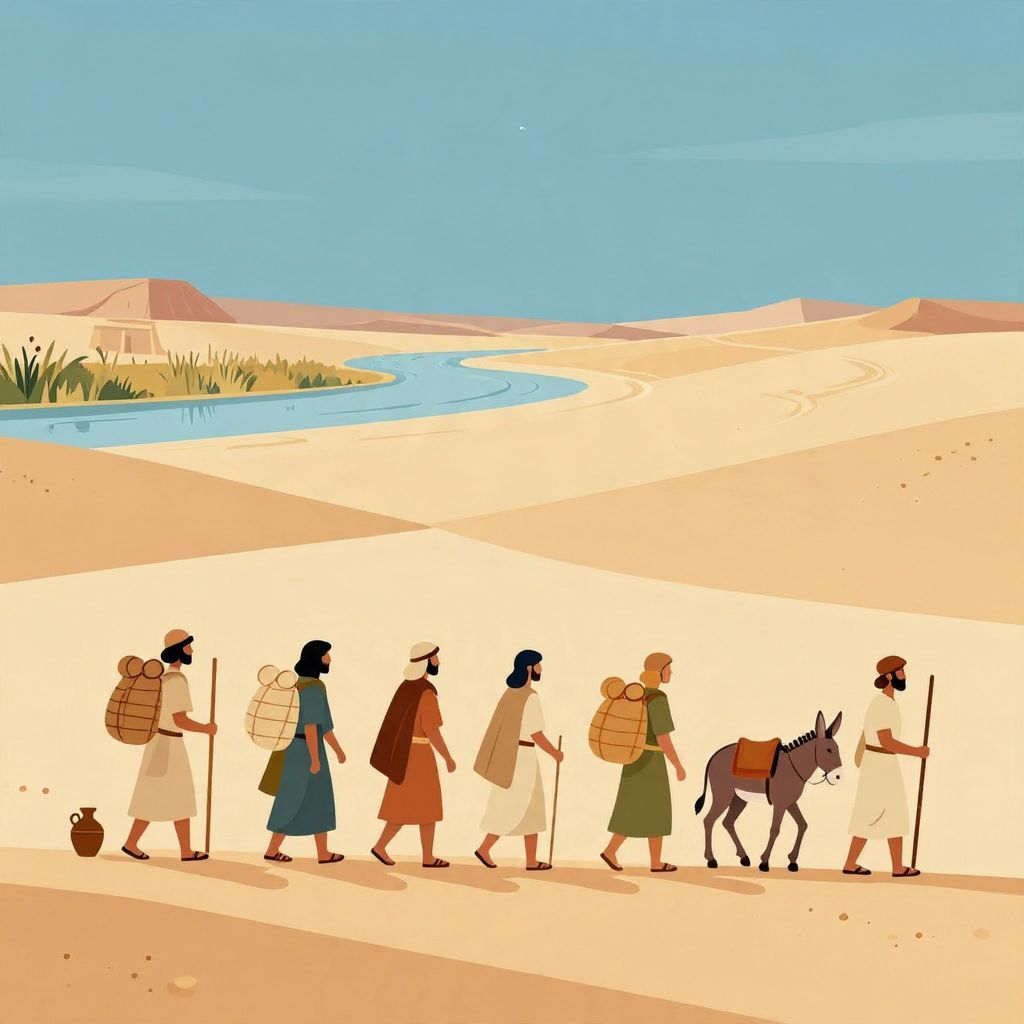
What does “Exodus” mean? In its simplest sense, it means a departure or mass exit from a place. Historically, the word is most famous because it names the biblical story of the Israelites leaving Egypt, but it also became a broader term for large-scale migration, escape, or removal.
The history of the word is tied to ancient language, religion, and later scholarship. To understand it fully, it helps to look at both the original meaning of the term and the long history of the story it came to describe.
What does Exodus mean?
“Exodus” means a departure, especially a large or significant one. The word comes from the Greek exodos, meaning “way out” or “departure.” In historical and religious usage, it most often refers to the Israelites’ escape from slavery in Egypt, as told in the Bible’s Book of Exodus.
Where the word “Exodus” comes from
The English word exodus entered usage through Latin and Greek. In Greek, exodos combines ex (“out”) and hodos (“way” or “road”). The basic idea is movement outward, especially leaving a place in a deliberate or dramatic way.
In the ancient world, this was a practical word before it became a famous title. It could refer to leaving a city, going out in procession, or departing from a location. Over time, Jewish and Christian readers came to associate it with the central liberation story of Israel leaving Egypt.
How the term became a biblical title
The Hebrew Bible originally did not use the English word “Exodus.” The second book of the Torah is known in Hebrew as Shemot, meaning “Names,” from its opening words. The Greek translation of the Hebrew scriptures, the Septuagint, gave the book the title Exodos, and that title was later carried into Latin and English tradition.
So when people ask what “Exodus” means, the answer has two layers: the literal meaning is “departure,” and the historical-religious meaning is the departure of the Israelites from Egypt.
What is the Exodus story in history?
The Exodus story is one of the most influential narratives in Jewish, Christian, and later Islamic tradition. It tells of the Israelites living in Egypt, suffering oppression, and then leaving under the leadership of Moses after a series of divine signs and confrontations with Pharaoh.
As a historical question, the story is more complicated. The Exodus is foundational religious memory, but scholars debate how much of it reflects recoverable history. There is no single consensus date or archaeological proof for the entire event as described in the Bible. Many historians treat it as a tradition shaped by memory, theology, and later national identity.
The basic sequence of the biblical narrative
- The Israelites are living in Egypt and are portrayed as oppressed and enslaved.
- Moses is called to lead them out.
- Pharaoh resists releasing them.
- Plagues strike Egypt in the biblical account.
- The Israelites leave Egypt and cross into the wilderness.
- The journey becomes the opening stage of covenant, law, and identity formation.
Whether read as sacred history, national memory, or theological narrative, the Exodus became a story about liberation, identity, and covenant. That is one reason the word has remained so powerful for centuries.
Did the Exodus happen as described?
Historians approach this question carefully. The biblical account is central to religious tradition, but direct evidence for a mass departure of hundreds of thousands of Israelites from Egypt has not been found. That does not mean the story is meaningless historically; it means its exact form is difficult to verify with the available evidence.
Scholars have proposed several possibilities. Some think the story may preserve memories of smaller groups leaving Egypt over time. Others see it as a later national origin story that combines older traditions, political memory, and theological meaning. The text itself was shaped over many generations, which makes simple one-date explanations unlikely.
Why historians remain cautious
Ancient Egypt left extensive records, but those records rarely describe defeats or embarrassing events in the way modern readers might expect. At the same time, the biblical text is not written as a modern historical report. It is a religious narrative with theological aims, so historians read it alongside archaeology, comparative texts, and the political history of the ancient Near East.
The cautious historical position is that the Exodus story reflects ancient memory and identity, but the details as written cannot be confirmed in full. This is a common situation in ancient history, where texts, oral tradition, and later editing all shape what survives.
Why the Exodus mattered in ancient history
Even if its precise historical reconstruction is debated, the Exodus became one of the most important origin stories in the ancient world. It explained how a people understood themselves: not as the product of empire, but as a community formed through deliverance, law, and covenant.
This mattered because ancient societies often defined themselves through kings, land, and empire. The Exodus offered a different foundation. It centered memory of suffering, escape, and obligation to a divine lawgiver rather than a human ruler. That made it unusually powerful in later political and religious thought.
Key themes in the story
- Oppression — life under forced labor and foreign power.
- Deliverance — escape through divine intervention and leadership.
- Identity — a people formed through shared memory.
- Law — freedom followed by covenant and responsibility.
- Journey — the wilderness as a place of testing and transformation.
How the word “exodus” is used today
In modern English, “exodus” is used far beyond the Bible. It can describe any large-scale departure, especially one involving many people leaving at roughly the same time. Journalists may use it for migration from cities, workplaces, countries, or institutions.
For example, people might speak of an exodus from a region during war, an exodus of workers from an industry, or a summer exodus from a city. In all these cases, the word still carries its original sense of a significant “way out.”
Examples of modern usage
- Population movement from rural areas to cities
- Refugee departures during conflict
- Mass resignations or layoffs
- Seasonal travel out of major urban centers
This broader usage shows how a word rooted in ancient Greek and biblical tradition became part of everyday historical language.
Exodus in religion, culture, and memory
The Exodus story has shaped more than vocabulary. It influenced religious ritual, law, literature, political movements, and ideas about freedom. In Jewish tradition, the Passover celebration commemorates the liberation from Egypt and keeps the memory alive year after year.
In Christian interpretation, the Exodus was often read as a symbol of salvation, deliverance, and spiritual journey. In later centuries, many political and social movements also drew on Exodus language to describe escape from oppression. Because of this, the word became a symbol of hope as well as departure.
Why the story endured
Stories endure when they speak to repeated human experiences. The Exodus does this by combining suffering, resistance, leadership, and the search for a better future. It is not only about leaving a place; it is about becoming a people through movement and memory.
That is why the term still resonates in historical writing, religious life, and public language. It names a departure, but it also suggests transformation.
What historians can say with confidence
There are a few points that are well supported. First, the word “exodus” comes from Greek and means “departure” or “way out.” Second, the Book of Exodus in the Bible received its title through Greek and later Latin tradition. Third, the story of Israel leaving Egypt became one of the most influential narratives in Western religious history.
What remains uncertain is the exact historical shape of the event behind the story. The biblical narrative is ancient, important, and deeply meaningful, but it is not straightforward evidence in the modern sense. Responsible history keeps both truths in view: the power of the tradition and the limits of what can be proven.
So, what does Exodus mean?
In historical terms, “Exodus” means a departure, especially a major one. In religious and cultural history, it refers most famously to the Israelites’ departure from Egypt and the larger story of liberation, covenant, and identity that followed. The word itself is ancient, but its significance has only grown over time.
If you want to explore the setting of the biblical story further, you may also find it useful to read about where Canaan was and the original language of the Bible.