
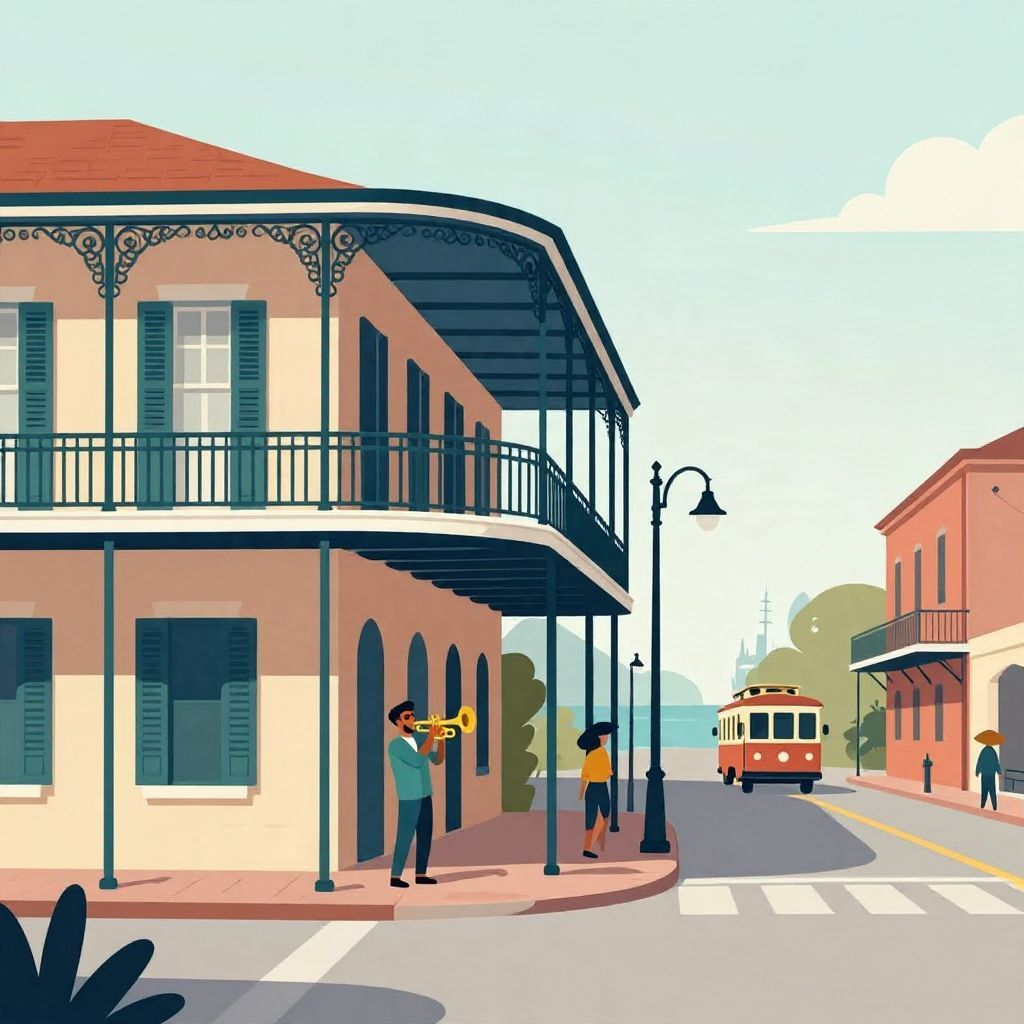
Why is New Orleans called the Big Easy? The short answer is that the nickname grew from the city’s long reputation for a relaxed pace, lively nightlife, music, and a culture that seemed less rigid than many other American cities. But the phrase did not begin as an official title; it emerged gradually in the 20th century and was shaped by local life, popular culture, and outsiders’ impressions.
Its meaning has changed over time, too. For some people, “the Big Easy” suggests the city’s easygoing social atmosphere. For others, it evokes the freedom, improvisation, and public celebration that have long defined New Orleans. The nickname is part history, part image, and part myth.
Why is New Orleans called the Big Easy?
New Orleans is called the Big Easy because the city became widely associated with a laid-back way of life, especially in contrast to faster-paced, more rule-bound urban centers. The nickname took hold in the 20th century, likely through local speech and newspaper usage, and was later reinforced by tourism, jazz culture, and popular media. It describes a reputation, not a formal origin story.
The historical roots of the nickname
The phrase “Big Easy” is modern, but the qualities it points to are older. New Orleans developed as a port city with a mixed population, strong musical traditions, and a social life shaped by French, Spanish, African, Caribbean, and American influences. That blend helped create a city culture that many visitors experienced as unusually open, expressive, and unhurried.
Unlike many American cities that grew around a single industrial identity, New Orleans was a port, a market, a cultural crossroads, and a place of performance. Street life, parades, music, food, and neighborhood gatherings became central to its public image. Over time, those features made “easy” feel like a fitting shorthand.
A city shaped by cultural mixing
Founded by the French in 1718, New Orleans passed under Spanish control in the late 18th century before becoming part of the United States in 1803 through the Louisiana Purchase. Its population included Europeans, enslaved Africans, free people of color, and migrants from the Caribbean and elsewhere. That diversity influenced language, religion, cuisine, architecture, and music.
This history mattered because the city’s culture was never simple or uniform. It was layered and often improvised, which later observers sometimes interpreted as relaxed or effortless. In reality, the “easy” image sat on top of a complex society shaped by slavery, racial hierarchy, poverty, migration, and political change.
How the nickname developed in the 20th century
The Big Easy became especially associated with New Orleans in the 1900s, when writers, journalists, musicians, and tourists began using it to describe the city’s atmosphere. The exact first use is difficult to pin down with certainty, and historians generally treat the nickname as a gradual cultural development rather than a single invention. By the mid-20th century, it was firmly attached to the city.
One reason the nickname spread was the growth of travel writing and entertainment coverage. New Orleans was increasingly marketed as a place of music, nightlife, and pleasure. The city’s jazz clubs, dance halls, and later its Mardi Gras celebrations helped make the “Big Easy” label memorable and commercially useful.
Possible meanings behind “easy”
- Easygoing lifestyle: A slower, more relaxed social rhythm than in many Northern or industrial cities.
- Entertainment culture: Music, bars, and festivals made the city seem effortlessly lively.
- Economic and social contrast: Visitors often compared New Orleans with more formal or hurried urban environments.
- Local identity: Residents and outsiders alike used the phrase to describe a distinctive civic personality.
It is important to note that “easy” did not mean simple. New Orleans has long been a city of hard work, inequality, and recurring crisis. The nickname highlights the city’s public face more than its hidden realities.
Jazz, nightlife, and the city’s public image
New Orleans is often called the birthplace of jazz, and that musical heritage strongly shaped the Big Easy nickname. In the late 19th and early 20th centuries, jazz emerged from a mix of African American musical traditions, brass band music, blues, ragtime, and Caribbean rhythms. The city’s music scene gave New Orleans a reputation for spontaneity and creativity.
Nightlife also mattered. Storyville, the city’s famous red-light district from 1897 to 1917, became associated with entertainment, dance, and music. Although Storyville was only one part of the city’s history, it helped establish a national image of New Orleans as a place where social rules seemed looser than elsewhere.
That reputation grew through performance culture. Brass bands, second-line parades, riverfront entertainment, and neighborhood celebrations all reinforced the idea that New Orleans was a city where public joy was part of everyday life.
The role of Mardi Gras
Mardi Gras did not create the nickname, but it strengthened it. The city’s Carnival season, with its parades, costumes, music, and street celebrations, offered a vivid example of New Orleans at its most exuberant. To outsiders, Mardi Gras seemed to confirm the city’s image as playful, festive, and socially open.
At the same time, Carnival has deep historical roots in Catholic tradition and local custom. It is not just a tourist spectacle. Its long development in New Orleans helped give the city a lasting identity tied to ceremony, performance, and public gathering.
Did the nickname come from gambling or crime?
Some popular stories link “the Big Easy” to gambling, vice, or supposedly effortless living. Those ideas are part of the city’s folklore, but they are not the best historical explanation. New Orleans certainly had districts associated with gambling, drinking, and prostitution, especially in the late 19th and early 20th centuries. However, the nickname itself is broader than that.
Historians generally treat the phrase as a cultural label rather than a reference to lawlessness. It described the city’s mood and public reputation, not a literal claim that life there was easy in every sense. In fact, many New Orleanians lived with segregation, economic hardship, flooding, and political corruption. The nickname can obscure as much as it reveals.
How outsiders helped popularize the name
Tourists and journalists played a major role in making the nickname stick. Visitors often arrived expecting music, food, and celebration, and they left with a romanticized picture of the city. That outside gaze helped turn local character into a marketable identity.
By the mid-20th century, New Orleans was increasingly promoted as a destination unlike any other American city. The nickname fit neatly into that branding. It suggested charm, leisure, and pleasure, all of which were useful for tourism and media coverage.
Popular culture later amplified the phrase. Once “the Big Easy” appeared in books, songs, and films, it became a familiar shorthand for the city itself. At that point, the nickname no longer needed a precise origin; it had become part of New Orleans’ public identity.
What the nickname leaves out
The Big Easy is a powerful phrase, but it can flatten history. New Orleans has also been a city of labor, conflict, crisis, and resilience. Its history includes slavery, racial segregation, yellow fever outbreaks, Hurricane Katrina, and long struggles over housing, infrastructure, and political power. None of that fits neatly into the image of an “easy” city.
Even the city’s celebrated culture was often produced under difficult conditions. African American musicians, Creole communities, dockworkers, cooks, and street performers helped shape the traditions now associated with New Orleans, often while facing discrimination and exclusion. The nickname captures the city’s style, but not always the social realities behind it.
A nickname with both truth and simplification
“The Big Easy” works because it points to something real: New Orleans does have a distinctive rhythm, one that values music, celebration, and social ease. But it is also a simplification. The city’s apparent effortlessness has always depended on deep historical layers, unequal power, and cultural labor.
That tension is part of why the nickname has endured. It is catchy, affectionate, and evocative, even if it does not tell the whole story.
The lasting significance of the Big Easy
Today, “the Big Easy” remains one of the most recognizable nicknames in American urban history. It reflects how New Orleans is imagined both by residents and by the wider world: as a city of music, celebration, hospitality, and distinctive local pride. The phrase has become inseparable from the city’s brand, but it also points back to centuries of cultural mixing and public performance.
In historical terms, the nickname matters because it shows how cities acquire meaning beyond geography. New Orleans did not simply become the Big Easy by accident; it was shaped by migration, empire, slavery, religion, music, and tourism, all of which helped create a reputation that still resonates.
So, why is New Orleans called the Big Easy? Because over time the city came to symbolize a relaxed, festive, and creative way of life. The nickname is rooted in real cultural history, even if it smooths over the harder truths of the city’s past. For more on the festive traditions that helped shape New Orleans’ identity, see what Carnival is and how Carnival traditions developed in Brazil.