
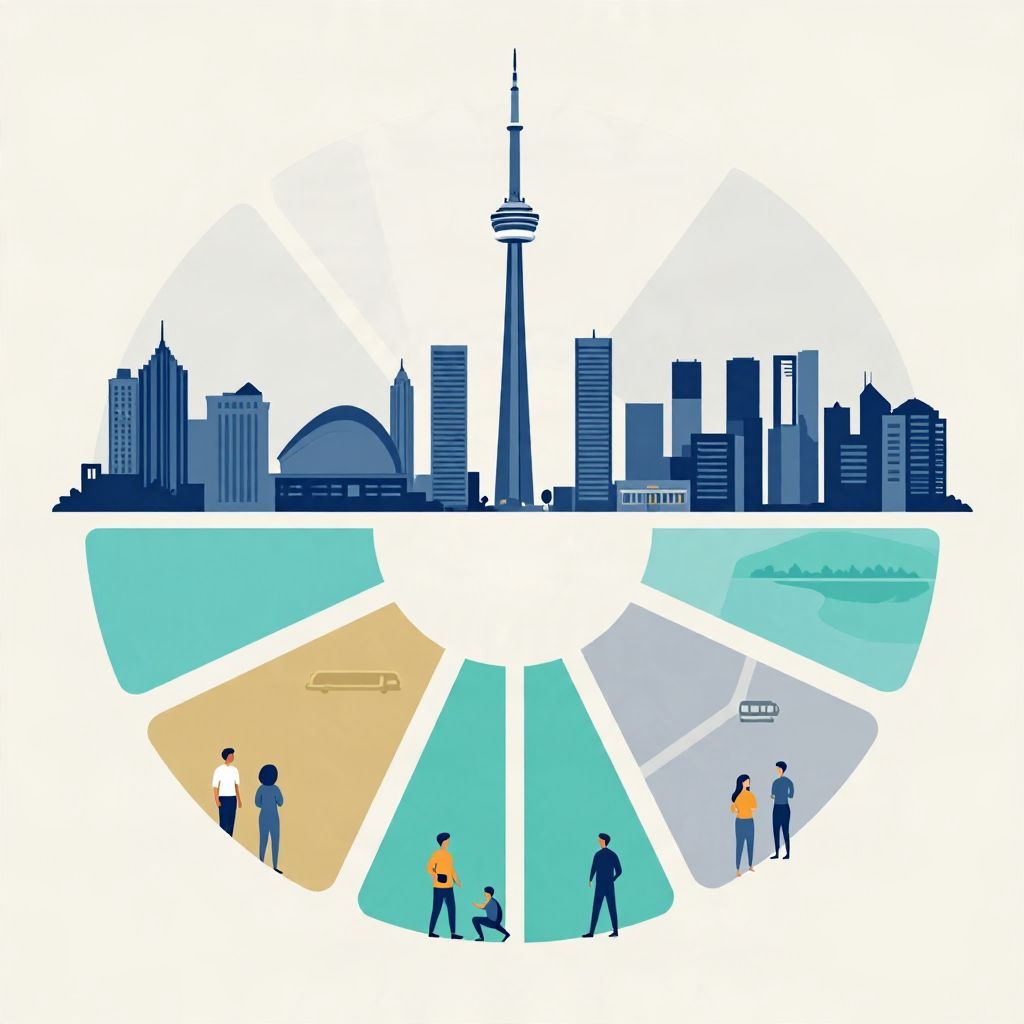
Why is Toronto called The 6? The nickname became widely known in the 2010s, but its roots reach into the city’s geography, telephone history, and hip-hop culture. It is most closely associated with rapper Drake, who helped popularize it internationally, though the idea did not come from him alone.
The phrase is now one of Toronto’s best-known modern labels, yet its meaning is often misunderstood. It refers to the city’s two area codes, 416 and 647, and to the six municipalities that made up the old City of Toronto before amalgamation in 1998. Over time, those layers of meaning merged into a compact cultural nickname.
Why is Toronto called The 6?
Toronto is called The 6 because the nickname combines two local references: the city’s area codes, especially 416, and the six former municipalities that formed the pre-1998 City of Toronto. The term was popularized by Toronto artists in the 2010s, especially Drake, and then spread through music and media.
The two main origins of the nickname
1. The area code connection
One of the clearest explanations is Toronto’s long association with the 416 area code. Introduced in the North American Numbering Plan in 1947, 416 originally covered a much larger part of southern Ontario. As the region grew, new area codes were added, but 416 remained strongly identified with Toronto itself.
When the overlay area code 647 was introduced in 2001, it expanded the city’s telephone identity rather than replacing 416. In everyday speech, people began to treat the two codes as symbols of Toronto life. The “six” in “The 6” is often understood as a shorthand that plays on those area codes, especially 416.
2. The six municipalities of old Toronto
Another important source is Toronto’s municipal history. Before the city was amalgamated in 1998, the “City of Toronto” consisted of six municipalities: Toronto, East York, Etobicoke, North York, Scarborough, and York. This “six” became a useful civic reference point, especially for people who wanted to distinguish the older city from the larger modern municipality.
Because both the area code and the municipal structure pointed to the number six, the nickname gained extra force. It was simple, memorable, and rooted in local identity rather than official branding.
How the nickname became popular
Drake and the spread of “The 6”
The nickname did not become famous overnight. Its rise is closely linked to Toronto’s hip-hop scene and to Drake, who helped turn local slang into a global cultural marker. By the early-to-mid 2010s, he was using “The 6” in interviews, songs, and public appearances, making it far more visible outside the city.
Drake did not invent every part of the phrase, but he played a major role in standardizing and exporting it. Once a globally recognized artist attached the nickname to Toronto, it spread quickly through music journalism, social media, and everyday conversation.
Local slang before global fame
Like many city nicknames, “The 6” likely circulated in smaller circles before it became widely known. Toronto residents had long used area-code language to signal neighborhood pride, and the number six had already been available as a civic shorthand after amalgamation. The nickname’s success came from the way these separate local meanings fit together naturally.
That is one reason the phrase felt authentic. It was not invented as a tourist slogan or a government campaign. It emerged from the city’s own social and cultural life.
Why the number six mattered in Toronto’s history
Amalgamation and civic identity
Toronto’s 1998 amalgamation was a major turning point. The provincial government merged the old City of Toronto with its surrounding municipalities into one larger city. This changed local politics, public services, and the way residents thought about place. For many people, the “six” in “The 6” evokes that earlier civic map and the memory of distinct local communities.
In that sense, the nickname carries a subtle historical argument: Toronto is not just a downtown core, but a city shaped by multiple former municipalities, each with its own identity. The phrase compresses that history into a single number.
Telephone geography and urban identity
Area codes often become cultural symbols in major North American cities. They can represent belonging, status, and local authenticity. Toronto’s 416 became especially meaningful because it was one of the city’s most recognizable identifiers for decades. When 647 was added, it did not erase the older code; instead, it reinforced the idea that Toronto had a distinct phone-based identity of its own.
That is why “The 6” works so well as a nickname. It sounds modern, but it is built from older systems of urban organization and communication.
Is “The 6” an official nickname?
No. “The 6” is not an official municipal title. It is a popular cultural nickname, and like many such labels, its meaning has evolved over time. Some residents embrace it enthusiastically, while others find it overused or too closely tied to celebrity branding. Still, it has become one of the most recognizable informal names for Toronto.
That distinction matters historically. Official city names are created by governments and institutions; nicknames usually emerge from everyday language, music, sports, and local pride. “The 6” belongs to the second category.
How Toronto’s nickname compares with other city monikers
Toronto’s nickname fits a broader historical pattern. Cities often acquire informal names that reflect geography, industry, reputation, or local identity. Some nicknames are proudly embraced; others begin as outsider labels and are later reclaimed. In Toronto’s case, the nickname grew from internal references and then spread outward through popular culture.
This is similar to how other places become known by memorable monikers that condense a larger identity into a short phrase. Such names can be powerful because they are easy to repeat and rich in local meaning.
What makes a nickname stick?
- Local relevance: the phrase must mean something to residents.
- Simple structure: short, catchy labels spread more easily.
- Cultural amplification: music, sports, and media can popularize a nickname quickly.
- Historical depth: the best nicknames often connect to older civic or geographic realities.
Common misunderstandings about The 6
Some people assume the nickname refers only to Drake, but that oversimplifies the story. Drake helped popularize it, yet the underlying references to area codes and municipal history were already available. Others think it refers only to the six boroughs of Toronto, but the city’s pre-1998 municipal structure is the more accurate historical context.
It is also worth noting that the nickname’s meaning is not fixed. For some, it points mainly to 416 and 647; for others, it evokes the six former municipalities; for many, it simply means Toronto in a cultural sense. That flexibility is part of why the phrase has endured.
The lasting significance of The 6
Toronto called The 6 is more than a trendy nickname. It reflects the city’s growth, its municipal restructuring, and the way modern urban identity can be shaped by music and media. The phrase captures both continuity and change: old civic boundaries remain visible in memory, while new cultural meanings keep the nickname alive.
In the end, the answer is straightforward. Toronto is called The 6 because the number links the city’s area codes and its six former municipalities, and because artists like Drake turned that local shorthand into a global brand. For readers interested in how places acquire memorable labels, you may also enjoy why Denver is called the Mile High City and why Tennessee is called the Volunteer State.